
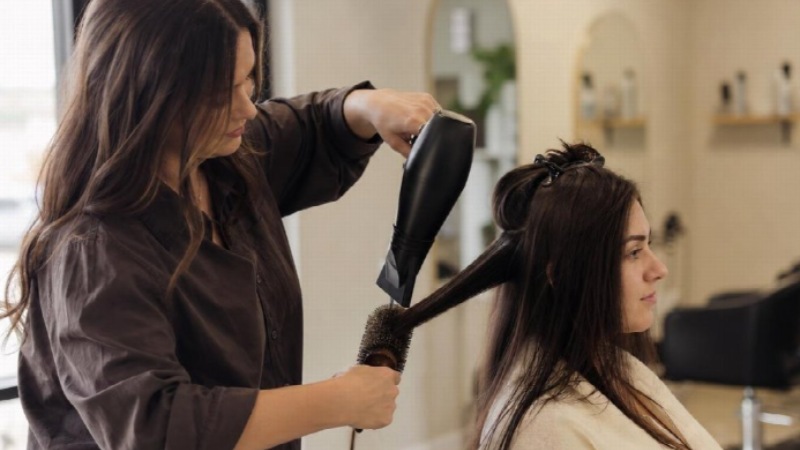
North Texas humidity is a genuine styling challenge. Summer dew points along the TX-114 corridor regularly push into the uncomfortable range, and Trophy Club’s position near Grapevine Lake creates a microclimate that accelerates frizz and collapses curl definition faster than many clients expect.David Ryan Salon, located in Trophy Club, specializes in precision styling techniques designed to hold through the Metroplex’s most demanding weather conditions.
Why Humidity Disrupts Even Well-Styled Hair
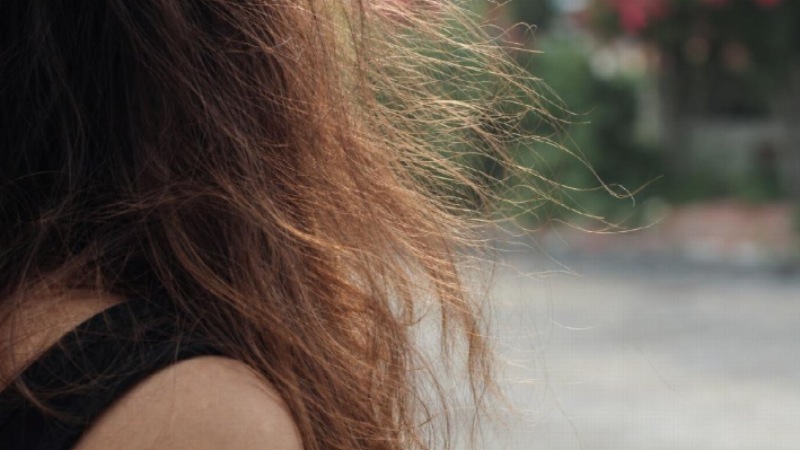
When relative humidity climbs past 60–70 percent, water molecules penetrate the hair shaft and temporarily reform hydrogen bonds in a swollen, irregular pattern, producing frizz, volume loss, and accelerated style collapse regardless of blowout time.
Why Certain Hair Types Are More Vulnerable
Fine, chemically processed, or naturally porous hair responds more dramatically to atmospheric moisture because the cuticle lifts more readily, absorbing surrounding moisture faster and accelerating the breakdown of any styling work. Clients throughout Southlake, Westlake, and the Grapevine Lake corridor report this pattern consistently from late spring through early fall.
The North Texas Humidity Profile
Summer dew points across the Dallas-Fort Worth Metroplex frequently exceed 65°F, pushing relative humidity past 70 percent on most mornings from June through September. Clients commuting along TX-114 often arrive at destinations with styles already compromised.David Ryan Salon’s hair styling protocols address cuticle integrity before a client steps outside, using five professional techniques that meaningfully extend style life under persistent high-humidity conditions.
Technique 1: The Tension Blowout with a Boar-Bristle Round Brush
A tension blowout applies consistent, directional pulling force simultaneously with heat, sealing the cuticle flat rather than allowing it to dry in a lifted state. In North Texas, where morning humidity can sit above 75% RH before 9 a.m. in July, hair that air-dries without directional tension retains an open cuticle that absorbs atmospheric moisture within hours.
How Tension Controls the Cuticle Layer
Brush barrel sizing directly affects tension distribution. For medium-length hair, a 25–32mm barrel maintains consistent contact; longer lengths require a 38–45mm barrel to keep tension uniform from root to tip. Nylon pins grip the scalp zone while boar bristles distribute natural sebum along the shaft, reducing the need for additional smoothing products.
Section width should not exceed 1.5 inches. Wider sections leave interior strands under-dried, and under-dried hair is the primary source of humidity rebound after leaving the salon, a particular concern for clients with extended commutes before reaching air-conditioned environments.
Product Layering for Humid Conditions
Effective frizz control depends on a three-product protocol in a specific sequence: first, a lightweight water-resistant thermal protectant applied at the 80–90% damp threshold; second, a humidity-blocking smoothing cream from mid-shaft to ends; third, a light-hold finishing spray applied only after the blowout is complete and hair has fully cooled. Reversing or skipping any step reduces each product’s film-forming integrity. Applying product to fully wet hair dilutes its film-forming agents before the blowout even begins.
Applying These Techniques: What to Discuss at Your Next Salon Appointment
A stylist determines the correct humidity-control approach by reviewing the client’s full chemical history. Color treatments, bleach, and relaxer applications all alter porosity, directly affecting how heat-sealing and humidity-blocking products perform.
Does Color-Treated Hair Require a Different Approach to Frizz Control?
Color-treated and bleached hair presents elevated porosity, absorbing atmospheric moisture more readily and losing internal hydration faster. Product protocols for these clients are adjusted to protect color integrity while delivering effective frizz reduction. Modified Brazilian blowout frizz reduction protocols formulated for chemically processed hair carry lower aldehyde concentrations to protect color-treated strands.
How Daily Lifestyle Shapes the Recommended Technique
The consultation should address the specific humidity conditions a client encounters most frequently. Morning school drop-off, outdoor professional work, and athletic activity each create different exposure profiles. Clients who move between heavy air conditioning and outdoor humidity face a dual challenge, static and dryness indoors, frizz and swelling outdoors, and stylists factor both extremes into the recommended technique.
David Ryan Salon’s hair styling appointments can be scheduled through the online booking portal at davidryansalons.com.
Technique 2: The Cold-Shot Seal at the End of Every Blowout
Finishing a blowout with the dryer’s cold-shot function is one of the most underutilized techniques for extending style life in humid climates. Heat opens the cuticle to allow styling and shaping; cold air forces it back down, locking the cuticle in a flat, sealed position before the hair is exposed to ambient moisture. Skipping this step leaves the cuticle in a semi-lifted state, meaning the style begins absorbing atmospheric humidity the moment the client steps outside.
Why Temperature Contrast Matters in High-Humidity Environments
In Trophy Club’s summer conditions, where outdoor humidity frequently sits above 70 percent before mid-morning, an unsealed cuticle absorbs surrounding moisture within 15 to 20 minutes of leaving an air-conditioned environment. A proper cold-shot pass, held for five to ten seconds per section after the heat styling is complete, closes the cuticle consistently across the entire head. The result is a measurable improvement in style retention, particularly for fine hair, which has a lower cuticle density and loses its sealed state faster than medium or coarse textures.
How to Execute the Cold-Shot Correctly
The dryer should be held at the same distance and angle used during the heat portion of the blowout, about two to three inches from the strand, maintaining the same directional airflow. Switching the airflow direction during the cold-shot disrupts the cuticle alignment the heat pass just achieved. Work section by section, not in a broad sweep across the full head. Rushing through the cold-shot by sweeping broadly across multiple sections at once provides uneven sealing and leaves interior sections open.
Technique 3: Strategic Use of Smoothing Serums Versus Anti-Humidity Sprays
Product selection for humid North Texas conditions requires distinguishing between two different product categories that serve different functions at different stages of the styling process. A smoothing serum is a leave-in product applied to damp hair before heat; it lubricates the cuticle and reduces friction during styling. An anti-humidity spray is a finishing product applied to dry, fully styled hair; it deposits a humidity-blocking film over the finished surface. Applying these in the wrong sequence or substituting one for the other eliminates a significant portion of their effectiveness.
The Correct Layering Sequence for North Texas Summers
On damp hair (80 to 90 percent dry), apply a lightweight smoothing serum from mid-shaft to ends, avoiding the root zone to prevent greasiness. Proceed with the tension blowout. Once the hair is fully dry and cooled, apply an anti-humidity finishing spray by misting from 10 to 12 inches away, allowing an even, light coating without oversaturation. A single pass is typically sufficient. Over-application of finishing spray on fine hair compresses the volume achieved during the blowout.
Heavy silicone-based serums are not appropriate for Trophy Club’s climate conditions because they create a film that blocks both moisture exit and moisture entry, but that seal weakens quickly under sustained high humidity, leaving a greasy residue rather than a functional barrier. Water-soluble silicone alternatives and humidity-blocking polymers provide effective protection without the buildup risk. Stylists at David Ryan Salon select the appropriate product weight based on each client’s strand thickness and wash frequency during the consultation.
Technique 4: Sectioning Discipline to Eliminate Hidden Moisture Pockets
The most common structural error in a blowout that fails under Trophy Club’s summer conditions is under-dried interior sections. Clients with medium-to-thick density hair frequently have sections near the nape and interior crown that retain moisture even after the outer sections appear dry. These pockets of retained moisture create humidity rebound from within, breaking down the blowout from the inside out before external atmospheric humidity becomes a factor.
Identifying and Eliminating Hidden Moisture Retention
Nape sections and the interior layers directly behind the ears are the highest-risk zones for hidden moisture. These sections receive less direct airflow during a typical blowout because the outer sections are styled first and the dryer angle shifts away from the interior as the blowout progresses. A structured sectioning protocol clips the upper sections out of the way and addresses the nape and interior layers first, working in horizontal sections no wider than one inch.
Running fingertips along the underside of each section after drying confirms whether the strand has reached full dryness before moving to the next. A section that feels slightly cool to the touch still contains residual moisture. Completing the cold-shot pass on a section before it is fully dry converts the retained moisture into a humidity vulnerability rather than eliminating it.
Technique 5: Protective Styling as a Humidity-Management Strategy
On days where Trophy Club’s conditions push dew points above 70 degrees and outdoor exposure is prolonged, such as school events, outdoor work, or extended commutes without air conditioning, protective styling becomes the most effective humidity-control approach available. A protective style confines the hair shaft so that atmospheric moisture affects a smaller surface area, and surface friction from wind, movement, and contact with clothing is eliminated.
Styles That Provide Meaningful Humidity Protection
Low buns, French twists, and braided styles secured at the nape offer the strongest protection because they minimize exposed surface area. Loose, brushed-out styles at the shoulder leave the ends, which are the most porous section of the shaft, fully exposed to ambient moisture and wind friction. A wrapped bun or a sleek low ponytail finished with a lightweight sealing spray extends visual cohesion through a full day of North Texas summer conditions where a blowout would not.
Protective styles also extend the life of a salon blowout by reducing the mechanical friction that disrupts cuticle alignment during daily wear. Clients who commute along TX-114 and spend midday hours outdoors typically see two to three additional days of style retention by alternating a blowout day with one or two protective style days before washing and restyling. Stylists at David Ryan Salon incorporate protective style planning into consultations for clients with active schedules and extended outdoor exposure throughout the Trophy Club and Southlake area.
Frequently Asked Questions
How Long Does a Tension Blowout Typically Last in Humid Weather?
In moderate humidity, a properly executed tension blowout can hold two to four days before frizz becomes noticeable. During peak Trophy Club summers, most clients find results last one to two days without a refreshing product at the roots. David Ryan Salon stylists often recommend a lightweight serum for day-two touch-ups.
Can I Replicate a Salon Blowout at Home with the Same Results?
Home blowouts are possible but rarely match salon results because professional dryers operate at higher wattage and stylists apply consistent tension that is difficult to achieve on one’s own hair. A technique consultation at David Ryan Salon can help identify the hand positions that work best for a given hair texture.
Is Silicone-Based Anti-Frizz Product Safe for Fine Hair?
Silicone-based products can weigh fine hair down and cause buildup without a clarifying shampoo used every two to three weeks. Lighter, water-soluble silicone formulas are generally safer for fine hair in humid climates. A stylist at David Ryan Salon can recommend the correct product weight based on strand thickness and wash frequency.
Does Cutting Hair on a Rainy or Humid Day Affect the Final Result?
Hair that absorbs ambient moisture before a cut can appear slightly shorter once it dries and contracts. Experienced stylists account for this by cutting with the natural texture in mind rather than relying solely on wet length. Communicating your at-home styling routine at the start of the appointment helps the stylist plan for how the hair will actually behave.
How Often Should I Deep Condition If I Live in a High-Humidity Area?
A weekly deep conditioning treatment is generally recommended for curly or coarse hair exposed to consistent North Texas humidity; straight or fine hair typically benefits from every two to three weeks. Over-conditioning fine hair can loosen the cuticle further and increase frizz. A stylist can identify the right frequency during a consultation.
Will a Keratin Smoothing Treatment Completely Eliminate Frizz?
Keratin treatments significantly reduce frizz and cut blowout time, but do not make hair fully immune to humidity during prolonged outdoor exposure. Results depend on natural texture, the formula used, and adherence to aftercare instructions. David Ryan Salon offers keratin consultations to help clients set realistic expectations and choose the right formula.
What Should I Do If My Style Starts Frizzing Midday?
Applying a small amount of smoothing serum or anti-humidity spray to dry hair can calm surface frizz without reactivating waves or curls underneath. Avoid touching or ruffling the hair, as friction disrupts the cuticle and accelerates frizz. David Ryan Salon stylists can recommend carry-friendly product sizes suited to midday fixes for clients who commute or spend time outdoors.
About David Ryan Salon
David Ryan Salon is a full-service hair salon located in Trophy Club, Texas, serving clients throughout Southlake, Westlake, Roanoke, and the broader Tarrant County area. The salon provides a complete range of hair care services, including color, cutting, and chemical smoothing treatments tailored to each client’s hair texture and lifestyle. It operates at 2210 Texas 114 Suite 240, Trophy Club, TX 76262.
Business Name: David Ryan Salon
Address: 2210 Texas 114 Suite 240, Trophy Club, TX 76262
Phone Number: (817) 290-6557