
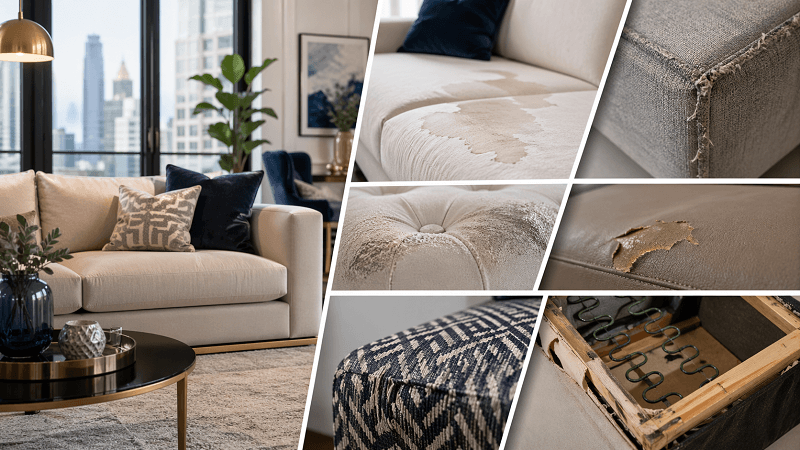
Your furniture has been putting in overtime, and not in a good way. It’s sat through the Collingwood losses, survived late-night cheese boards, and witnessed that dinner party where someone spilt red wine and suddenly developed selective blindness.
Melbourne’s weather doesn’t help, either. One week, it’s baking, and the next, it’s a humid mess. The point is, your upholstery has been copping it from all sides, and if you’re making any of these six mistakes, it’s costing you more than you think.
1. Choosing the Wrong Fabric
Australia’s southeastern corner throws everything at you: scorching summers, damp winters, and humidity that fluctuates wildly.
Unfortunately, not all fabrics are built for that. Heavy synthetics, for example, trap heat and moisture, which sounds harmless until your sofa starts holding onto that humidity like it’s part of the design.
On the other hand, natural fibres are light and dry fast. So, you won’t feel like your lounge has turned into a giant swamp after a warm, humid day.
If you’re buying new furniture or reupholstering old pieces, talk to a fabric specialist before committing. What looks good in the showroom under fluorescent lighting doesn’t always hold up through a Melbourne summer.
2. Letting Stains Set
It starts small, with a bit of coffee or a smear of Vegemite landing on your favourite armchair while you’re enjoying your breakfast. Naturally, you grab a tea towel, scrub the area quickly, and move on with your day. Crisis averted, right?
Here’s the catch, though: that quick rub is doing the exact opposite of what you think. Instead of lifting the spill, it pushes it deeper into the fabric.
And while the surface might look fine, moisture, bacteria, and maybe even a bit of mould are probably throwing a rager underneath.
So, what actually works? Slow it down and blot instead. For most everyday spills, a simple mix of water and white vinegar should do the trick. But if it’s something greasy, a bit of dish soap with cold water works better.
3. Skipping Regular Vacuuming
Most people clean their floors every few days like clockwork, but their furniture somehow gets a free pass.
If you think about it, though, your upholstery is basically a plush floor you sit on, nap on, and breathe right next to every day. It’s not exactly living a clean, low-traffic life.
Skin cells, pet dander, dust mites, and crumbs accumulate in the fibres constantly. And without regular vacuuming, these build up into a layer that no amount of spot-cleaning can address.
So, keep it simple: vacuum it regularly. Once a week is a solid baseline, but if you’ve got pets or kids, bump that up to twice.
When it comes to your technique, use a brush attachment on fabric and a narrow nozzle to get into the seams.
Got a bit of extra money and want to see better results? Invest in a vacuum with a HEPA filter. Unlike standard machines, these nifty models trap allergens instead of blasting them back into the room.
4. Experimenting with Chemicals
Nothing turns a homeowner into a self-taught scientist faster than a red wine stain. You head to Bunnings, grab the bottle with the brightest ‘professional strength’ label, and prepare to go to war.
It may work if you’re lucky. But a lot of those off-the-shelf cleaners are way too harsh for upholstery, especially if the fabric is delicate or a bit older.
So, you can end up stripping the colour, shrinking the cushion fillings, or permanently damaging fibres in a way that no amount of fluffing will fix.
If you’re dealing with a stubborn stain or a piece you care about, it’s a better idea to bring in the professionals. A same-day couch cleaning service in Melbourne can assess the fabric type, choose the right method, and get your sofa back in usable condition within hours.
Sure, you might feel like it’s a splurge, but just think about how expensive replacements are, and it’ll start to sound like a bargain.
5. Overlooking Protective Treatments
Most homeowners think of upholstery protection as an upsell—something the cleaning company throws in at the end to bump up the invoice. But actually, it’s one of the most practical investments you can make.
These treatments create a barrier, so spills sit on the surface instead of diving straight into the fabric. Of course, they won’t make your furniture indestructible, but they’ll buy you more time to act before a stain becomes a permanent feature of your décor.
In Melbourne, where humidity can push past 70% in summer, that extra layer of protection also reduces the amount of moisture your upholstery absorbs. That means fewer musty smells, less dampness, and a much lower chance of mould settling in.
So, before you brush it off, ask your cleaning professional about what’s suitable for your specific fabric. Trust us, paying a little extra now beats replacing your entire lounge suite in a few years.
6. Ignoring Minor Wear
A small snag on the armrest, a loose thread near the seam, or a tiny tear in the corner of a cushion may not seem like the end of the world.
But every time someone sits down, shifts, or leans against those trouble spots, it puts a bit more strain on your upholstery. The loose thread keeps pulling, the tear stretches a little further, and before long, you can end up with a hefty repair bill.
So, every now and then, give your furniture a quick once-over. Run your hand along the fabric and check the seams, armrests, and cushion corners.
If something feels off or looks like it’s heading south, deal with it early. Melbourne has no shortage of skilled upholstery repair professionals who can sort it quickly and affordably.
Conclusion
We’ve all been tempted to ignore odd smells or go to war with a stain using whatever we can find under the kitchen sink. But those shortcuts can lead to four-figure replacements or expensive repairs.
So, stay away from harsh chemicals, blot spills straight away, and keep that sewing kit close. And the next time your friend mentions a new upholstery product that promises miracles, just nod and smile because you know better.