
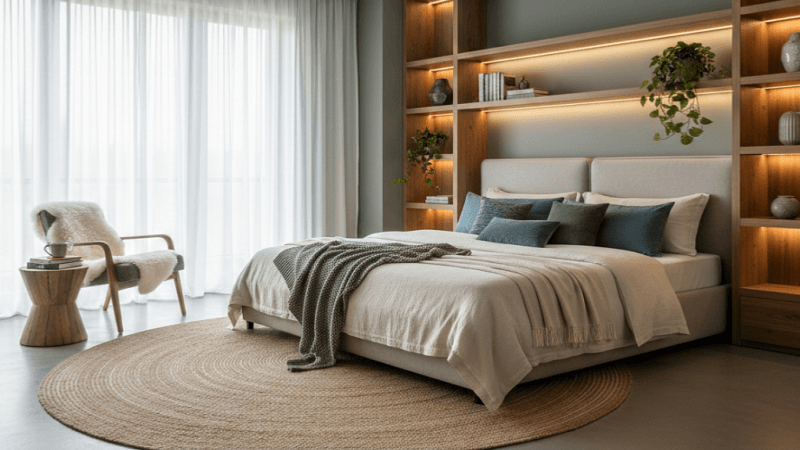
Is your master bedroom currently acting as a dumping ground for laundry piles, children’s toys, and half-read books? Many of us find that the room intended for rest often becomes the last priority in a busy family home. Creating a space that promotes rest is not just about aesthetics; it directly impacts your health and daily energy levels.
Most homeowners want to know if simple changes can actually improve sleep quality or if a full renovation is required. Research shows that environmental factors like light, temperature, and clutter play a huge role in how quickly you drift off. By focusing on layout and sensory details, you can create a peaceful retreat without spending a fortune. This guide provides actionable advice to help you reclaim your space.
1. Prioritise a Clutter-Free Layout
The physical state of your room affects your mental state. When you walk into a space filled with unfinished business, your brain struggles to switch off. According to a 2025 survey by Bensons for Beds, 56% of people feel they get a better night’s sleep when their bedroom is neat, with this figure rising to 67% for those aged 25 to 34.
Start by clearing the surfaces. Bedside tables should hold only essentials, like a lamp, a water glass, and perhaps a single book. If your current furniture does not provide enough storage to hide the daily mess, it might be time to reconsider your furniture choices. Using bedroom design tips that focus on smart storage can help you keep the floor clear and the mind calm. For those looking to maximise every inch of their room, exploring bedroom design that makes sense can inspire layouts that work with your specific architectural features rather than against them.
2. Master the Science of Sleep Lighting
Your body follows a natural internal clock, the circadian rhythm, which is heavily influenced by light. In 2026, the trend for “circadian-friendly” lighting has moved from high-end hotels into British homes. The goal is to mimic the sun’s natural progression.
During the day, maximise natural light to boost your mood. As evening approaches, swap bright overhead lights for warm-toned lamps. Use bulbs with a low Kelvin rating to create a soft, amber glow that encourages melatonin production. Blackout curtains or high-quality blinds are also essential, especially if you live in an urban area with streetlights. Eliminating light pollution ensures that your sleep remains deep and uninterrupted throughout the night.
3. Optimise Your Thermal Comfort
Temperature is one of the most overlooked aspects of a sleep sanctuary. The Chartered Institution of Building Services Engineers (CIBSE) suggests that sleep quality may be compromised at temperatures above 24°C. In fact, a study published on ResearchGate highlights that over 19% of UK bedrooms are prone to overheating, leading to significant sleep loss.
To transform your room this weekend:
- Switch to breathable, natural fabrics like linen or 100% cotton bedding.
- Ensure your duvet tog rating is appropriate for the current season.
- If your room holds heat, consider a quiet ceiling fan or a cooling mattress protector.
- Keep a window slightly cracked to allow fresh air to circulate, which helps regulate CO2 levels.
4. Introduce a Calming Colour Palette
While bold colours are popular in living areas, the bedroom benefits from a more muted approach. In 2026, we are seeing a shift towards “Middleism,” a design style that sits between minimalism and maximalism. This involves using earthy neutrals, soft sages, and warm taupes to create a grounded atmosphere.
If you have a free Saturday, a fresh coat of paint is the fastest way to change the vibe. Earthy tones like terracotta or clay can add warmth without feeling heavy. If painting feels like too much work, you can introduce these colours through soft furnishings like velvet cushions or a wool throw. These tactile textures add depth to the room and make it feel more inviting.
5. Focus on the Senses with Scent and Sound
A true sanctuary appeals to more than just your eyes. The olfactory system is linked to the emotional centre of the brain, making scent a powerful tool for relaxation. Lavender, chamomile, and sandalwood are classic choices for a reason. Use a reed diffuser or a few drops of essential oil on a wooden block to maintain a consistent, subtle fragrance.
Sound is equally important. If your house is noisy, a white noise machine or a dedicated sleep speaker can mask external sounds. Many modern bedside gadgets now offer adaptive soundscapes that respond to your movements, helping you stay asleep even if there is a disturbance elsewhere in the house.
6. Invest in Quality Textiles
You spend roughly a third of your life in bed, so the quality of your textiles matters. Beyond just the sheets, think about the layers. A weighted blanket can provide a sense of security and reduce anxiety, while a high-quality rug underfoot ensures that the first thing you feel in the morning is soft and warm.
When choosing fabrics, look for durability and ease of care. For family homes, removable covers and washable fabrics are a must. This allows you to maintain a high-end look without the stress of accidental spills or sticky handprints. Adding a variety of textures, from knitted throws to silk pillowcases, creates a “cocooning” effect that makes the bed the undisputed hero of the room.
7. Personalise with Intentional Decor
Finally, your bedroom should reflect who you are. However, there is a fine line between personal and cluttered. Instead of filling every shelf, choose three or four items that truly mean something to you. This could be a framed photograph from a favourite holiday, a piece of handmade pottery, or a healthy indoor plant.
Plants like the Snake Plant or Peace Lily are excellent for bedrooms as they continue to produce oxygen at night and help purify the air. Position them in a corner where they can catch the light, adding a touch of nature to your indoor environment. By being intentional with your decor, you create a space that feels curated and peaceful.
Summary of Weekend Upgrades
| Task | Estimated Time | Impact Level |
| Clear all surfaces and declutter | 2 Hours | High |
| Swap bulbs for warm-toned LEDs | 30 Minutes | Medium |
| Update bedding to natural fibres | 1 Hour | High |
| Add a calming scent (Diffuser) | 5 Minutes | Low |
| Introduce two indoor plants | 1 Hour | Medium |
Transforming your bedroom into a sleep sanctuary does not require a massive budget or weeks of construction. By focusing on these seven areas, you can create a room that supports your well-being and provides a genuine escape from the pressures of daily life.