
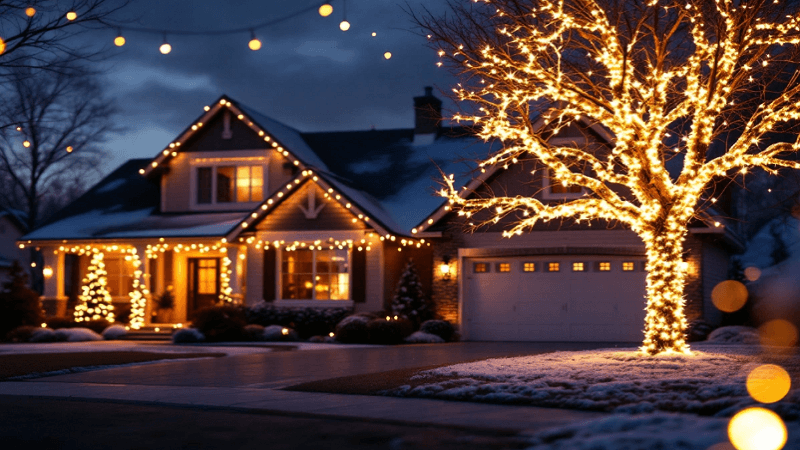
Once the sun sets, the character of a home does not fade away; it changes. The combination of architecture, landscaping, and light can make a house really shine in the dark. Most homes would turn dark, but some are attracting attention with warm, inviting light that puts their best features in the spotlight. The distinction is usually reduced to the extent of using lighting to highlight design features.
Highlighting Architectural Features
The architecture of a house significantly contributes to its appearance at Night. The roof peaks, dormers, and columns of the porch draw the eye naturally in the daytime–and must be artificial lighting at Night.
Peaks and gables on the roof, e.g., make great visual lines. They can add depth and dimension to the whole structure when lit from below with soft uplights. Even dormer windows can become a special feature when softly lit, providing the upper part of the house with a balanced finish.
The other focal point is the columns on the porches. Colonnades are either classic or modern in design, but they are impressive when lit vertically. This not only makes the shapes more cohesive but also adds symmetry and elegance to the front of the house.
The Role of Landscaping in Nighttime Appeal
When it comes to curb appeal at Night, landscaping is just as important as architecture. Textures and layers are offered by trees, shrubs, and garden beds, which can be brought to life by lighting.
The proper placement of spotlights at the bases of trees can create dramatic shadows and highlights, transforming ordinary flora into a visual focal point. Smaller plants and hedges benefit from more gentle lighting, which delineates their form without dominating the space.
Another chance to stand out is in the walkways. Path lights make the way safe and provide a warm touch. They form a rhythm when positioned correctly, making the house look more welcoming as they guide the eye along the street to the front door.
Creating Natural Focal Points
The difference between a normal home and an outstanding one during the Night is the availability of clear areas of focus. Lighting must not be scattered about in a desultory manner.
For example, the entrance is the primary focus in most cases. The entrance can be welcoming and friendly with a mix of porch lighting, sconces, or soft overhead lights. Equally, a properly illuminated tree or section of the building might serve as a secondary centre of interest, without any crowding out of the appearance.
Balance is key. Excessive light will destroy details, whereas insufficient light may cause some vital features to be overlooked. The aim is to develop contrast — to emphasize some things and leave others in the shadows.
Seasonal Enhancements and Temporary Lighting
Many people who live in their own homes during the winter months use seasonal lighting to make their homes more attractive at Night. This is where Christmas light installation services in Covington come into play.
Temporary lighting, such as string lights along rooflines or around trees, can likewise festively highlight architectural lines and landscaping features. Although these displays are not permanent, they show that lighting can change a house’s look and highlight its most attractive features.
Final Thoughts
The house which is conspicuous at Night is not the one which is the most brightly lit up, it is the one which is the most intelligently lit. Homeowners can significantly enhance their curb appeal in the evening by paying attention to details, such as roof peaks and columns, and by adding more trees and walkways to strengthen their landscaping and create a visual point of interest.
The appropriate lighting, whether in permanent structures or seasonal extensions, defines the character of a house. Any house can be made special in the neighbourhood after dark with a bit of planning and imagination.