
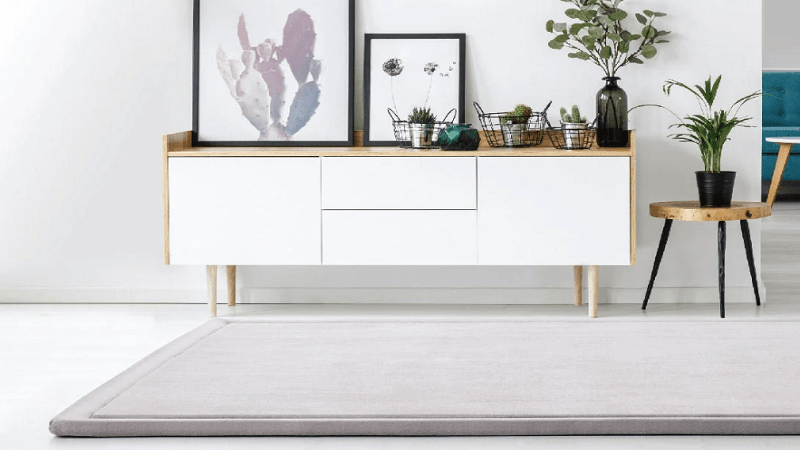
There’s a moment most parents know well. You set your baby down on the floor, lie down next to them, and suddenly — you’re in their world. They turn to look at you. You make a face. They smile. A small hand reaches for yours.
It looks like nothing. It’s everything.
Floor time — unstructured play on a flat, open surface — is one of the most effective developmental tools available to parents. Paediatricians have recommended it from the early months for decades. But what’s often overlooked is that floor time isn’t just about building stronger muscles or hitting milestones. It’s about connection. When you get down on the floor with your baby, you remove every barrier between you. No high chair, no bouncer, no screen. Just parent and child, face to face, on the same level. That closeness is where some of the deepest family bonds are formed.
What floor time does for your child — and for your relationship
Every major motor milestone in the first two years happens on the floor. Tummy time builds the neck and shoulder strength needed for rolling. Rolling teaches weight shifting. Crawling develops cross-body coordination that researchers have linked to later reading and writing skills. Pulling up to stand and those first unsteady steps — all floor-based.
But here’s what the milestone charts don’t tell you: your child is looking at you during all of it.
When a baby is learning to roll over, they glance toward their parent for reassurance. When a toddler takes a tumble and gets back up, they check your face before deciding whether to cry or laugh. Developmental psychologists call this “social referencing” — and it happens constantly during floor play. Your presence on the floor isn’t just supervision. It’s active participation in your child’s confidence.
Floor play also feeds the sensory system. Babies process information through touch, and the textures, temperatures, and resistance of the surface beneath them are all inputs. A child lying on a soft play mat is learning about pressure and support. A child crawling across a textured surface is building sensory pathways that will later help with handwriting, balance, and body awareness. When a parent is nearby — lying alongside them, gently guiding their hand to a new texture — babies explore more freely and for longer.
And there’s a cognitive side. When babies and toddlers play on the floor, they practise spatial awareness — judging distances, navigating around objects, understanding where their body is in space. This proprioceptive development is foundational. Because floor play is self-directed, it builds early independence and focus. A child reaching for a toy just out of range is problem-solving — and when they finally grab it and turn to show you, that shared moment of triumph matters more than the toy itself.
Why the surface matters more than you think
Not all floors are created equal, and the surface you choose makes a real difference — to your child’s safety, to how much they actually move, and to how comfortable you are joining them.
Hard floors (tile, hardwood, laminate) are slippery, cold, and unforgiving when a baby falls. Young children sense this. Research on early motor development shows that infants on hard, slippery surfaces move less and take fewer risks — which means fewer opportunities to build strength and coordination. Hard floors are also uncomfortable for parents, which means you’re less likely to sit down and stay.
Traditional carpet is softer, but comes with trade-offs. It traps dust, allergens, and dust mites — a concern for families managing allergies or eczema. It’s also difficult to keep clean when you’re dealing with the daily reality of spills, drool, and food.
The ideal play surface sits in between: soft enough to cushion falls, non-slip so it stays in place, easy to wipe clean, and made from materials that are safe for babies who will inevitably press their faces against it. Just as importantly, it should be comfortable enough that you actually want to sit down on it — because the best floor time happens when the whole family is on the mat together.
This is where a purpose-built baby play mat earns its place. A good play mat turns any room into a safe, comfortable space for play and connection — and the right one does it without looking like a crèche.
What to look for in a play mat
If you’re choosing a playmat for your home, here’s what actually matters:
Cushioning that absorbs impact. New walkers fall constantly — often backward. A mat with real thickness (not a thin foam layer) protects heads and tailbones. Look for playmats with at least 15–20mm of dense cushioning. Bonus: thick cushioning is also kinder on adult knees and backs.
A non-slip base. This is non-negotiable. A mat that slides on hard floors is a hazard, not a safety feature. The best playmats have a textured or grippy underside that locks to the floor.
Easy cleaning. Babies and toddlers are messy. A play mat that can be wiped down with a damp cloth — and doesn’t absorb liquids — saves time and keeps the play area hygienic for the whole family.
Non-toxic materials. Babies chew on everything, including the floor. Choose a soft mat that is certified free from formaldehyde, BPA, phthalates, and heavy metals. Look for third-party testing certifications, not just marketing claims.
Size that fits your space — and your family. A small mat restricts movement; a mat that’s too large for the room becomes a tripping hazard around the edges. Some families look for custom-size options — especially useful for open-plan living areas or oddly shaped rooms. A tatami-style playmat is a popular choice for families who want a clean, minimal look that blends into the home. Choose one large enough for you and your child to lie down on together — that shared space is the whole point.
How to set up a family floor play area
Setting up a play space doesn’t require a dedicated room or expensive equipment. Here’s a practical approach:
- Choose a clear, flat area away from sharp furniture edges and heavy objects that could be pulled down. A living room corner or bedroom floor works well.
- Lay down a soft, non-slip play mat that covers the full play zone. The mat should sit flat without curling at the edges.
- Add a few open-ended toys — blocks, balls, stacking cups, soft books. Keep it minimal. Fewer toys means more focused, creative play — and more attention on each other.
- Add yourself. This is the most important step. Sit down. Lie on your stomach. Get on your child’s level. You don’t need to direct the play — just being present and available transforms floor time from exercise into bonding.
- Rotate toys regularly. Swapping out a few items every few days keeps the space interesting without adding clutter.
Floor time at every stage — and how connection grows with it
Floor play isn’t a single activity — it evolves as your child grows, and so does the bond it builds.
0–4 months: Short bursts of supervised tummy time on a soft mat. Lie face-to-face with your baby. Talk to them, sing, make eye contact. These early moments of closeness lay the groundwork for secure attachment — your baby is learning that the world is safe because you’re right there.
4–8 months: Rolling and reaching dominate. A larger play mat gives room to move in all directions. Babies at this stage will surprise you with how far they can travel — and how often they turn back to check that you’re still watching. That backward glance is connection in action.
8–12 months: Crawling begins, and pulling up to stand follows quickly. A non-slip surface becomes essential — this is the stage where falls are frequent and a cushioned, stable play mat prevents the bumps that discourage new movers. You become the safe base your child explores from and returns to. The crawl away and the crawl back are equally important.
12 months and beyond: Walking, climbing, jumping, tumbling. Toddlers are fearless and uncoordinated in equal measure. A thick, cushioned playmat absorbs the inevitable crashes and keeps play sessions going longer. This is also when floor time gets joyful in a new way — shared laughter, clapping for first steps, building a block tower together and watching it fall. These are the moments that become family memories.
A small moment, a lasting connection
Floor time doesn’t require a complicated setup or a long list of equipment. What it does require is a safe, comfortable space and the willingness to get down on your child’s level.
A cushioned, non-slip play mat and a few well-chosen toys can transform any room into a space for play, growth, and family connection. It’s one of the simplest, most effective things you can do — not just for your child’s physical, sensory, and cognitive development, but for the bond between you.
Some of the happiest family moments happen on the floor.
For families looking for a safe, cushioned play mat that fits their space, Momomi’s range of playmats are designed with non-toxic materials, a non-slip base, and custom sizing — so the mat fits the room, your family, and the way you live.