
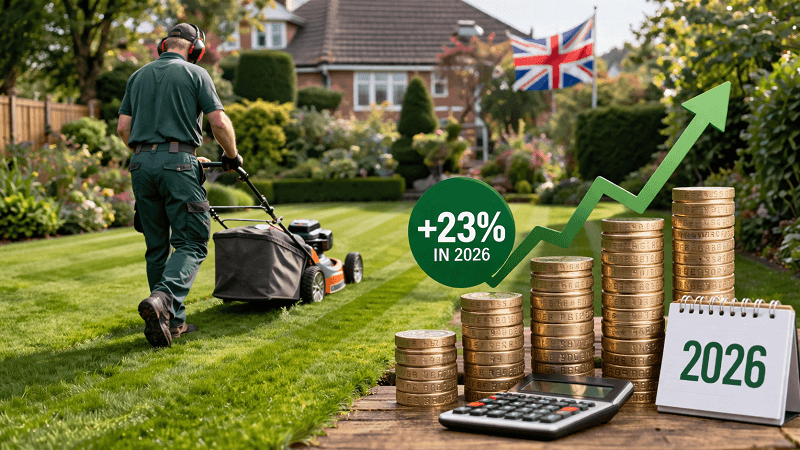
By 2026, lawn care across the UK is set to cost noticeably more, with prices rising by an estimated 23%.
The reasons are layered, and none of them is a fleeting trend, which means this isn’t just a one-season spike. Then again, a well-kept garden doesn’t have to become a luxury.
With a bit of awareness and a few clever adjustments, you can still enjoy a tidy lawn, or a neatly clipped patch—without wincing at every invoice.
Inflation Is Stretching Every Garden Budget
Inflation rarely announces itself dramatically, yet it has a way of creeping into everyday services—including lawn care. What once felt like a modest expense can quickly edge upwards as the cost of fuel, equipment, and materials rises behind the scenes.
For example, a routine mow that might have cost £30 not long ago can now sit closer to £37. It’s not extravagance—it’s simple arithmetic. Businesses are absorbing higher operational costs and, inevitably, passing a portion on to customers.
This is where a bit of financial awareness pays off. Reviewing your garden spend every few months, and keeping an eye out for local offers, can make a noticeable difference over the year.
A small shift in mindset helps too. Treat lawn care like any other household expense—planned, reviewed, and occasionally negotiated. It keeps things manageable and avoids that end-of-summer surprise when the garden suddenly becomes one of your bigger expenses.
Rising Labour Costs Are Changing the Price of a Tidy Lawn
Behind every neatly edged lawn is time, skill, and increasingly, a higher wage bill. Across the UK, minimum wages are constantly rising, and there’s a growing demand for experienced workers. This, in turn, pushes labour costs up, and lawn care services are feeling it.
For businesses, it’s not simply about paying staff more. There’s training, retention, and the challenge of finding reliable professionals during peak seasons.
The result is a steady increase in service prices, particularly in high-demand areas, like Greater London and the South East.
That said, timing can work in your favour. Booking services in quieter periods, such as early spring or mid-autumn, often comes with more flexible pricing. Demand dips slightly, schedules open up, and providers are more willing to offer competitive rates.
There’s also something to be said for consistency. Regular, smaller visits could be more cost-effective than occasional, larger overhauls. A lawn that’s maintained little and often tends to need less intensive intervention later.
Environmental Rules Are Reshaping Garden Care
Sustainability is no longer a buzzword—it’s a requirement. Across the UK, environmental regulations are pushing for greener practices, and lawn care is evolving to keep pace.
Electric mowers, for instance, are becoming the norm. They’re quieter and cleaner, making them well-suited to everything from suburban cul-de-sacs to tighter urban spaces in cities like Bristol or Edinburgh.
The upfront investment is higher, though, and that cost is gradually reflected in service pricing.
There’s also a growing shift towards organic fertilisers and eco-friendly treatments. These alternatives are gentler on wildlife and soil health, though they can appear more expensive at first glance.
Over time, however, they often contribute to a more resilient garden, reducing the need for frequent interventions.
Homeowners are adapting too. Swapping out high-maintenance turf sections for native plants—think bluebells, heather, or wildflower patches—can reduce upkeep while adding a distinctly British charm.
Premium Lawn Care Is Becoming the New Normal
While some households are trimming costs, others are leaning in the opposite direction—investing in premium lawn care services that elevate outdoor spaces entirely.
This shift is less about necessity and more about lifestyle. Gardens are no longer just functional. They’re extensions of the home. In places like the Cotswolds or parts of Kent, a thoughtfully designed garden can feel like an outdoor living room.
Organic lawn care sits at the heart of this trend. Using compost, seaweed extracts, and natural pest control methods, it offers a greener, safer approach.
The result is a lawn that feels lush underfoot without the chemical edge—ideal for families, pets, and anyone keen to garden a little more responsibly.
Bespoke landscaping takes things a step further. From winding stone paths to carefully curated flower beds and water features, these designs transform a simple garden into something far more immersive.
According to property insights from RICS, a well-maintained outdoor space can even add around 5% to a home’s value.
Of course, these services come at a premium. But for many homeowners, the investment feels justified—not just in aesthetics, but in long-term property appeal.
A Thoughtful Approach Can Keep Costs Under Control
Rising prices don’t necessarily mean sacrificing a beautiful garden. In many cases, it simply calls for a more hands-on, thoughtful approach.
Taking care of basic tasks yourself—mowing, edging, and weeding—can significantly reduce how often you need professional help. It doesn’t require expert knowledge, just a bit of regular attention and the willingness to spend a sunny afternoon outdoors.
Investing in an electric mower is another practical step. It cuts down on fuel costs, reduces noise, and aligns neatly with newer environmental standards. Over time, it tends to pay for itself.
Community can play a role as well. Local gardening groups, whether in small villages or London boroughs, often share tools, advice, and even bulk-buying opportunities. It’s an effective way to lower costs, while picking up useful tips along the way.
The overall idea isn’t to do everything yourself—but to strike a balance. A bit of DIY paired with occasional professional support tends to deliver the best value.
Planning Makes All the Difference
When it comes to lawn care, a little foresight goes a long way. Spreading tasks and expenses across the year can prevent both financial strain and last-minute garden emergencies.
Simple habits make a difference. Addressing small issues early, like patchy grass or the first signs of pests, stops them from becoming larger, more expensive problems. Buying supplies gradually through spring and summer can also ease the financial load.
There’s a certain rhythm to it. Much like tending a garden in the first place, it’s about steady, consistent effort rather than sudden bursts of activity.
Professional lawn care solutions and advice can be surprisingly helpful here. A quick conversation with a lawn care expert might lead to cost-saving suggestions you hadn’t considered—whether it’s choosing a hardier grass mix or adjusting your maintenance schedule.
Ultimately, planning isn’t about restriction. It’s about control. And in a year where costs are rising, that sense of control becomes particularly valuable.
Conclusion
A 23% rise in lawn care costs may sound daunting, but it doesn’t have to derail your plans for a well-kept garden.
The most effective approach is rarely drastic. A mix of regular upkeep, smart timing, and occasional professional input can keep your garden looking its best without placing unnecessary strain on your budget.
Gardens have always been a point of pride across the UK—whether it’s a modest patch in a terraced home or a sprawling lawn in the countryside. With a bit of care and planning, that tradition can continue, even as the costs evolve.