
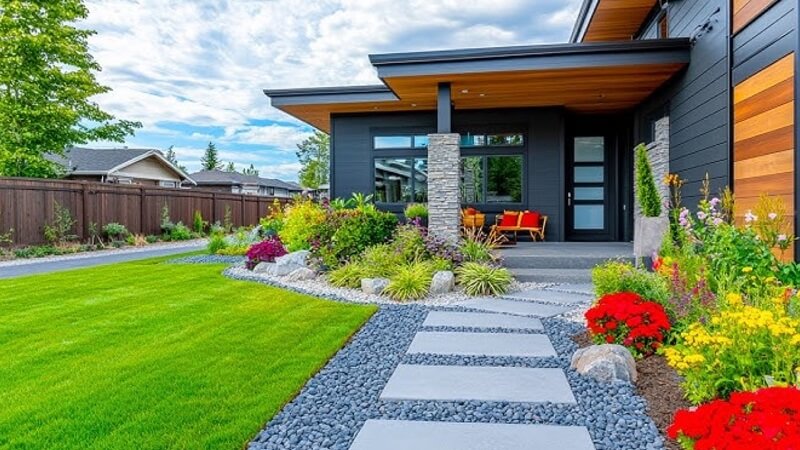
When homeowners consider maintaining their home’s exterior, they often turn to techniques such as pressure washing or repainting. Landscaping, however, is one of the most neglected factors. The manner in which you lay out your yard, all the way to the mulch beds, irrigation systems, etc., contributes significantly to the rate at which the dirt, grime and stains accumulate onto the exterior of your home. A well-considered landscaping plan can minimize maintenance requirements, whereas ineffective planning will cause your house to become dirtier much more quickly.
Mulch Beds and Soil Splash
One landscaping trend that has become very popular is the use of mulch beds, which help retain moisture, suppress weeds, and improve soil health. Nevertheless, they may also be the source of external dirt. During a rainstorm or during intense watering, the mulch and soil may splash onto the siding, particularly in lower areas of the house.
Dark mulch, especially, can leave visible marks on light siding or brickwork. Mulch beds planted too near the base, or too high, are likely to enhance this effect of the so-called soil splash. To reduce the problem, edging can be installed, the grade can be slightly reduced, or ground-cover plants can be used.
Plant Placement and Airflow
The way you arrange the shrubs, trees, and plants in and around your house directly affects the cleanliness. Plants that are too close to the walls may trap moisture, block sunlight, and limit airflow. This establishes the best conditions for the growth of mould, mildew, and algae on siding.
Hanging trees might also shed leaves, sap, and pollen on your house, causing streaks and spots over time. Trimming plants and maintaining some distance between the vegetation and the external wall ensures surfaces dry more quickly and remain cleaner longer.
Irrigation Systems and Water Exposure
To maintain a healthy lawn, irrigation systems are needed, but improperly adjusted sprinklers can do more harm than good to exterior cleanliness. Sprinkler heads spraying on your house may keep it constantly wet, resulting in water spots, algae growth, and dirt.
Irrigation systems can also cause hard water that deposits on windows and siding, making it difficult to remove. These issues can be greatly mitigated by adjusting sprinkler angles, drip irrigation along the house boundary, and monitoring water pressure.
Walkways, Driveways, and Runoff
Hardscaping features such as walkways and driveways also affect the movement of dirt on your property. When such surfaces are inclined towards the direction of your house, these surfaces may bring mud, debris, and pollution to your walls and foundations.
Water should be directed away from the house through proper grading. Also, maintaining clean, well-kept walkways reduces the amount of dirt splashed onto exterior surfaces during storms.
Roof Runoff and Gutter Placement
The interaction between landscaping and drainage systems aims to manage water flow. When gutters and downspouts are not installed correctly, roof runoff may strike the soil or mulch beds, splashing dirt onto the siding.
Splash blocks or longer downspouts farther from the house can be installed to avoid this problem. When used together, proper drainage and intelligent landscaping design will help to keep your yard and exterior clean.
The Role of Maintenance
No matter how well the landscaping design is, there must be some accumulation over time. Maintenance is where this comes in. Occasional cleaning, such as hiring the best house washing company in Post Falls can help restore your home’s appearance and remove stubborn dirt, algae, and stains.
However, the central message is that proper landscaping will help reduce the frequency of such services. It is much better to prevent than to clean.
Final Thoughts
Landscaping options are not only pretty on the outside; they also directly impact how clean your home is. Whether it is the placement of mulch or the design of the irrigation system, each choice determines how the dirt and water will interact with your exterior surfaces.
With a landscape designed with a clean mind, you can reduce accumulation, protect your home’s exterior, and reduce long-term maintenance.