
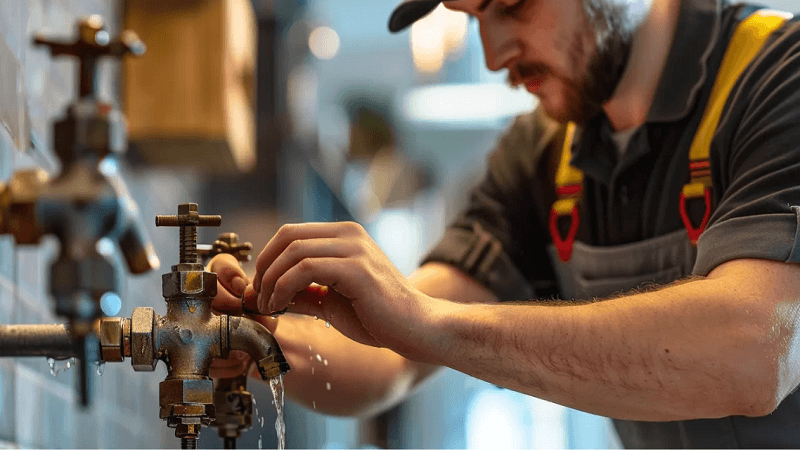
Inefficient water use in homes not only leads to higher utility bills but also contributes to the wasteful consumption of vital resources. An average household can waste approximately 10,000 gallons of water yearly due to leaks, which is where professional plumbing services come into play.
Employing a skilled plumber can significantly elevate your home’s water efficiency, paving the way for both economic and environmental gains. Below, we explore how professional plumbing services benefit water management and overall sustainability of resources.
How Hiring a Plumber Can Enhance Your Home’s Water Efficiency
Hiring a plumber provides a precise assessment of your home’s water system, identifying areas of inefficiency often overlooked by homeowners. Such proficiency enables the early detection and rectification of problems that can lead to significant water loss.
For instance, a plumber might adjust water pressure settings to optimal levels, preventing stress on pipes and reducing the likelihood of ruptures or leaks. Additionally, they can advise on the best practices for your specific plumbing system, tailored to your household’s habits and needs.
To get started, homeowners should schedule an initial inspection to understand the current state of their plumbing infrastructure. This assessment acts as the basis for any necessary upgrades or repairs—plumber ensuring that your system operates at maximum efficiency.
Identifying and Fixing Leaks: A Key Step Toward Better Water Management
One of the crucial steps in improving water efficiency is the early detection and repair of leaks. Plumbers are equipped with tools and expertise to recognize even the smallest leaks, which might go unnoticed but can cumulatively lead to substantial water waste.
A professional can perform pressure tests and use ultrasonic devices to pinpoint leaks behind walls or under floors that are otherwise inaccessible. Enhanced techniques, such as thermal imaging, enable a non-invasive approach to detect hidden problems, thereby preventing larger issues and aiding in water conservation.
After detecting leaks, immediate repair is essential. Replace old fixtures or damaged pipes as recommended by your plumber to maintain an efficient and safe water system. Fix-a-Leak Week initiatives also emphasize the importance of addressing leaks promptly to conserve water.
Modern Plumbing Technologies and Water-Saving Fixtures
Advancements in plumbing technology offer significant opportunities to improve home water efficiency. Installing modern water-saving fixtures, such as low-flow toilets and showerheads, provides noticeable reductions in water use without sacrificing performance.
Plumbers can install devices such as aerators on faucets, which minimize water flow while maintaining pressure, effectively reducing water consumption by up to 50%. Additionally, installing tankless water heaters or smart water management systems can further optimize water usage and heat efficiency
For those interested in the latest in water-efficiency, seeking advice from a professional plumber about tankless water heaters and the benefits they offer could significantly reduce water and energy costs.
Regular Maintenance and Its Role in Sustaining Water Efficiency
Regular maintenance scheduled through a licensed plumber can help avoid the degeneration of plumbing fixtures, leading to improved longevity and performance. This preventative approach is key to maintaining water efficiency over time.
During maintenance visits, plumbers can clean mineral build-up that often affects water fixtures and pipes, optimizing flow and reducing the risk of blockages and leaks. These sessions are also ideal for evaluating the health of your plumbing system, ensuring all parts function as intended.
Consider setting up a yearly or bi-yearly maintenance plan. This proactive measure not only keeps your plumbing in top shape but also boosts overall efficacy, ensuring you get the most out of your plumbing investments.
Ultimately, the efficiency of your home’s water system hinges greatly on professional plumbing services. From installing advanced water-saving technologies to regular maintenance, plumbers play a crucial role in helping households manage their water use more effectively. Such practices not only lead to cost savings but also contribute significantly to environmental conservation.