
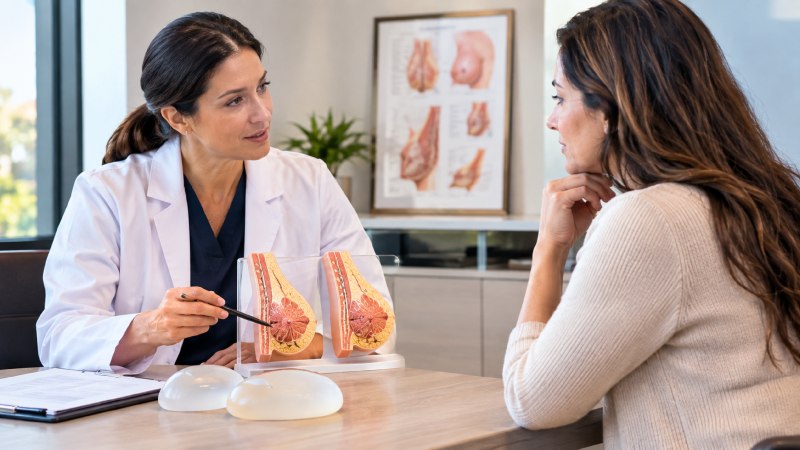
Pregnancy and breastfeeding can transform a woman’s body in meaningful ways, but some changes may remain long after nursing ends. Breasts can lose upper fullness, develop stretched skin, or sit lower on the chest than they did before pregnancy. For some women, a breast lift can address these concerns by removing excess skin and reshaping the existing breast tissue. However, a lift does not automatically restore lost volume. If the breasts look both saggy and deflated after breastfeeding, another approach may be considered. Understanding the difference between lifting the breast and restoring its volume can help women have more productive conversations with their plastic surgeon. The right procedure depends on breast anatomy, skin quality, desired size, and whether additional pregnancies are planned.
Why Breasts Change After Breastfeeding
Breast changes after pregnancy are extremely common. During pregnancy, hormonal changes cause the breasts to enlarge as the body prepares for milk production. The skin and supporting tissues stretch as breast volume increases. After breastfeeding ends, the breasts gradually decrease in size as milk production stops.
This process can leave some women with stretched skin and less fullness, particularly in the upper portion of the breast. Weight changes associated with pregnancy and postpartum life can contribute to these changes as well. Genetics, age, skin elasticity, breast size, and the number of pregnancies can all influence the final appearance.
It is also worth noting that breast changes should not automatically be blamed on breastfeeding itself. Research discussed by the American Society of Plastic Surgeons has found that pregnancy-related changes can be an important factor in breast shape and sagging, including among women who breastfeed and those who do not.
What Does a Breast Lift Actually Do?
A breast lift, medically known as mastopexy, is primarily designed to improve breast position and shape. During the procedure, a surgeon removes excess skin and reshapes the breast tissue. The nipple and areola can also be repositioned when necessary.
For women whose primary concern is drooping, a lift can make a significant difference. It can create a higher breast position and improve the overall contour without necessarily making the breasts larger.
However, there is an important distinction between lifting a breast and adding volume.
A lift primarily changes position and shape. It does not function like a breast implant and is not designed to substantially increase breast size. This distinction becomes particularly important for women who notice that their breasts are both sagging and noticeably less full after pregnancy and breastfeeding.
When a Lift Alone May Not Be Enough
Some women finish breastfeeding and discover that their breasts have a combination of problems rather than one isolated concern. The breasts may hang lower, but they may also appear smaller, flatter, or deflated at the top.
In this situation, a lift alone may correct the drooping but may not restore the amount of upper-breast fullness the patient wants.
Women researching their options may come across information about breast lift surgery in Red Deer when exploring procedures that combine lifting and augmentation. A consultation can help determine whether a lift by itself is appropriate or whether additional volume may better address the patient’s goals.
This is not about one procedure being universally better than another. The appropriate approach depends on what has changed after pregnancy and what the patient wants to change surgically.
Lift Versus Augmentation: Understanding the Difference
Breast lift and breast augmentation address different concerns.
A breast lift focuses primarily on position, shape, excess skin, and nipple placement. It can make the breast sit higher on the chest and create a more youthful contour.
Breast augmentation focuses primarily on volume. It can increase breast size and restore fullness using implants or, in selected cases, fat transfer.
This difference explains why augmentation alone may not solve significant sagging. Adding volume does not necessarily tighten loose skin or reposition a nipple that has descended significantly.
Likewise, a breast lift alone may not provide the fuller appearance some women want after postpartum volume loss.
For certain patients, combining the two procedures can address both concerns during one surgical plan. The lift reshapes and raises the breast, while augmentation provides additional volume.
Signs You May Be Dealing With Both Sagging and Volume Loss
Every woman’s breast anatomy is different, but several common changes may indicate that more than a lift could be needed.
One is significant loss of upper-pole fullness. The upper portion of the breast may look flatter than it did before pregnancy, particularly when standing without a bra.
Another is a nipple that has moved downward. A breast lift can reposition the nipple and reshape the surrounding tissue when appropriate.
Loose or stretched skin is another consideration. If the skin envelope has expanded considerably, simply adding an implant may not provide the desired shape because the existing skin may still allow the breast to sit low.
Some women also notice that their breasts look smaller after breastfeeding even though they do not necessarily want a dramatic increase in size. In such cases, the discussion may involve whether modest augmentation, fat transfer, or reshaping the patient’s own tissue could provide the desired result.
The key point is that breast size, breast position, skin quality, and nipple position should be evaluated together rather than separately.
What Is a Breast Lift With Augmentation?
Breast lift with augmentation, sometimes called mastopexy augmentation, combines two surgical objectives.
The lifting portion addresses sagging and excess skin. The augmentation portion adds volume. When appropriate for the patient, combining the procedures can help address the deflated appearance that sometimes occurs after pregnancy and breastfeeding.
The exact surgical technique depends on the patient’s anatomy and desired outcome. Implant size, breast shape, amount of excess skin, nipple position, and existing breast tissue all influence surgical planning.
A combined procedure may be discussed with women who want their breasts positioned higher while also wanting additional fullness. According to the American Society of Plastic Surgeons, combining augmentation and lifting can address both loss of volume and changes in breast position.
The goal should not simply be to make the breasts larger. Good surgical planning considers proportion, shape, tissue characteristics, and the relationship between the breast and the rest of the body.
Are Implants Always Necessary?
No. Not every woman who experiences postpartum breast deflation needs implants.
Some patients may be satisfied with a lift alone if their primary concern is sagging and they are comfortable with their current breast volume.
Other women may prefer an approach that uses their own tissue. In selected cases, fat transfer or techniques that reposition existing breast tissue can provide additional fullness without using an implant. Fat grafting, for example, may provide a modest increase in volume and can be used with a breast lift in appropriate candidates.
This is one reason an in-person consultation matters. An online description cannot determine which approach is appropriate for an individual patient.
Why Timing Matters After Breastfeeding
It is generally important to allow the breasts and body to stabilize after breastfeeding before planning elective breast surgery.
Breast size and shape can continue changing after lactation ends. Performing surgery before the breasts have settled may make it more difficult to predict the final shape.
The American Society of Plastic Surgeons notes that many women are advised to wait after breastfeeding has ended before undergoing breast rejuvenation, with a commonly suggested period of several months to allow the breasts to settle. Individual timing can vary, so patients should discuss their circumstances with their surgeon.
Future pregnancy plans are also relevant. Another pregnancy can change breast volume, skin, and position and may affect the long-term appearance of a previous lift or augmentation.
What Happens During a Consultation?
A consultation is an opportunity to discuss what changed after pregnancy and what you would like to improve.
Your surgeon may evaluate breast size, skin elasticity, nipple position, breast symmetry, and the amount of existing breast tissue. Your medical history and previous pregnancies may also be relevant.
It can be helpful to describe your desired result in practical terms. For example, you may want the breasts to sit higher, regain some upper fullness, look fuller in clothing, or maintain approximately the same size while improving shape.
If augmentation is being considered, implant size and type can be discussed. If you prefer not to have implants, ask whether other approaches may be suitable.
A qualified plastic surgeon should also explain potential risks, scars, recovery expectations, limitations, and the possibility that future pregnancy or major weight changes could affect the results.
Understanding Scars and Recovery
Breast lift surgery involves incisions, so scarring is an important part of the discussion. The type and extent of scarring depend partly on the amount of lifting required and the surgical technique used.
Common lift patterns can range from an incision around the areola to patterns that extend vertically and, for larger lifts, along the breast crease. Your surgeon can explain which approach is appropriate for your anatomy.
Recovery also varies. Patients typically need to limit strenuous activities for a period following surgery and follow specific postoperative instructions from their surgical team.
It is important to understand that healing takes time. Swelling and changes in breast position can occur during recovery, meaning the early postoperative appearance is not necessarily the final result.
What Results Can You Realistically Expect?
A breast lift can improve breast position, shape, and nipple placement, while augmentation can increase volume. Combining them may address both sagging and deflation when both concerns are present.
However, surgery cannot stop the natural aging process. Future pregnancy, significant weight changes, skin elasticity, and gravity can influence the breasts over time.
The goal should therefore be a realistic improvement rather than a guarantee of permanently unchanged breasts.
Patients should also remember that breast surgery is highly individualized. Two women who have both breastfed may have very different anatomy and therefore receive different surgical recommendations.
Frequently Asked Questions
1. Can breastfeeding cause permanently sagging breasts?
Pregnancy and the associated changes in breast size can contribute to stretching and changes in breast shape. Breastfeeding is often blamed for sagging, but research suggests that pregnancy itself can be an important contributor. Other factors, including age, genetics, weight changes, breast size, and skin elasticity, also play a role.
2. Is a breast lift enough after breastfeeding?
It depends on the patient’s goals and anatomy. If the primary issue is sagging, a lift may be sufficient. If the breasts are also significantly deflated or smaller than desired, a surgeon may discuss augmentation or another volume-restoring option alongside the lift.
3. Can I have a breast lift without implants?
Yes. A breast lift can be performed without implants. Depending on the patient’s anatomy and goals, other techniques such as fat transfer or repositioning existing breast tissue may also be discussed. These approaches have different benefits and limitations, so an individualized consultation is important.
4. How long should I wait after breastfeeding before considering surgery?
Many plastic surgeons recommend waiting several months after breastfeeding ends so that breast tissue and volume have time to stabilize. The exact timing depends on the individual, and a surgeon can assess whether the breasts have reached a stable point for elective surgery.
Conclusion
Sagging and volume loss after pregnancy and breastfeeding can occur together, which is why a breast lift is not always the complete solution for every woman. A lift can raise and reshape the breasts, but it does not primarily restore lost volume. For women who want both improved breast position and additional fullness, a combination of breast lift and augmentation may be considered. Others may prefer a lift alone or an approach using their own tissue.
The most important step is understanding what you actually want to change. A consultation with a qualified plastic surgeon can help evaluate your breast position, skin quality, volume, and overall anatomy before recommending an appropriate surgical plan. With realistic expectations and individualized planning, women can make informed decisions about addressing postpartum breast changes.