
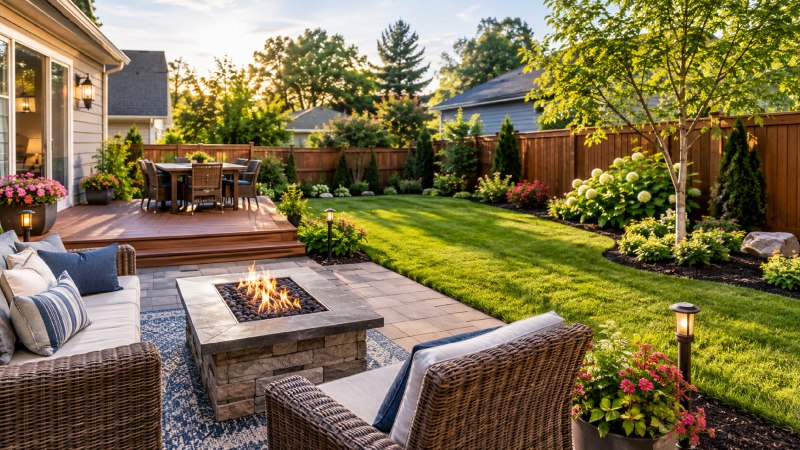
Selling a home involves more than preparing the interior, setting an asking price, and arranging showings. The backyard can also shape how buyers imagine living in the property, from hosting family gatherings to enjoying quiet evenings outdoors. However, not every outdoor feature deserves an expensive renovation before a sale. Some improvements may make the space more appealing, while others add maintenance responsibilities or consume money that sellers cannot reasonably recover. The smartest approach is to evaluate how the yard functions, identify problems that could concern buyers, and determine which changes offer practical value. By understanding buyer expectations, existing conditions, and the costs of potential projects, homeowners can prepare an outdoor space that feels inviting without making unnecessary investments.
1. Start by Understanding How Buyers Might Use the Backyard
Before purchasing materials or scheduling contractors, take time to consider how prospective buyers might experience the backyard. The most valuable outdoor spaces are not necessarily the largest or most elaborate. They are spaces that feel usable, well-maintained, and appropriate for the property’s overall character.
Different buyers imagine different activities when they look at an outdoor area. A family with young children might appreciate open lawn space, secure boundaries, and room for outdoor games. Buyers who regularly entertain guests may prioritize a patio, comfortable seating, and convenient access to the kitchen. Others may prefer a low-maintenance garden where they can relax without spending every weekend doing yard work.
These differences make it important to evaluate the backyard as a functional part of the home rather than a collection of features that should automatically be upgraded.
Consider Your Property’s Most Likely Buyers
Think about the type of buyer who might reasonably be interested in the property. The home’s size, location, layout, neighborhood, and price range can provide useful clues.
A modest home with a compact yard may appeal to buyers seeking an easy-to-maintain property. In that situation, a clean patio and attractive landscaping might be more appropriate than installing elaborate outdoor amenities. A larger property with generous outdoor space may benefit from clearly defined areas for dining, gardening, recreation, or relaxation.
Avoid making assumptions based solely on stereotypes about families, retirees, or young professionals. Instead, consider the property’s practical advantages and the ways different buyers could use them.
For example, a spacious backyard can appeal to several types of households when it offers flexibility. Leaving a portion of the lawn open may allow future owners to add a garden, play equipment, or a seating area according to their preferences.
Evaluate the Yard From a Visitor’s Perspective
Walk through the backyard as though you were seeing it for the first time. Start at the door leading outside, then follow the natural route a visitor would take.
Ask yourself several questions:
- Is the outdoor area easy to access?
- Can visitors understand how the space is intended to be used?
- Are walking paths clear and safe?
- Does the yard feel private enough for its setting?
- Are there obvious maintenance problems?
- Does the space feel larger or smaller than it actually is?
- Can visitors imagine enjoying the yard without first completing several projects?
These observations help distinguish between genuine shortcomings and personal preferences.
A seller might dislike an established garden because it requires occasional pruning, while a buyer might appreciate its mature plants and seasonal color. Conversely, a seller may enjoy a complicated outdoor arrangement that prospective buyers see as difficult to maintain.
The objective is not to redesign the backyard around every possible preference. It is to remove avoidable obstacles that prevent buyers from recognizing the space’s existing benefits.
2. Establish a Baseline Before Planning Improvements
A clear understanding of the backyard’s current condition is essential before deciding where to spend money. Sellers sometimes begin with ambitious plans without first determining whether the yard actually needs substantial work.
Start by creating an inventory of existing features. Include the lawn, planting beds, trees, fences, gates, retaining walls, drainage systems, walkways, patios, decks, lighting, sheds, irrigation equipment, and any pool or spa.
Record the condition of each feature and note any repairs that might be necessary.
A simple inventory can prevent unnecessary spending by separating items that require attention from those that are already serving their purpose.
Classify Features According to Their Condition
One practical method is to divide the backyard into three categories.
Category One: Features That Are Already Working Well
These may include healthy mature trees, a stable patio, attractive planting beds, a functional fence, or a well-maintained lawn.
Unless there is a specific problem, these features generally need cleaning and routine maintenance rather than replacement.
Category Two: Features That Need Minor Attention
Examples include overgrown shrubs, loose gate hardware, peeling exterior paint, weeds between paving stones, dirty outdoor furniture, or damaged mulch.
These issues may be relatively inexpensive to correct and can make the yard feel more cared for.
Category Three: Features That Need Significant Repair or Professional Assessment
This category may include unstable retaining walls, substantial drainage problems, damaged decking, unsafe electrical fixtures, failing pool equipment, or cracked hardscape that creates a trip hazard.
These concerns deserve closer evaluation because they can affect safety, usability, future maintenance, or a buyer’s confidence in the property’s overall condition.
Do not assume every item in the third category must be completely replaced. A qualified professional may determine that a targeted repair is sufficient. The appropriate response depends on the severity of the problem, the remaining useful life of the feature, and the cost of available solutions.
Separate Appearance Problems From Functional Problems
An unattractive feature is not necessarily defective, and an attractive feature is not necessarily functioning properly.
A patio might look dated but remain structurally sound. Replacing it simply to achieve a more fashionable appearance may be difficult to justify before a sale.
On the other hand, a beautifully landscaped yard may conceal water pooling near the foundation, unstable steps, or a malfunctioning drainage system. Those concerns deserve more attention than decorative updates.
Prioritize issues that affect safety, water management, structural condition, or ordinary use. Cosmetic work should generally come afterward.
This order is especially useful when the selling budget is limited. It prevents sellers from spending money on decorative details while leaving more consequential problems unresolved.
3. Decide Whether the Backyard Needs Improvement, Maintenance, or No Major Changes
One of the most important decisions is determining the appropriate level of preparation. A backyard does not automatically need renovation because a property is going on the market.
In many cases, maintenance is enough to make the space attractive and ready for showings. Other properties may benefit from a small number of targeted improvements. Major construction should be considered only when there is a clear reason to pursue it.
Choose Maintenance When the Existing Space Is Functional
Maintenance is usually the logical starting point when the backyard already offers useful space and its main shortcomings involve cleanliness or routine upkeep.
Tasks may include mowing the lawn, trimming shrubs, removing weeds, cleaning paving, sweeping the deck, washing outdoor furniture, and clearing leaves from pathways.
These activities help visitors focus on the property instead of its maintenance backlog.
For example, a backyard with mature trees, a basic lawn, and an older but stable patio may already have everything many buyers need. Removing dead branches, refreshing planting beds, and arranging a few chairs could make the space feel considerably more welcoming without requiring a major investment.
Maintenance can also help protect existing features. Clearing debris from drains, keeping gutters free of leaves, and maintaining irrigation equipment may prevent avoidable problems during the selling period.
Choose Targeted Improvements When They Solve a Clear Problem
A modest improvement can be worthwhile when it addresses a visible weakness that interferes with the yard’s use.
Consider a gate that does not close properly, a bare patch that makes the lawn appear neglected, or an awkward transition between the back door and the patio.
Correcting such problems may improve the overall impression without changing the backyard’s fundamental layout.
When considering a pool related project, homeowners should similarly begin with the condition and intended use of the existing installation. Speaking with Annapolis pool companies for custom pool designs may help a seller understand possible approaches to an existing pool, including maintenance, repairs, or potential design changes. The relevant question is whether the proposed work addresses a real need, not whether a more elaborate pool will automatically increase the home’s sale price.
A professional consultation can help clarify the available options, but sellers should request a clear scope of work and realistic cost estimates before committing to construction.
Leave the Backyard Alone When Additional Work Is Unlikely to Help
Sometimes, the best financial decision is to avoid making major changes.
A functional backyard may already fit the property and neighborhood. If the lawn is healthy, the patio is safe, and the landscaping is manageable, a complete redesign may add expense without producing a meaningful improvement in buyer interest.
Buyers also have their own preferences. One may want a vegetable garden, another may prefer open lawn space, and another may eventually plan a swimming pool. Spending heavily on a specialized design can limit flexibility rather than increase it.
Before approving a project, ask whether the backyard would be difficult to understand, use, or maintain if the project were not completed.
If the answer is no, consider whether the money would be better spent on necessary repairs elsewhere in the home.
4. Evaluate the Lawn, Landscaping, and Mature Trees
Landscaping is one of the most visible elements of a backyard, but its value depends on condition, scale, and maintenance requirements.
A healthy lawn and orderly planting beds can make a yard feel inviting. Mature trees may provide shade, privacy, and a sense of permanence. However, extensive gardens, dense vegetation, and elaborate planting schemes can also create work for future owners.
The goal is to present the existing landscape clearly and responsibly.
Focus on Lawn Health Rather Than Perfection
A lawn does not need to resemble a professional sports field to look attractive during a showing.
Regular mowing, appropriate watering, and attention to obvious bare patches can help establish a well-maintained appearance. Where grass struggles because of shade, compacted soil, or drainage conditions, identify the underlying cause before spending money on repeated treatments.
A small, healthy lawn may be more appealing than a larger area that requires substantial water, chemicals, or ongoing attention.
If the yard has significant erosion or persistent muddy areas, investigate the cause before simply adding grass seed or decorative materials. Water movement, soil condition, and grading can influence whether a temporary cosmetic fix will last.
Preserve Healthy Mature Trees
Established trees can contribute shade, visual interest, and a sense of privacy. They may also help distinguish a property from nearby homes with newly planted landscaping.
Avoid removing healthy trees simply because a more open design is fashionable.
At the same time, inspect trees for dead limbs, visible damage, or branches that interfere with structures and pathways. A qualified arborist can assess concerns that are beyond routine pruning.
Tree roots, fallen leaves, and overhanging branches may require maintenance, but those responsibilities should be weighed against the tree’s practical and visual benefits.
If a tree appears unstable or has substantial damage, prioritize professional assessment rather than trying to conceal the problem before listing the property.
Keep Planting Beds Simple and Orderly
A backyard with many plants can look attractive when its design is coherent. However, an assortment of neglected shrubs, tangled vines, and competing plant varieties may make the space seem smaller or harder to manage.
Remove weeds, trim plants that obstruct paths, and clear dead vegetation. Fresh mulch can improve the appearance of planting beds when applied appropriately, but it should not be piled against tree trunks or used to conceal drainage problems.
Consider reducing excessive visual clutter rather than removing healthy landscaping wholesale.
The result should feel intentional without appearing so specialized that buyers struggle to imagine their own outdoor preferences.
Account for Local Growing Conditions
Plant choices and maintenance schedules should reflect the local climate, soil, and water supply.
A seller in a region with hot summers may need to pay attention to irrigation efficiency and heat-tolerant plants. A property in a wetter climate may require more attention to drainage, moss, and plant growth.
Choose improvements that make sense for the property’s actual environment instead of copying a design that depends on very different conditions.
Before investing in new planting, consider the time required for plants to establish themselves. Mature landscaping that is already healthy may be more useful during an immediate sale than a new garden that will take years to develop.
5. Determine Whether a Patio or Deck Needs Attention
Patios and decks often help buyers understand how a backyard can be used. They create a transition between the house and the surrounding outdoor space and provide a natural place for dining, relaxing, or entertaining.
However, the presence of a patio or deck is less important than its condition, layout, and relationship to the rest of the yard.
Inspect Safety and Structural Condition First
Check walking surfaces, steps, handrails, railings, support posts, and connections to the house.
Look for loose boards, splintering wood, unstable railings, deteriorating masonry, and uneven paving that could cause trips or falls.
A surface that merely looks weathered may need cleaning or refinishing. A deck with significant rot or an unstable railing requires more serious attention.
When structural concerns arise, obtain an assessment from an appropriately qualified contractor. Do not rely on a fresh coat of stain or paint to disguise underlying deterioration.
Decide Whether Refinishing Is Sufficient
A deck or patio may benefit from straightforward cleaning rather than replacement.
Depending on the material and condition, possible maintenance tasks include pressure washing at an appropriate setting, removing moss, cleaning joints, refinishing suitable wood surfaces, or replacing isolated damaged components.
Be careful with aggressive cleaning methods that could damage wood, loosen joint materials, or harm nearby landscaping.
If the surface remains functional and safe after cleaning, a major redesign may not be necessary.
Make Outdoor Living Areas Easy to Understand
Buyers should be able to recognize how a patio or deck might be used.
A small table and a few chairs can suggest an outdoor dining area. Comfortable seating may help demonstrate a place for relaxing. A clear walkway between the house and the outdoor space can make the layout feel practical.
Avoid overcrowding the area with furniture, decorative accessories, or equipment.
If the patio is unusually large, simple arrangements can help define separate uses without building permanent walls or adding expensive structures.
If the outdoor surface is too small for the furniture currently placed on it, remove some items rather than attempting to make the area accommodate everything.
Consider Shade and Weather Exposure
Shade can influence how comfortable a backyard feels, particularly in areas with hot summers.
Existing trees, covered porches, and established awnings may already provide useful protection. Before installing a new pergola, permanent canopy, or other structure, determine whether the improvement is genuinely needed and whether it is appropriate for the property.
Large additions can involve permitting, maintenance, and installation costs. They may also affect light entering the home or change how buyers perceive the available yard space.
A portable umbrella or simple outdoor arrangement may provide enough visual definition for a showing without creating a permanent expense.
6. Evaluate Swimming Pools With Realistic Expectations
A swimming pool can be a major backyard feature, but it is not automatically an advantage for every buyer or every property.
Some households value swimming, exercise, and outdoor recreation. Others may be concerned about maintenance, insurance, operating costs, safety requirements, or the amount of usable yard space occupied by the pool.
For this reason, sellers should evaluate a pool as an existing property feature with both benefits and responsibilities.
Inspect the Pool’s Actual Condition
Begin with the pool’s condition rather than its appearance.
Review the visible condition of the pool shell or liner, coping, surrounding deck, access points, filtration equipment, pumps, and other major components. Look for obvious leaks, cracked surfaces, damaged fittings, or equipment that does not operate correctly.
A clean pool can still have underlying problems, so appearance alone is not enough to establish its condition.
If the pool has not been serviced recently or its operating history is uncertain, consider obtaining an assessment from a qualified pool professional.
Request information about necessary repairs, recommended maintenance, equipment condition, and any concerns that could affect continued use.
The resulting information can help you make a more informed decision about whether to repair, maintain, or leave the installation as it is.
Compare Repairs With Cosmetic Upgrades
A pool project may involve very different levels of work.
Routine servicing, cleaning, and correcting a minor equipment problem are not equivalent to resurfacing, replacing major equipment, redesigning the surrounding deck, or changing the pool’s shape.
Begin by separating essential maintenance from optional improvements.
If a pump is failing, restoring reliable operation may be more important than adding decorative water features. If the pool is already functioning properly but looks dated, a cosmetic upgrade should be evaluated according to its cost and likely relevance to buyers.
Avoid assuming that a larger pool, elaborate lighting, premium finishes, or additional water features will produce a corresponding increase in the selling price.
The financial outcome depends on the property, local buyer demand, comparable homes, project costs, and other factors that cannot be determined from the pool design alone.
Consider Whether the Pool Fits the Property
The pool should be evaluated in relation to the size of the backyard and the home’s overall position in the market.
A pool that occupies nearly all the outdoor space may appeal to some buyers while discouraging others who want room for children, pets, gardening, or additional seating.
A smaller pool with practical surrounding space may be easier for different households to imagine using.
Also consider how easily the pool can be accessed from the house, whether the surrounding area is safe, and whether necessary equipment is maintained appropriately.
If the installation is functional and in reasonable condition, routine servicing and clear presentation may be sufficient preparation for a sale.
Review Pool Safety and Documentation
Safety concerns deserve priority because they affect how the pool can be used and maintained.
Check gates, barriers, latches, visible equipment, and other applicable safety provisions. Requirements vary by location, so confirm local rules rather than assuming that a setup acceptable in one area will satisfy regulations elsewhere.
Gather available information about installation, servicing, equipment replacements, warranties, and relevant permits or inspections.
A well-organized record can help prospective buyers understand the installation and identify questions that may need professional answers.
If repairs or modifications are necessary, determine the appropriate scope before making cosmetic changes.
Decide Whether Major Pool Work Makes Financial Sense
Before approving substantial construction, calculate the total likely expense.
Include design, labor, materials, permits where required, landscaping restoration, equipment changes, and the possibility of unexpected work.
Then compare that figure with the time remaining before the intended sale, the property’s price range, and the availability of comparable homes.
A major pool renovation may take longer than expected. Construction can also disrupt the yard and create unfinished areas during the selling period.
Where the pool already functions adequately, a professional inspection, routine maintenance, and straightforward presentation may be a more sensible approach.
If the pool has serious defects, obtain estimates for both targeted repairs and broader renovation where appropriate. Compare the costs and practical outcomes before deciding.
The best choice is the one supported by the property’s condition and your selling priorities, not an assumption that any pool investment must increase the final sale price.
7. Review Fences, Gates, and Privacy Features
Fences and gates influence how a backyard feels, how easily people move through it, and how the property relates to neighboring homes.
They may also serve practical purposes involving pets, privacy, access, and applicable safety requirements.
Because these features can be prominent during showings, visible damage is worth addressing.
Check Stability and Everyday Function
Walk along the fence line and inspect posts, panels, fasteners, gates, and hinges.
Look for leaning sections, loose boards, rusted hardware, gaps, or gates that stick when opened and closed.
A small hardware repair may restore normal operation. A substantially damaged or unstable fence may need professional attention.
Do not automatically replace an entire fence because its finish has faded. Determine whether the underlying structure remains sound and whether cleaning, painting, staining, or isolated repairs would be adequate.
Evaluate Privacy Without Creating Unnecessary Expense
Privacy can be useful in a backyard, particularly when neighboring homes are close together.
Existing fencing, established hedges, mature trees, and the arrangement of outdoor seating may already provide sufficient screening.
Before installing a new fence or planting a row of large shrubs, consider the cost, time required, maintenance demands, and any local restrictions.
New plants may not provide meaningful privacy by the time the home sells. A temporary furniture arrangement or maintenance of existing vegetation may be enough to demonstrate how the yard can be used.
Check Gate Access and Pool Barriers Separately
A garden gate and a pool safety barrier may serve different purposes. Do not assume that an ordinary fence or functioning latch satisfies all applicable pool safety requirements.
Where a pool is present, inspect relevant barriers and gates against local requirements and obtain professional advice when necessary.
Safety-related defects should be addressed according to their importance, rather than being treated as ordinary cosmetic imperfections.
8. Assess Outdoor Lighting and Electrical Features
Outdoor lighting can make paths, steps, entrances, and seating areas easier to use. It may also help buyers understand how the yard could function after sunset.
However, a large lighting installation is rarely necessary simply to prepare an otherwise functional backyard for sale.
Prioritize Existing Lighting That Works
Check whether installed lights operate correctly and whether bulbs need replacing.
Clean fixtures, remove visible cobwebs, and check for loose or damaged covers.
Look at the lighting around steps, changes in elevation, gates, and other areas where visibility matters.
If a fixture has exposed wiring, damage, or another potential electrical problem, consult a qualified electrician instead of attempting an improvised repair.
Avoid Overlighting the Backyard
Too many decorative lights can create visual clutter and may draw attention away from the property’s natural features.
A simple arrangement that makes the entrance, walkway, patio, or deck easy to understand may be sufficient.
If the backyard already has functional lighting, focus on maintenance rather than adding more fixtures.
Consider How the Yard Looks During Different Showings
Some properties are shown during daylight, while others may be visited later in the day.
Check the yard in both conditions if practical. Daylight reveals the landscaping, surfaces, and overall layout. Evening conditions can reveal whether important paths and entrances are adequately illuminated.
The purpose is to establish a comfortable, understandable space, not to stage an elaborate outdoor display.
9. Decide Whether an Outdoor Kitchen or Entertainment Area Is Necessary
Outdoor kitchens, built-in grills, fireplaces, and entertainment areas can make a backyard distinctive. They can also introduce substantial costs and maintenance obligations.
Whether these features are worthwhile depends on their current condition, the property’s existing appeal, and the needs of likely buyers.
Maintain Existing Features Before Adding New Ones
If an outdoor kitchen already exists, inspect the condition of counters, cabinets, storage areas, appliances, and surrounding surfaces.
Clean grease and debris from suitable surfaces, organize storage, and address visible damage.
Any gas, electrical, or plumbing concerns should be assessed by qualified professionals.
A functional outdoor kitchen does not necessarily need upgraded appliances or premium finishes before a sale. Its existing usefulness may be enough to communicate its value.
Consider the Costs of New Construction
Building an outdoor kitchen or permanent entertainment area can involve multiple trades, utility connections, permits, and weather-resistant materials.
The total expense may exceed the cost of the visible appliances and counters.
Before starting such a project, ask whether the existing backyard would otherwise be difficult to use. If the yard already provides a comfortable patio and dining area, additional construction may be unnecessary.
Buyers who want an outdoor kitchen can make their own decisions about the design, appliances, and layout.
Leaving sufficient open space may therefore be more appealing than installing a highly specific arrangement shortly before selling.
Present Flexible Entertainment Space
An uncluttered patio can suggest several possible uses without committing buyers to one permanent design.
A table and chairs may demonstrate outdoor dining. A simple seating arrangement can suggest a place for conversation. Clear space near the house may allow buyers to imagine adding their own grill or furniture.
The key is to communicate possibilities without trying to predict every buyer’s preferred lifestyle.
10. Think Carefully About Sheds, Storage, and Recreational Equipment
Backyard storage can be useful, particularly when buyers need space for gardening tools, bicycles, outdoor furniture, or maintenance equipment.
However, storage structures should be evaluated according to their condition, usefulness, and effect on the overall layout.
Inspect Existing Sheds and Storage Structures
Look for roof damage, deteriorating materials, unstable doors, signs of water intrusion, and other obvious maintenance concerns.
Remove unnecessary items and organize the remaining contents so visitors can understand the available storage space.
If a shed is structurally sound but visually dated, cleaning and minor maintenance may be enough.
If it is unstable, damaged, or potentially unsafe, seek appropriate advice before deciding whether to repair or remove it.
Avoid Removing Useful Storage Without a Reason
A seller may consider a shed unattractive because it does not match the main house. A buyer may see it as a convenient place to store tools and equipment.
Evaluate whether the structure occupies valuable yard space, blocks access, or requires substantial maintenance before deciding to remove it.
The same principle applies to existing play structures, garden beds, and recreational equipment. Their usefulness depends on the condition of the item and the flexibility of the surrounding space.
Reduce Clutter Around the Yard
Broken planters, unused building materials, old toys, damaged furniture, and miscellaneous equipment can make the yard feel smaller than it is.
Removing unnecessary objects helps reveal the actual dimensions and layout of the space.
This is often more practical than purchasing new decorative features.
A clean backyard allows buyers to focus on its potential rather than the seller’s unfinished projects or stored belongings.
11. Evaluate Drainage, Grading, and Water Management
Drainage is one of the most important backyard considerations because problems with water movement can affect landscaping, outdoor surfaces, and potentially the home itself.
Although drainage improvements may be less visually exciting than a new patio, they can be more consequential when a genuine problem exists.
Look for Signs of Persistent Water Problems
After rainfall, observe whether water collects in low areas, remains around the house, or flows toward structures rather than away from them.
Other possible warning signs include recurring muddy patches, eroded soil, damaged planting beds, and waterlogged areas that remain wet for extended periods.
A single wet patch does not necessarily indicate a serious defect. Soil conditions, recent weather, and the location of irrigation equipment can all influence moisture.
Repeated or substantial problems deserve further investigation.
Understand the Cause Before Paying for Repairs
Water problems may result from grading, clogged drainage routes, soil conditions, damaged gutters, irrigation leaks, or other factors.
The appropriate solution depends on the cause.
Adding decorative gravel, new topsoil, or plants may improve appearance without resolving the underlying problem. In some circumstances, inappropriate grading work can make drainage worse.
Where water regularly accumulates near the foundation or causes substantial erosion, seek advice from a qualified drainage or building professional.
Do Not Conceal Evidence of a Known Problem
If the property has a known drainage issue, cosmetic preparation should not substitute for an appropriate assessment.
Sellers should understand applicable disclosure requirements and provide accurate information as required by local law.
Records of repairs, assessments, and maintenance may help buyers understand what has been addressed and what remains.
Addressing drainage concerns before optional upgrades also helps protect the money spent on patios, landscaping, and other outdoor improvements.
12. Consider How Much Maintenance the Backyard Requires
Buyers may evaluate an outdoor space partly by considering the time, effort, and expense required to maintain it.
A backyard with extensive planting beds, a pool, an irrigation system, and several outdoor structures may provide many amenities but also require regular attention.
A simpler space may be attractive to buyers who want to enjoy the outdoors without taking on extensive maintenance responsibilities.
Review the Ongoing Work Required by Each Feature
For every major backyard feature, consider the recurring tasks it creates.
A swimming pool may require water treatment, cleaning, equipment servicing, and seasonal care depending on its type and location.
A large lawn may require mowing, watering, and periodic treatment. Extensive gardens may require pruning, weeding, and irrigation. Timber decking may need periodic inspection and refinishing.
These responsibilities do not automatically make a feature undesirable. They simply form part of the decision about whether an improvement is appropriate.
If a feature is already installed, maintaining it properly may be the best way to prepare it for sale.
Favor Practical Simplicity Over Elaborate Design
When two options offer similar usability, the simpler one may require less money and time.
For example, repairing a straightforward paved seating area may be more sensible than replacing it with an elaborate outdoor entertainment space.
Similarly, removing dead plants and organizing existing beds may be sufficient without redesigning the entire landscape.
A practical backyard does not need to be minimal or plain. It should simply feel manageable and coherent.
Provide Useful Maintenance Information
Where available, organize records for pool servicing, irrigation maintenance, landscaping work, equipment repairs, and other recurring responsibilities.
A brief description of the care a feature requires can help buyers understand what ownership involves.
Avoid making unsupported claims about operating costs or maintenance needs. Actual expenses vary with climate, equipment, usage, utility prices, and the condition of the installation.
Reliable information is more useful than presenting an elaborate feature as effortless to maintain.
13. Compare Improvement Costs With the Likely Selling Benefit
The financial side of backyard preparation deserves careful consideration. A project may make the property more attractive without increasing the sale price by an amount equal to its cost.
Sellers should distinguish between improvements that help a home show well, repairs that address existing defects, and optional upgrades intended to create additional appeal.
These are different decisions and should be evaluated separately.
Prepare a Realistic Project Budget
For each potential improvement, estimate the full cost rather than focusing only on the price of materials.
Include labor, delivery, permits where required, disposal, landscaping restoration, maintenance, and a reasonable allowance for unexpected expenses.
If a contractor identifies possible additional work, request clarification about what is included and what could generate extra charges.
Compare more than one quote for substantial projects when practical, ensuring that the proposed scopes of work are similar.
A lower quote is not necessarily the best choice if it excludes important repairs or uses unsuitable materials.
Distinguish Necessary Repairs From Optional Upgrades
Necessary repairs may address safety, water intrusion, structural concerns, or a feature that cannot function as intended.
Optional upgrades may include new decorative lighting, premium patio finishes, elaborate landscaping, or additional pool features.
A useful decision-making order is to address significant safety and functional concerns first, complete affordable maintenance tasks second, and consider optional improvements only afterward.
This approach reduces the risk of spending heavily on appearance while leaving more important issues unresolved.
Consider the Property’s Price Range and Comparable Homes
Review similar properties in the local market and consider the condition and outdoor features buyers can already obtain at comparable prices.
A substantial outdoor installation may be more relevant in one segment of the market than another, but there is no universal rule that a particular feature guarantees a premium.
If possible, consult a knowledgeable local real estate professional about how buyers in the relevant market respond to similar properties.
Ask specific questions about whether the backyard appears competitive, whether obvious defects are likely to become concerns, and which preparations are most worthwhile.
Treat these discussions as informed guidance rather than guarantees of a particular financial return.
Account for the Time Remaining Before Listing
A project that makes sense six months before a sale may be impractical when showings are expected in two weeks.
Consider contractor availability, material delivery, weather conditions, permit requirements, and the possibility of delays.
If a major project is unlikely to be completed before listing, an unfinished backyard may create more concern than the existing condition.
In that situation, prioritize safety, basic maintenance, and clear presentation unless the unfinished work must be addressed for another reason.
Estimate the Opportunity Cost of Spending
Money used for a backyard renovation cannot be used for other selling expenses or retained as part of the proceeds.
Compare potential outdoor projects with other priorities, such as correcting a leaking fixture, repairing damaged flooring, improving exterior cleanliness, or addressing a known maintenance issue.
The best allocation depends on the home’s overall condition and the seller’s circumstances.
Avoid assuming that an expensive project is inherently more valuable than a smaller, well-chosen repair.
14. Prepare the Backyard for Photographs and Showings
Once major decisions have been made, presentation becomes important. Buyers often form an initial impression from listing photographs before they ever visit the property.
A backyard that is clean, orderly, and easy to understand can communicate its strengths without requiring new construction.
Clean the Entire Outdoor Area
Remove leaves, weeds, fallen branches, and unnecessary objects.
Sweep walkways and outdoor surfaces. Clean furniture, remove visible cobwebs, and empty bins or storage containers that are not needed for the showing.
Pay attention to corners, fence lines, the area behind sheds, and spaces around pool equipment where debris may accumulate.
Small details matter because a visitor may interpret widespread neglect as a sign that other maintenance tasks have also been postponed.
Arrange Furniture to Show the Layout
Use outdoor furniture to demonstrate scale and function.
A modest dining arrangement can indicate where people might eat. A few chairs can help define a quiet seating area. However, furniture should not obstruct paths or make the yard appear cramped.
Remove damaged or unnecessary items rather than purchasing an entirely new collection.
The purpose of staging is to help buyers understand the space, not to create an unrealistic impression of a luxury outdoor lifestyle.
Improve the View From Inside the House
The backyard is often visible from a kitchen, living room, dining area, or bedroom.
Stand inside the main rooms and look through the windows or doors.
Notice whether clutter, dead plants, damaged furniture, or an untidy patio dominates the view.
Where practical, clear the immediate sightline and arrange existing features so the outdoor area looks inviting from indoors.
This may improve the perceived connection between indoor and outdoor living without requiring structural changes.
Check Access During a Showing
Make sure gates open properly, paths are unobstructed, and outdoor doors function as intended.
If a pool or another feature requires special safety procedures, ensure they remain in place during showings.
Secure tools, chemicals, maintenance equipment, and other potentially hazardous materials appropriately.
A tidy, accessible space helps visitors explore the yard comfortably while reducing avoidable safety concerns.
15. Avoid Backyard Projects That Are Difficult to Justify
Some projects are tempting because they promise a dramatic visual change. Before committing, consider whether the proposed improvement solves a genuine problem or merely reflects the seller’s personal taste.
Avoid Installing Features Solely Because They Are Trendy
Outdoor kitchens, elaborate fire features, decorative water installations, and highly customized landscaping may appeal to some buyers but not others.
Trends also change, and a design that feels fashionable today may not suit the preferences of future owners.
If a feature requires substantial investment and ongoing care, the decision should be supported by a clear practical reason.
Do Not Overpersonalize the Space
Highly specific themes, unusual permanent structures, or extensive decorative arrangements can make a yard feel less flexible.
This does not mean every backyard must be neutral or characterless.
Instead, preserve existing elements that contribute to the property’s identity while avoiding unnecessary additions that make it difficult for buyers to imagine their own use of the space.
Do Not Replace Functional Materials Without a Clear Benefit
An older patio, established fence, or modest garden may be entirely suitable for the property.
Replacing functional materials simply because newer alternatives are available can add expense without addressing a meaningful problem.
Consider whether cleaning, maintenance, or localized repair would achieve the intended result.
Avoid Starting Several Major Projects at Once
Multiple simultaneous projects can strain budgets, complicate contractor schedules, and leave the backyard in an unfinished state.
If major work is genuinely needed, determine the correct order of operations and establish realistic completion dates.
For example, drainage work may need to precede landscaping, and structural repairs may need to precede refinishing.
Coordinating the work helps avoid paying to restore surfaces or planting beds that later construction could disturb.
16. Use a Simple Decision Framework Before Spending Money
A structured approach can help sellers compare backyard projects objectively rather than making decisions based on emotion or appearance alone.
For every proposed project, answer five questions.
Question One: Is There a Real Problem?
Identify whether the feature is unsafe, defective, difficult to use, or simply not to your personal taste.
A genuine problem deserves more attention than a cosmetic preference.
Question Two: Will the Work Improve Everyday Usability?
Consider whether the project will make the yard easier to access, maintain, or understand during a showing.
If its main benefit is purely decorative, evaluate it more cautiously.
Question Three: Is the Cost Proportionate to the Benefit?
Obtain a realistic estimate and consider alternative approaches.
A smaller repair may provide most of the practical benefit of a larger renovation.
Question Four: Can the Work Be Completed Properly Before Listing?
Account for contractors, materials, weather, inspections, and potential delays.
Do not underestimate the risk of having an unfinished project when photographs or showings begin.
Question Five: Would a Buyer Reasonably Value This Feature?
Consider the property’s market position, local buyer expectations, maintenance requirements, and the availability of comparable homes.
If the benefit is uncertain, avoid treating the project as a guaranteed investment.
Apply the Framework to Common Backyard Decisions
| Backyard feature | Practical first step | When larger work may be justified |
| Lawn and planting beds | Mow, weed, prune, and remove dead plants | Persistent erosion, extensive plant failure, or significant drainage concerns |
| Patio or deck | Clean surfaces and inspect stability | Structural damage, unsafe components, or extensive deterioration |
| Swimming pool | Service the system and assess its condition | Significant defects or necessary repairs identified by a qualified professional |
| Fence and gates | Repair hardware and correct minor damage | Instability, major deterioration, or safety-related deficiencies |
| Outdoor lighting | Replace suitable bulbs and clean fixtures | Damaged wiring, unsafe installations, or inadequate essential lighting |
| Outdoor kitchen | Clean and test existing components appropriately | Defective equipment or a genuine need to address unsafe connections |
| Shed and storage | Organize contents and inspect the structure | Structural problems, substantial damage, or an unusable layout |
| Drainage | Observe water movement and clear suitable drainage routes | Recurring pooling, erosion, or water near the foundation |
This framework does not produce a guaranteed return on investment. Its purpose is to make decisions more consistent and reduce the likelihood of spending money without a clear reason.
17. Create a Prioritized Backyard Preparation Plan
After reviewing the existing features, group the work into a manageable sequence.
First Priority: Safety and Significant Defects
Address hazards, unstable structures, substantial drainage concerns, damaged electrical installations, and other serious problems.
Obtain professional assessments when the issue requires specialist knowledge.
Second Priority: Essential Maintenance
Clean the yard, maintain the lawn, trim appropriate vegetation, service existing equipment, and remove clutter.
These tasks often help the backyard feel more cared for without substantial expense.
Third Priority: Targeted Cosmetic Improvements
Consider minor refinishing, replacing damaged hardware, refreshing planting beds, or arranging existing furniture.
Proceed only when the improvement solves a visible problem or meaningfully strengthens the presentation.
Fourth Priority: Optional Major Upgrades
Evaluate new patios, elaborate landscaping, outdoor kitchens, and substantial pool modifications only after reviewing the more important priorities.
Consider the total budget, likely completion date, local buyer expectations, and uncertainty surrounding any possible increase in sale price.
This order helps keep the preparation process focused on what the property actually needs.
Keep the Plan Flexible
New information may change the priorities.
A contractor’s assessment may reveal that a seemingly minor problem requires more substantial attention. Alternatively, a professional may determine that an expensive replacement is unnecessary.
Be willing to adjust the plan when reliable information supports a different decision.
The aim is not to complete every possible improvement. It is to prepare the property in a way that supports a clear, honest, and practical presentation.
Frequently Asked Questions
1. Which backyard improvements should sellers make before listing a home?
Sellers should generally begin with safety, necessary repairs, drainage concerns, and routine maintenance. Cleaning the yard, trimming overgrown plants, maintaining existing outdoor surfaces, and removing clutter can improve presentation without major construction. Larger improvements should be considered individually, based on the property’s condition, local buyer expectations, budget, and time available before listing.
2. Does installing or renovating a swimming pool increase a home’s selling price?
Not necessarily. A pool may appeal to buyers who value swimming and outdoor recreation, while others may be concerned about maintenance, safety, insurance, or operating expenses. The financial outcome depends on local market conditions, the property’s price range, the pool’s condition, and the cost of the work. Sellers should compare realistic estimates with local market guidance rather than assume a renovation will increase the sale price by an equivalent amount.
3. Is it better to renovate the backyard or leave it as it is?
The right decision depends on the existing condition and usability of the space. A functional backyard may need only cleaning, routine maintenance, and minor repairs. A yard with significant safety concerns, structural damage, or drainage problems may require professional attention. Major cosmetic renovations are best considered when there is a clear practical reason and the expected benefit justifies the expense.
4. How can sellers make a small backyard look more appealing without spending much money?
Start by removing clutter, trimming plants, cleaning walkways, and arranging existing furniture to demonstrate how the space can be used. Keep pathways clear and avoid overcrowding the yard with decorative items. Maintaining healthy plants and making the outdoor area easy to understand can help buyers appreciate the available space without requiring expensive construction or extensive landscaping.
Conclusion
Deciding which backyard features matter before selling a home requires a realistic assessment of the property’s condition, the way the outdoor space functions, and the expectations of likely buyers. The most effective preparation does not necessarily involve installing new amenities or undertaking a complete landscape renovation. In many cases, routine maintenance, careful cleaning, and a few well-chosen repairs can make an existing backyard more inviting. Features such as pools, decks, patios, fences, and outdoor kitchens should be evaluated according to their condition, safety, usefulness, and ongoing maintenance requirements. Before investing in substantial work, sellers should compare realistic project costs with the property’s market position and the time available before listing. By prioritizing necessary repairs, preserving useful features, and avoiding upgrades without a clear purpose, homeowners can present an attractive outdoor space while keeping spending under control.