
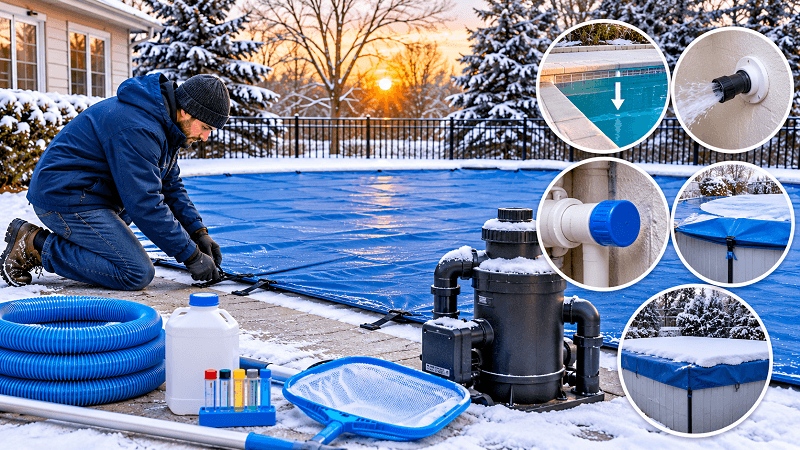
Minnesota summers feel short, and pool season feels even shorter. Once the leaves start turning, it’s time to think about closing your pool, because the months ahead bring long stretches of freezing temperatures, heavy snow, and ice that can do serious damage to an unprepared pool.
A proper winterization protects your plumbing, equipment, and pool surface until spring. This guide walks you through what every Minnesota pool owner should know before the first hard freeze.
Why Minnesota Winters Are So Hard on Pools
Water expands by about nine percent when it freezes, and that expansion puts enormous pressure on anything holding it. Any water left in pipes, pumps, filters, or heaters can crack them wide open during a cold snap. In a state where temperatures regularly drop below zero, even a small amount of trapped water can cause expensive damage.
The pool itself faces risks, too. Ice sheets can push against tile lines, skimmers, and coping, while repeated freeze and thaw cycles stress concrete, plaster, and vinyl liners. Snow piling up on a cover adds weight, and a poorly secured cover can sag, tear, or collapse into the water before spring arrives.
Many homeowners handle closing on their own, but some jobs call for professional help, especially when a pool shows cracks, leaks, or worn equipment. Working with experienced Minneapolis pool contractors can help ensure everything runs smoothly from start to finish.
Skipping winterization rarely saves money in the long run. Repairing cracked plumbing, replacing a frozen pump, or patching a damaged surface in spring can cost far more than a careful closing in the fall. A few hours of work now can save you a frustrating and costly start to next summer.
Time Your Pool Closing Right
Timing matters more than most pool owners realize. Close too early, and warm days in late September can trigger algae growth under the cover. Wait too long, and an early freeze can catch your plumbing full of water. Most Minnesota pool owners aim to close sometime between mid-September and mid-October.
Water temperature offers the best guide. Once your pool water drops and stays below about 65 degrees, algae grows much more slowly, which makes it a good time to start closing. Keep an eye on the extended forecast as well, and plan to finish the job before nighttime temperatures start dipping well below freezing.
If you plan to hire help, book early. Pool service companies across the Twin Cities fill their fall schedules quickly, and the most popular dates near the end of September and early October often disappear weeks in advance. Reserving a spot in August gives you more flexibility and less stress.
Gather your supplies before closing day so you don’t have to stop halfway through. You’ll usually need a water testing kit, balancing chemicals, shock, a winter algaecide, skimmer and return plugs, pool-safe antifreeze, and a cover in good shape. Checking your cover for holes or worn straps early gives you time to replace it.
Clean and Balance the Water First
A clean pool closes much better than a dirty one. Skim leaves and debris off the surface, brush the walls and floor, and vacuum anything that settles at the bottom. Organic material left in the water over winter feeds algae and can stain your pool surface, which leaves you with a bigger cleanup job in spring.
Next, test and balance the water chemistry. Most pool professionals recommend a pH between 7.2 and 7.6, total alkalinity around 80 to 120 parts per million, and calcium hardness in the range your pool surface calls for. Balanced water protects plaster, liners, and metal parts from corrosion and scaling during the months the pool sits idle.
Once the water is balanced, shock the pool to kill bacteria and break down contaminants. Run the pump for several hours afterward so the chlorine circulates evenly, and wait until chlorine levels drop back to a normal range before adding winter algaecide. High chlorine can weaken algaecide and damage some covers, so patience pays off.
Many pool owners also add a winter enzyme or stain-and-scale product for extra protection. These treatments help break down oils and keep minerals from settling on surfaces while the water sits under the cover. You see, a few extra dollars in chemicals now can make spring opening far quicker and easier.
Protect Plumbing and Equipment From Freezing
Lower the water level before you deal with the plumbing. For most inground pools with a mesh safety cover, that means dropping the water several inches below the skimmer opening, while pools with solid covers often need less. Never drain an inground pool completely, since groundwater pressure can lift or crack an empty shell.
Blowing out the lines comes next, and it’s the most important step for a Minnesota closing. A shop vac or air compressor pushes water out of the skimmer and return lines, and then you seal each line with a winter plug. Adding pool antifreeze to the lines gives you an extra layer of protection against any leftover water.
Use only antifreeze made for pools, which is non-toxic, and never substitute automotive antifreeze. After that, drain the pump, filter, heater, and chlorinator by removing their drain plugs. Store the plugs somewhere safe, like inside the pump basket, so you can find them easily when it’s time to open the pool in spring.
Whenever possible, bring smaller equipment indoors for the winter. Pumps, automatic cleaners, ladders, handrails, and diving boards last longer in a dry garage or basement than outside in the snow. Turn off power to all pool equipment at the breaker before you disconnect anything, and clean filter cartridges or backwash sand filters before storage.
Cover the Pool and Keep an Eye on It All Winter
The right cover makes a huge difference in Minnesota. Mesh safety covers anchor into the deck, hold heavy snow loads, and let melting snow drain through, which makes them a popular choice for inground pools. Solid covers block sunlight and debris more effectively, but they need regular attention to keep water from pooling on top.
Above-ground pool owners should place an air pillow in the center of the pool before covering it. The pillow absorbs pressure from expanding ice and helps snow and water slide off the cover instead of collecting in the middle. Secure the cover tightly with a cable and winch so strong winds can’t lift it.
Check on your pool every few weeks throughout the winter. Use a cover pump to remove standing water from solid covers, and gently clear heavy snow buildup with a soft push broom. Look for loose anchors, torn straps, or a sagging cover, and fix small problems before they turn into big ones.
Safety matters during the off-season, too. A covered pool can look like solid ground under a layer of snow, which creates a real hazard for kids and pets. Keep gates locked, make sure your fence stays in good repair, and remind family members to stay off the cover no matter how sturdy it looks.
Wrap Up
Winterizing your pool takes some time and effort, but it protects one of your biggest backyard investments from Minnesota’s harsh cold. Clean water, dry plumbing, stored equipment, and a secure cover go a long way toward a smooth spring opening.
Start planning early, follow each step carefully, and call in a professional if anything looks off. Your pool will be ready to enjoy as soon as summer returns.