
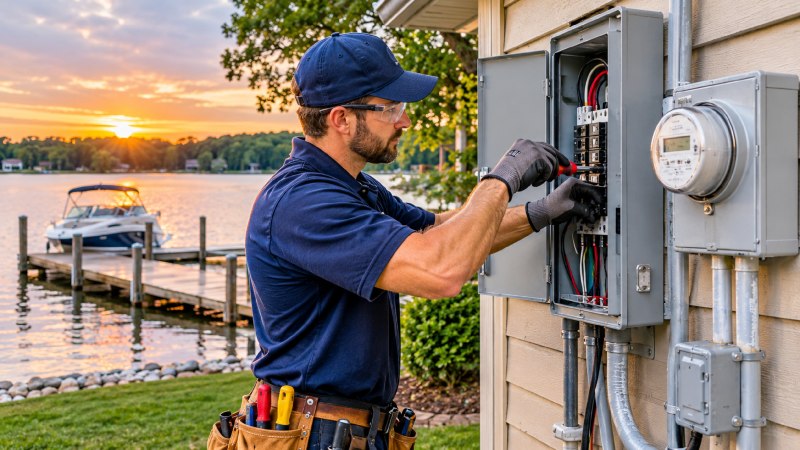
Living near a lake or river comes with plenty of perks, from morning views to easy water access. That same water also puts extra pressure on your home’s electrical system. Moisture, flooding, storms, and docks with live power all create risks that inland homes rarely face.
The right upgrades keep your family safe and your property protected year after year. These are the improvements every waterfront homeowner should consider.
Why Waterfront Homes Need Extra Electrical Protection
Water and electricity have always been a dangerous pair, and homes near lakes and rivers face water from every direction. Higher humidity, morning fog, splashing waves, and seasonal flooding all expose wiring and equipment to moisture. Over time, that moisture corrodes connections, weakens insulation, and raises the risk of shocks and short circuits.
Because the stakes run higher near the water, every upgrade on this list deserves a licensed professional. Homeowners can visit lakesideelectricmn.com to connect with Lakeside Electric, a Minnesota team that handles the inspections, panel work, and outdoor wiring waterfront properties need to stay safe from spring thaw through the deep freeze.
Waterfront properties also carry more outdoor electrical equipment than most homes. Docks, boat lifts, pumps, landscape lighting, and outbuildings all need power, often far from the main panel. Each long wiring run and outdoor connection adds another spot where water can get in, so the whole system needs a careful plan.
Many lake cabins and riverside homes are older, too, and builders put some up long before modern electrical codes existed. Additions, DIY projects, and decades of seasonal use can leave outdated wiring and overloaded circuits behind. A professional inspection gives you a clear picture of what needs attention before small issues turn into dangerous ones.
Add GFCI and AFCI Protection Throughout the Home
Ground fault circuit interrupters, or GFCIs, rank among the most important safety devices for any waterfront home. They monitor electricity flow and cut power within a fraction of a second if current starts leaking through water or a person. That quick response can prevent serious shocks and save lives.
Building codes already require GFCI protection in bathrooms, kitchens, garages, basements, and outdoor areas, but many older homes never received those upgrades. Waterfront homeowners should go further by protecting every outdoor outlet, boat lift circuit, boathouse, and outbuilding. Test each GFCI monthly by pressing the test button and confirming that power shuts off.
Arc fault circuit interrupters, or AFCIs, handle a different danger. They detect dangerous electrical arcs caused by damaged wires, loose connections, or corroded terminals, all of which show up more often in humid lakeside environments. When an AFCI senses arcing, it shuts off the circuit before the heat can start a fire inside your walls.
Many modern panels support dual-function breakers that combine GFCI and AFCI protection in a single device. An electrician can install them in your existing panel or recommend a panel upgrade if your current one can’t accommodate them. Layering both types of protection covers the two biggest electrical risks waterfront homes face.
Make Dock and Boat Lift Wiring Safe
Docks and boat lifts bring some of the highest electrical risks on any waterfront property. Faulty wiring can leak current into the surrounding water, creating an invisible hazard called electric shock drowning. Swimmers near an energized dock can lose muscle control without warning, and this risk runs especially high in freshwater lakes and rivers.
Have a licensed electrician install any dock wiring and understand marine electrical codes. Ground fault protection on the circuit feeding the dock can shut off power the moment current starts leaking, and marine-rated wire, enclosures, and fittings stand up to constant moisture far better than standard materials. Shortcuts here simply aren’t worth the risk.
Install a clearly labeled disconnect switch on shore so anyone can cut power to the dock quickly in an emergency. Keep extension cords off the dock entirely, and never run household cords to boat lifts or lights. Post a no swimming sign near docks with electrical service, and keep kids and pets away from the water around them.
Schedule a dock electrical inspection at least once a year, ideally before you put the boat in each spring. Ice, waves, and freeze-and-thaw cycles can shift docks and stress wiring over the winter. An electrician can test for stray current, check connections, and replace any corroded or damaged components before swimming season begins.
Prepare for Flooding and Storms
Flooding poses a constant threat for homes near rivers and low-lying lakeshores. If water reaches your electrical panel, outlets, or appliances, it can destroy equipment and create serious shock hazards. In flood-prone areas, an electrician can relocate your main panel and raise outlets, switches, and wiring above the expected flood level.
Sump pumps work hard in waterfront basements, especially during spring melt and heavy rain. Give your sump pump a dedicated circuit so other appliances can’t overload its breaker, and add a battery backup that keeps it running during power outages. A water alarm that alerts your phone adds another layer of protection when you’re away.
Waterfront homes often sit in open, exposed spots, and lightning strikes nearby can send damaging surges through your home’s wiring. A whole-home surge protector installed at the main panel shields appliances, electronics, and HVAC systems from those spikes. For homes on especially high or isolated lots, a professionally installed lightning protection system adds even more security.
Storms also knock out power more often in rural lake areas, where outages can last longer. A standby generator with an automatic transfer switch keeps your sump pump, furnace, refrigerator, and well pump running until the utility restores service. Have a licensed electrician handle the installation to ensure the generator connects safely.
Upgrade Outdoor Outlets, Lighting, and Wiring
Standard outlets don’t belong outside a waterfront home. Weather-resistant receptacles, marked WR, use materials that withstand moisture, UV exposure, and temperature swings. Pair them with in-use covers, which shield the outlet from rain and lake spray while cords stay connected. Codes require both for new outdoor outlets, so older homes deserve the same upgrade.
Lighting fixtures near the water need extra durability. Look for fixtures with wet location ratings and corrosion-resistant finishes like marine-grade stainless steel, brass, or powder-coated aluminum. Cheap fixtures rust quickly in humid lakeside air, and corrosion inside a fixture can lead to flickering lights, tripped breakers, and eventual failure of the whole unit.
Underground wiring to docks, outbuildings, and landscape lighting should run through proper conduit at code-required depths. Shallow or unprotected cables can be damaged by frost heave, digging, or shifting shoreline soil. Low-voltage LED landscape lighting offers a safer option for pathways and gardens near the water, since it runs on a fraction of standard household voltage.
Smart technology makes waterfront homes easier to manage, especially seasonal cabins. Smart panels, leak sensors, and remote monitoring systems let you track power use, spot problems, and shut off circuits from your phone. For lake properties that sit empty for weeks at a time, that kind of oversight can prevent costly surprises.
Wrap Up
Waterfront living brings unique electrical challenges, from moisture and flooding to energized docks and powerful storms. GFCI and AFCI protection, safe dock wiring, flood and surge defenses, and weather-ready outdoor equipment all work together to keep your home safe.
Start with a professional inspection, tackle the biggest risks first, and keep up with yearly checks. That way, you can enjoy everything the water offers without worrying about what’s happening behind your walls.