
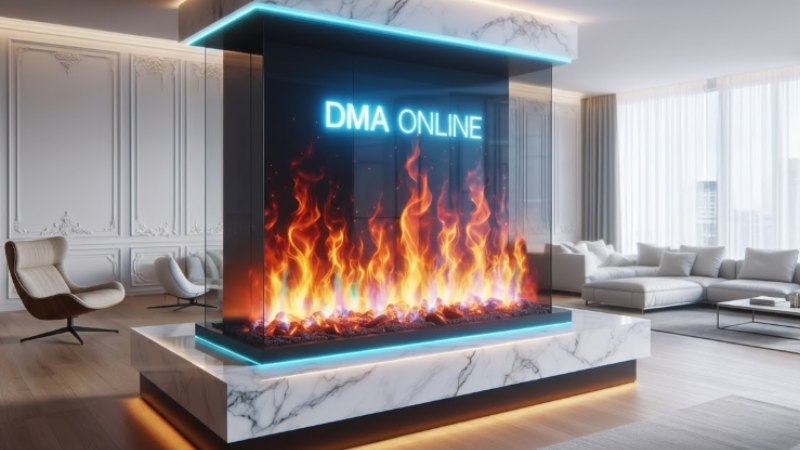
There is something special about a fireplace. It draws people together, creates a natural focal point and can transform an ordinary living room into a space that feels warm, inviting and thoughtfully designed. Traditionally, achieving that atmosphere meant dealing with firewood, ash, a chimney and the practical demands of a conventional fireplace. Today, Australian homeowners have another option: the modern electric fireplace.
Electric fireplaces have evolved into much more than simple imitation fires. Depending on the model, they can feature panoramic flame displays, adjustable colours, illuminated log sets, contemporary glass fronts, remote controls, programmable timers and supplementary heating. Some are designed to sit on a wall, others integrate into a purpose-built feature wall, while mantel suites combine a decorative surround with a fireplace insert for a more traditional look.
That variety is exciting, but it can also make choosing the right product more complicated than expected. Two fireplaces might look similar in photographs yet differ significantly in heating output, dimensions, installation requirements, controls and running costs. A stunning wide-screen fireplace might suit a spacious renovated living room but be impractical for a compact apartment. A decorative model may deliver the visual effect you want without providing the heating function you assumed it had.
The best purchase starts with understanding how you intend to use the fireplace, where it will go and what matters most to your household. Whether you are planning a complete renovation, updating a dated living room or searching for a striking feature for a new home, this guide explains how to make a confident, informed choice.
At a Glance: What Should You Look for in an Electric Fireplace?
Before comparing individual models, consider these seven fundamentals:
- Purpose: Decide whether you primarily want a visual feature, supplementary heating or both.
- Style: Compare wall-mounted, recessed, built-in, freestanding, mantel and water-vapour designs.
- Dimensions: Measure the room, available wall space and any proposed installation opening.
- Heating: Check the exact model’s rated output, controls and intended room suitability.
- Operating costs: Estimate electricity consumption using the appliance’s power rating and your tariff.
- Installation: Confirm electrical access, clearances, ventilation and any construction requirements before work begins.
- After-sales considerations: Review the warranty, included accessories, delivery arrangements and available customer support.
These details provide a practical foundation for comparing products. Once they are clear, the decorative features and finishing touches become much easier to evaluate.
1. Why Electric Fireplaces Suit Contemporary Australian Homes
Australian homes come in many forms, from compact city apartments and suburban townhouses to spacious family homes, coastal retreats and newly built properties. A fireplace needs to suit the way each space is designed and used.
One appeal of an electric fireplace is the flexibility of its visual design. A wall-mounted unit can introduce a contemporary focal point without requiring a traditional chimney. A recessed model can be integrated into a carefully planned feature wall. A mantel suite can bring a classic fireplace appearance into a room where constructing a conventional hearth would be impractical.
Electric fireplaces can also suit households that want the appearance of a fire without burning wood or gas. Conventional electric flame-effect models create their display using lighting and other visual elements. They do not require a wood-burning fire or a combustion flue, although individual models may have specific installation and ventilation requirements.
A design feature for more than winter
A fireplace does not have to be used only when the weather turns cold. If the chosen model allows the flame display to operate independently of its heater, the visual effect can remain part of the room’s atmosphere during warmer months.
This is particularly appealing in open-plan living areas, where a fireplace can anchor the seating arrangement or complement an entertainment wall. During winter, the heating function may provide additional comfort. At other times, the flame display can contribute to the room’s ambience without necessarily producing heat.
Consider the climate and your home, not just the season
Australia’s climate varies considerably. A home in Melbourne, Canberra or the NSW Southern Highlands may have different winter heating requirements from a property in coastal Queensland or northern Western Australia. Even within the same city, insulation, orientation, window size, ceiling height and exposure to draughts can make a substantial difference.
That is why choosing a fireplace solely because it is advertised as suitable for a particular room size can be misleading. Use the manufacturer’s stated room suitability as a guide, then consider the conditions in your own home.
2. Decide Whether You Want Atmosphere, Heating or Both
This is arguably the most important decision in the entire buying process. It determines which specifications deserve the most attention and helps prevent paying for features you will rarely use.
When visual impact is the priority
If you want a striking architectural feature, concentrate on the flame display, viewing width, ember-bed design, glass presentation and the way the unit integrates with your interior. A long, horizontal fireplace may suit a contemporary media wall, while a traditional mantel suite can complement classic furniture and softer decorative finishes.
For a design-led installation, consider how the fireplace will look in daylight as well as after dark. Reflections, overhead lighting and nearby windows can affect the visibility of the display. Product photographs are useful, but it is worth examining several images and checking the actual dimensions before making a decision.
When supplementary heating matters
If you want warmth as well as ambience, investigate the heating specifications first. Check the rated output, available heat settings, thermostat controls and any stated room-suitability guidance.
A fireplace heater may help make an occupied living area more comfortable, but it should not automatically be treated as a replacement for an appropriately sized whole-home heating system. Large open-plan spaces, high ceilings, extensive glazing and poor insulation can increase the amount of heat required.
When you want the best of both
Many households want a fireplace that looks impressive and provides useful supplementary warmth. In this case, look for a model that balances flame presentation with suitable heating performance and practical controls.
Separate flame and heat settings can be especially useful, if offered. They allow you to enjoy the visual effect without necessarily running the heating element every time the fireplace is switched on.
Buying tip: write down your three most important requirements before browsing. For example, you might prioritise a wide flame display, a recessed installation and adjustable heating. This makes comparing models more objective and reduces the temptation to choose based on appearance alone.
3. Electric Fireplace Styles Explained
The installation format influences the overall appearance, preparation required and flexibility of the finished result. The following options each have different strengths.
Wall-mounted electric fireplaces
Wall-mounted fireplaces are often chosen for their clean, contemporary appearance. Their horizontal profile can work well in living rooms, apartments, bedrooms where permitted by the product instructions, and entertainment spaces.
Depending on the model, a wall-mounted unit may be attached to a suitable wall without the same cavity construction required by a recessed installation. That does not mean every wall is suitable or that installation is automatically simple. The wall must support the appliance, the electrical connection must be appropriate, and the specified clearances must be maintained.
Think carefully about what will sit around the fireplace. Curtains, timber shelves, decorative panels and televisions may affect the available space and must be positioned in accordance with the relevant manufacturers’ instructions.
A wall-mounted design can be particularly appealing when you want a strong visual feature without committing to major building work, provided the selected model and wall are suitable.
Recessed electric fireplaces
Recessed models are designed to sit within a prepared opening, depending on the manufacturer’s approved installation method. When planned correctly, they can create a streamlined finish in which the fireplace appears integrated into the wall rather than attached to it.
This format is popular for contemporary renovations, custom entertainment walls and interiors where a low-profile finish is desirable. It can also help create a deliberate architectural line across a room.
The main consideration is preparation. Before constructing the opening, confirm the exact model’s cut-out dimensions, installation depth, electrical access, required clearances and ventilation provisions. Do not assume that two fireplaces with similar external dimensions can use the same cavity.
It is also important to confirm whether the model is approved for full recessing, partial recessing or another arrangement. A product advertised as recessed or wall-mounted may support more than one configuration, but the instructions for the particular model must determine how it is installed.
Built-in electric fireplace inserts
A built-in insert can form part of a custom surround, cabinetry arrangement or architectural feature. This approach offers considerable design flexibility because the surrounding materials and proportions can be coordinated with the room.
It is particularly suitable for homeowners who are renovating or building and can plan the fireplace into the design from an early stage. The fireplace may become the centrepiece of a living room, a feature in a formal lounge or part of a carefully coordinated media wall.
Before ordering, check whether the insert is designed for the intended surround and whether the proposed enclosure complies with its installation requirements. Heat clearances, access panels and airflow provisions must not be improvised or covered for the sake of appearance.
Freestanding electric fireplaces
Freestanding designs can offer flexibility where permanent wall construction is not practical. Depending on the product, the unit may be positioned in a suitable area without building a dedicated feature wall.
Freestanding does not mean that the appliance can be placed anywhere. It still needs a stable position, an appropriate electrical connection and sufficient clearance from furniture, curtains and other combustible materials.
Consider how the power cable will reach the outlet and whether the cord could create a trip hazard. If you are renting or living in an apartment, check any applicable property rules before purchasing a model that may require mounting or permanent changes.
Electric fireplaces with mantel suites
A mantel suite combines a fireplace insert with a decorative surround, bringing the appearance of a traditional fireplace into a contemporary home. Designs can range from crisp white finishes to darker timber looks, textured surrounds and marble-effect details.
The advantage is that the surround and insert are designed to work together as a visual package. This can simplify the design decision compared with coordinating a separate insert and custom surround.
However, a mantel suite still needs to suit the room’s proportions. Check its overall width, height and depth, not just the insert dimensions. A substantial surround may look impressive in a spacious living room but occupy too much visual or physical space in a compact apartment.
Three-sided and panoramic electric fireplaces
Some models offer wider or multi-sided viewing arrangements. Depending on the design, these can create a more expansive display and allow the flame effect to be seen from different positions in the room.
They may suit open-plan interiors or architectural features where the fireplace is intended to be a major focal point. However, the installation options vary by model. Confirm whether the unit is approved for the intended configuration rather than assuming a three-sided design can be installed in any opening.
Water-vapour fireplaces
Water-vapour fireplaces use a different visual approach from conventional illuminated flame-effect models. They create a flame-like display using water vapour and lighting, with the precise effect and features depending on the product.
These models deserve separate consideration because their operating requirements may include a water reservoir, refilling and additional cleaning. Check the maintenance schedule, water requirements, controls and installation instructions before purchasing.
Also verify whether the particular model provides actual space heating. A convincing flame-like visual display does not, by itself, mean that a fireplace has the same heating capability as a conventional electric heater.
To compare different formats, finishes and configurations, explore the electric fireplaces collection at Electric Flames and review the specifications of individual models.
4. How to Choose the Right Fireplace Size
Size is not simply a question of choosing the largest unit that fits. A fireplace should feel proportionate to the wall, furniture and overall room design.
Measure before browsing
Measure the available wall width and height, along with the space occupied by windows, doors, cabinetry and nearby furniture. For a recessed installation, also record the intended cavity dimensions, taking the manufacturer’s technical drawing as the definitive reference.
Keep the installation depth in mind. A fireplace may fit the wall’s width but still be unsuitable if there is insufficient depth or if the required clearances cannot be achieved.
Think about the fireplace as part of a composition
Imagine a long living-room wall with a television above the fireplace, cabinetry to either side and a sofa opposite. The fireplace needs to look balanced within that entire composition, not just attractive in isolation.
A very wide unit can provide dramatic visual impact, but the surrounding design must support its scale. A smaller unit may work better when the room has limited wall space or when a more understated feature is desired.
One practical technique is to mark the proposed external dimensions on the wall using removable painter’s tape. View the outline from the main seating position, nearby walkways and the entrance to the room. This can reveal proportion issues before money is spent on the appliance or building work.
Understand external dimensions versus viewing area
Advertised measurements can refer to the entire appliance, the insert, the glass opening or the nominal screen size. These measurements are not necessarily interchangeable.
Check the product’s dimension drawing to understand the actual visible flame area and the amount of surrounding frame or trim. If the appearance of a wide, uninterrupted display is important, the viewing dimensions may matter more to you than the external width alone.
Plan around a television carefully
A fireplace beneath a television can create an elegant entertainment wall, but the two appliances have separate installation requirements. Follow the fireplace manufacturer’s heat-clearance instructions and the television manufacturer’s temperature and mounting guidance.
Do not rely on a generic online diagram or assume that a particular gap is suitable for every combination. The correct arrangement depends on the specific products, their installation configuration and the surrounding materials.
5. Heating Output: What the Numbers Actually Mean
A product’s heating specification is important, but the number alone does not tell you exactly how comfortable your room will feel. Heat demand depends on more than floor area.
Understand watts and kilowatts
Electrical heating output is commonly discussed in watts or kilowatts. One kilowatt equals 1,000 watts. A model rated at 1,500 watts is therefore described as a 1.5 kW appliance.
This rating helps you understand the appliance’s power consumption when operating at the relevant setting. It should not be confused with a guarantee that the heater will bring a particular room to a chosen temperature within a fixed time.
Consider insulation and heat loss
Two rooms of the same floor area can have very different heating needs. A well-insulated room with good window seals may retain warmth more effectively than a draughty room with high ceilings, extensive glazing and little insulation.
Other factors include external wall exposure, ceiling height, room layout, outdoor temperature and whether the space opens directly into other areas. A heater’s advertised coverage should therefore be treated as product guidance rather than a universal promise.
Understand the difference between supplementary and whole-home heating
An electric fireplace heater can be useful when you want to improve comfort in a particular occupied room. It may be less appropriate as the sole source of heating for a large, open-plan house.
If your main goal is whole-home energy efficiency, compare the fireplace with other available heating systems, including reverse-cycle air conditioning. The best option depends on the home’s design, local climate, energy tariff and the way the household uses each space.
Features that can improve everyday usability
Depending on the model, useful controls may include:
- Adjustable heat settings: Allow the user to select from the available heating levels.
- Thermostat control: Helps regulate operation around a selected temperature, subject to the model’s design and the room conditions.
- Timer: Can help limit operation to planned periods.
- Remote control: Makes it easier to adjust settings from the seating area.
- Independent flame controls: May allow the visual display to operate without the heater.
- App or smart controls: Available on some models, but should be confirmed for the exact product.
Choose features that solve real problems for your household. A simple control system may be perfectly adequate if you mainly want ambience, while programmable settings may be more useful when the fireplace will be used regularly for supplementary heating.
6. Electric Fireplace Running Costs in Australia
Running costs are one of the most common questions buyers have, and the most reliable answer is to calculate an estimate for the exact appliance rather than rely on a broad claim about electric fireplaces in general.
The calculation is straightforward:
Energy consumed in kWh = power in kW × operating time in hours.
Estimated electricity cost = energy consumed in kWh × electricity tariff per kWh.
A worked example
Suppose a hypothetical electric fireplace heater has a rated heating power of 1.5 kW. You use the heating function for three hours, and your electricity tariff is $0.30 per kWh.
- Rated power: 1.5 kW
- Usage period: 3 hours
- Energy at continuous rated power: 1.5 × 3 = 4.5 kWh
- Illustrative cost: 4.5 × $0.30 = $1.35
Under those assumptions, the estimated cost is $1.35 for the three-hour period. This is an illustration, not a quoted cost for every electric fireplace or Australian electricity plan.
Why your actual cost may differ
Your electricity rate may be higher or lower than the example. Some heaters cycle on and off under thermostat control, so they may not draw their full rated power continuously. Flame-only operation may also consume a different amount of electricity from operation with the heater enabled.
For a useful estimate, use the appliance’s technical specifications and your current tariff. If the model has several operating modes, check the power consumption for the mode you expect to use most frequently.
Compare the cost of comfort, not just the appliance
A fireplace that is used for a short period in the living room serves a different purpose from a heater intended to maintain warmth throughout a large house. Comparing products without considering how they will actually be used can lead to misleading conclusions.
Consider whether you want to warm one occupied room, supplement existing heating or create ambience without heat. That context makes it easier to assess whether the running cost is reasonable for your household.
For broader advice on managing home energy use, Australia’s YourHome guide to heating and cooling discusses the relationship between heating systems, insulation, heat loss and comfort.
7. Installation Planning: Avoid Expensive Surprises
A fireplace feature is much easier to plan when the technical requirements are considered before the decorative work begins. This is particularly important for recessed installations, custom cabinetry, stone surrounds and media walls.
Obtain the exact installation manual
Before finalising the design, obtain the instructions for the precise model you intend to purchase. Confirm the opening dimensions, installation depth, electrical connection, required clearances, ventilation provisions and maintenance access.
Do not build a cavity based solely on the product’s external width and height. The required opening may differ, and the manufacturer may specify additional space for airflow or access.
Coordinate with your builder or cabinetmaker
If you are renovating, provide the installer or cabinetmaker with the product’s technical drawings before the wall or cabinetry is constructed. This allows the design to account for the appliance’s requirements instead of trying to adapt the fireplace to an already completed structure.
It is also worth considering cable access, nearby power points, the position of any television and the route for future maintenance. A visually neat installation should still allow the appliance to be accessed and serviced as required.
Plug-in versus hard-wired models
Some fireplaces are designed to connect to an appropriate power outlet, while other models or installation configurations may require hard-wired electrical work. The exact requirements depend on the product and its approved installation method.
In Australia, electrical wiring work must be carried out by an appropriately licensed electrician. If your project involves hard-wiring, moving a power point or changing the electrical installation, arrange professional advice before construction begins.
The NSW Government provides guidance on electrical safety requirements and consumer rights, including the need for licensed electrical work and safe use of heating appliances. Always check the requirements that apply in your own state or territory.
Respect clearances and ventilation requirements
Do not assume that a fireplace can be fully enclosed because it appears to have a slim profile or a flush front. Some appliances require specific clearances or airflow arrangements that must remain unobstructed.
Similarly, there is no single clearance distance that can safely be applied to every electric fireplace. Follow the instructions for the exact model, including any requirements relating to curtains, furniture, televisions, shelves and combustible building materials.
Check the proposed location before ordering
If the fireplace is intended for an apartment, rental property or strata-managed building, confirm any relevant restrictions before purchasing. Permanent changes to walls, electrical installations or shared building elements may require permission or additional planning.
Early checks can prevent a situation in which a product has been purchased but cannot be installed in the intended location.
8. Electric Fireplace Safety and Product Compliance
Good design and practical performance should go hand in hand with safe use. Before buying, check the appliance’s electrical safety information, installation instructions and suitability for the intended environment.
Check applicable Australian safety information
When purchasing electrical equipment, Australian consumers should check the relevant approval information and ensure that the appliance is suitable for use in Australia. The Queensland Electrical Safety Office explains the importance of the Regulatory Compliance Mark and the risks associated with non-compliant electrical products.
Its guidance is available at Buying and using electrical equipment. Check the actual product documentation rather than assuming that every appliance sold online has the same approvals.
Keep combustible materials away from the heater
Curtains, blankets, clothing, furniture and other combustible items must be kept away from the heater in accordance with the manufacturer’s instructions. Do not place objects on the appliance or obstruct its vents.
Take particular care when arranging a fireplace within a feature wall. Decorative materials should not interfere with the appliance’s airflow or violate its clearance requirements.
Think about children and pets
Households with young children or pets should consider the location of the appliance, the accessibility of controls and the area around the heater. Make sure the installation does not encourage children or pets to sit, stand or play too close to a heated surface.
Use any child-safety features supplied with the product as instructed, and supervise children around operating heating appliances.
Maintain the appliance according to its manual
Cleaning requirements vary between models. Follow the manufacturer’s directions for cleaning the glass, removing dust, maintaining vents and carrying out any permitted user maintenance. Water-vapour models may require additional attention to their reservoirs and other components.
Do not dismantle electrical components or attempt repairs beyond the manufacturer’s permitted user maintenance. If the appliance, plug or cable appears damaged, stop using it and seek appropriate professional advice.
9. Flame Effects, Colours and the Details That Make a Difference
The flame display is often the feature that attracts a buyer in the first place. It is worth looking beyond the main product image, however, because the details can influence how convincing and versatile the finished effect feels.
Flame colour and brightness
Some fireplaces offer a traditional amber appearance, while others provide multiple colours or adjustable brightness. A warm display may complement timber, natural stone and softer furnishings. A more contemporary effect can suit minimalist interiors and darker finishes.
Consider whether you want a realistic-looking traditional fire, a modern decorative display or the flexibility to change the appearance to suit different occasions. The available settings vary by product, so confirm which options are included rather than assuming that every fireplace offers the same controls.
Logs, crystals and ember beds
The material displayed beneath the flame effect can significantly change the overall appearance. Some models feature decorative logs, while others use crystals, stones or alternative ember-bed arrangements.
Look carefully at what is included with the particular model. Accessories shown in promotional photographs may not always be standard inclusions, and optional decorative media can affect the total purchase cost.
Glass, reflections and viewing angles
The glass design, frame and viewing angle influence how the flame effect is presented. A wide viewing area can suit a panoramic feature wall, while a more compact format may be better for a smaller room.
Consider where people will sit and walk. In an open-plan home, a fireplace may be viewed from the dining area, kitchen and lounge. If the model offers a multi-sided configuration, verify that it is designed and approved for the intended installation.
10. Match the Fireplace to Your Interior Design
A successful fireplace installation should feel connected to the room rather than like an appliance added as an afterthought. That means thinking about colour, proportion, texture, furniture and lighting together.
Contemporary and minimalist homes
Clean lines, understated finishes and a broad viewing area can work well in modern interiors. A recessed fireplace may suit a simple feature wall, while a wall-mounted model can create a focal point without requiring a complete custom installation.
For a cohesive look, coordinate the fireplace with cabinetry, wall colours and other architectural features. Avoid making the feature wall so busy that the flame display becomes visually lost.
Warm and natural interiors
Timber tones, textured walls, comfortable seating and warm lighting can complement a traditional-looking flame display or a mantel suite. Rather than matching every finish exactly, aim for a balanced combination of complementary textures and colours.
A fireplace can provide a visual anchor around which other elements are arranged, helping the room feel more intentional and inviting.
Small living rooms and apartments
In compact spaces, the best design often comes from careful proportion rather than maximum size. A well-chosen wall-mounted fireplace or appropriately sized mantel suite can introduce a focal point without overwhelming the room.
Pay attention to the amount of wall space available, furniture clearance, cable routing and any installation restrictions that apply to the property. A smaller, well-integrated unit can be more effective than a larger model that dominates the room.
Open-plan living and entertainment areas
Open-plan spaces can benefit from a fireplace that helps visually define the lounge area. A wide unit may work well as part of a media wall, while a carefully positioned fireplace can give a seating area a stronger sense of identity.
However, large spaces can also be more demanding to heat. Assess the heater’s specifications separately from its design suitability, particularly if the room connects to a kitchen, dining area or high-ceilinged space.
11. What to Compare When Shopping for an Electric Fireplace
When several models look appealing, use a consistent checklist rather than comparing only price and appearance.
- Dimensions: Confirm the overall width, height, depth and visible flame area.
- Installation format: Check whether the model is wall-mounted, recessed, built-in, freestanding or part of a mantel suite.
- Heating output: Review the rated output and any manufacturer guidance about room suitability.
- Flame controls: Confirm available colours, brightness settings and whether the display can operate independently of heat.
- Convenience features: Check whether a thermostat, timer, remote control or app control is included.
- Installation requirements: Review the electrical connection, cut-out dimensions, ventilation and clearances.
- Included accessories: Confirm whether decorative logs, crystals, stands or other accessories are included.
- Warranty: Read the actual warranty terms, including applicable exclusions and service arrangements.
- Delivery: Confirm the delivery arrangements, estimated timeframe and any requirements for receiving a large or heavy item.
- Support: Check how to contact the retailer if you need clarification before purchase or assistance afterwards.
If a specification is important to your decision, ask for confirmation before ordering. It is much better to clarify a dimension, installation method or included accessory in advance than to discover that an assumption was incorrect after delivery.
12. Common Electric Fireplace Buying Mistakes to Avoid
Even a beautiful fireplace can disappoint if the practical details are overlooked. These are some of the most avoidable mistakes.
Choosing by photograph alone
Product images show the design, but they cannot tell you everything about dimensions, heating performance, installation requirements or included accessories. Read the specifications and examine the technical drawings before deciding.
Assuming all fireplaces provide heat
Some electric fireplace products are decorative and do not provide a heating function. Others combine a flame display with a heater. Check the exact listing if supplementary warmth is one of your main reasons for buying.
Confusing overall width with viewing width
The external dimensions can be substantially different from the visible flame area. If a wide display is important, compare the manufacturer’s drawings rather than relying on the nominal size in the product title.
Building the feature wall too early
Constructing a cavity before selecting the exact fireplace can create expensive problems. Different models may require different openings, depths, ventilation and access arrangements. Confirm the product first and plan the wall around its instructions.
Assuming a fireplace will heat an entire home
A heater suitable for supplementary warmth in one room may not be adequate for a large open-plan space. Consider room conditions and the appliance’s rated output before relying on it as a primary heating source.
Ignoring running costs
Do not assume that a particular model will be inexpensive to operate simply because it is electric. Calculate an estimate using the appliance’s power rating, expected hours of use and your electricity tariff.
Overlooking delivery and support
Large fireplaces and mantel suites may require more planning than a small household appliance. Check the retailer’s delivery arrangements, the space needed to receive the item and how you can obtain assistance if you have questions.
13. Why Australian Buyers Should Consider Electric Flames
Choosing an electric fireplace is about more than selecting a product from a photograph. Buyers need to compare styles, dimensions, heating functions, installation requirements and finishes to find an option that genuinely suits their home.
Electric Flames is an Australian-based online retailer offering an extensive range of electric fireplaces alongside indoor and outdoor furniture. Its fireplace collection includes wall-mounted, recessed, built-in, freestanding and mantel designs, providing Australian shoppers with a variety of approaches to creating a fireplace feature.
For homeowners who are still exploring their options, having a broad selection in one place makes it easier to compare different looks and configurations. Whether you prefer a streamlined contemporary fireplace, a traditional mantel suite or a more distinctive visual display, the range provides a starting point for comparing designs and identifying products worth investigating further.
Electric Flames also presents Australia-wide delivery and customer support as part of its online retail offering. These details can be useful when comparing retailers, particularly if you need to clarify product dimensions, installation suitability or delivery arrangements before making a purchase.
The business’s website features customer testimonials and describes its focus on customer service. As with any online purchase, buyers should review the information available for the specific product, read the applicable policies and contact the retailer if they need clarification about an important detail.
For an informed shopping experience, start with your room measurements and must-have features, then compare the individual product specifications. This approach helps narrow the selection to models that suit your requirements rather than choosing on appearance alone.
14. Frequently Asked Questions About Electric Fireplaces
Do electric fireplaces produce real flames?
Conventional electric fireplaces create a flame effect using lighting and other visual elements rather than burning wood or gas. Water-vapour models use a different technology to produce a flame-like display. Check the exact product description to understand how the effect is created.
Can an electric fireplace heat a living room?
Some models provide supplementary heating suitable for a living room. Actual comfort depends on the heater’s rated output, the room’s dimensions, insulation, ceiling height, glazing and other conditions. Review the manufacturer’s room-suitability guidance before buying.
Can I use the flame effect without heat?
Some models allow the flame display to operate independently of the heating function, while others offer different controls. Check the individual product’s features if you want to enjoy the visual effect throughout the year.
How much does it cost to run an electric fireplace in Australia?
Running costs depend on the appliance’s power consumption, the operating mode, the number of hours used and your electricity tariff. Multiply the power rating in kilowatts by the operating hours to estimate energy consumption, then multiply the resulting kilowatt-hours by your electricity rate.
Do electric fireplaces require a chimney?
Conventional electric fireplaces do not burn fuel and generally do not need a combustion chimney or flue. Recessed and built-in models can still have specific cavity, ventilation, electrical and clearance requirements that must be followed.
Can I install an electric fireplace under a television?
Some installations may allow a fireplace beneath a television, but the arrangement must comply with both products’ requirements. Check the fireplace’s heat clearances and the television manufacturer’s temperature and mounting instructions before finalising the layout.
Is a wall-mounted or recessed electric fireplace better?
Neither is universally better. Wall-mounted designs may suit homeowners who prefer a surface-mounted feature, while recessed models can create a more integrated finish. The right option depends on the room, wall construction, budget, installation requirements and desired appearance.
Are electric fireplaces suitable for apartments?
Some models may be suitable for apartments, but the choice depends on the available space, electrical connection, installation requirements and any applicable building, strata or tenancy restrictions. Check these details before purchasing.
What should I check before buying an electric fireplace online?
Confirm the exact dimensions, heating specifications, flame settings, electrical requirements, installation clearances, included accessories, warranty and delivery arrangements. If anything is unclear, ask the retailer for confirmation before ordering.
Do electric fireplaces need maintenance?
All appliances should be maintained according to their manufacturer’s instructions. Depending on the model, this may include cleaning the glass, removing dust, keeping vents clear and checking the condition of the power cable. Water-vapour models may have additional reservoir and cleaning requirements.
Can an electric fireplace be part of a renovation?
Yes, many designs can be incorporated into a planned feature wall, cabinetry arrangement or mantel installation. The important step is to select the exact model and review its installation manual before construction begins, so the opening, electrical access and clearances can be planned correctly.
Make a Confident Choice for Your Home
The right electric fireplace can bring together visual appeal, modern convenience and supplementary warmth in a way that complements the character of your home. But the best choice is not necessarily the largest unit, the most expensive design or the model with the longest feature list.
Start with your priorities. Decide whether you want a dramatic visual centrepiece, practical supplementary heating or a combination of the two. Measure the room, compare the available installation styles, calculate realistic operating costs and check the manufacturer’s technical information before committing to a particular model.
If you are renovating, involve the relevant tradespeople early and make sure the installation is planned around the exact appliance. If you are purchasing online, clarify any questions about dimensions, included accessories, delivery and warranty before placing your order.
For Australian homeowners ready to compare different designs, the electric fireplaces collection at Electric Flames is a useful place to explore available styles and configurations. Review the individual product details, identify the models that fit your requirements and choose a fireplace that complements both your home and the way you live.
A little planning before you buy can make all the difference between choosing a fireplace that simply looks good online and finding one that feels right in your home for years to come.