
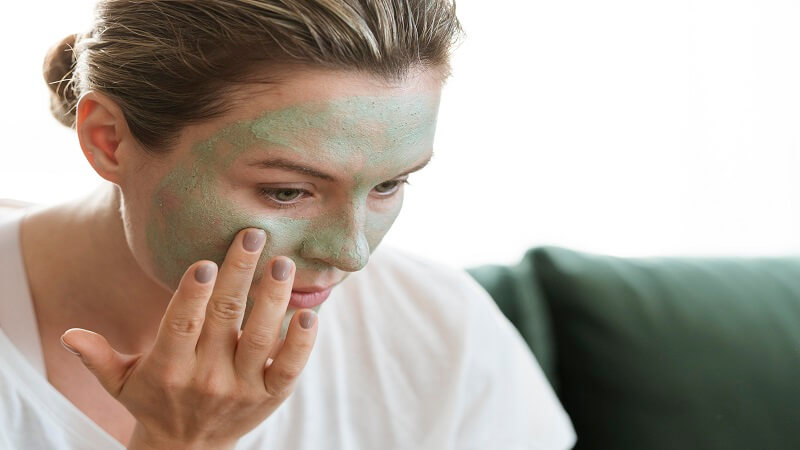
We have all seen a thick layer of clay covering a celebrity’s face with cucumber slices over their eyes. Clay masks have become almost synonymous with at-home skincare thanks to their popularity on social media.
But there’s more to these masks than their picture-perfect appearance. Clay has been used in skincare for years and is especially popular among people with oily or acne-prone skin. Today you can find clay masks in all kinds of formulas, colors, and textures.
So do clay mask for oily acne prone skin actually work? And what can they really do for your skin? Let’s take a closer look.
What Do Clay Masks Do?
Clay is naturally absorbent. When you apply a clay mask, it works like a magnet for the oil, dirt, and debris sitting inside your pores. As it dries and you rinse it off, it takes that buildup with it.
For oily and acne-prone skin, that process matters. Excess oil is one of the main triggers for clogged pores and breakouts. Removing it regularly helps keep skin clearer between washes.
Different clays do slightly different things. Kaolin clay is on the gentler side; it absorbs oil without being overly stripping. Glacial clay goes a little deeper, drawing out impurities that sit further in the pore. Many effective masks combine both for a more balanced result.
Benefits of Clay Masks for Oily, Acne-Prone Skin
Right, let’s get onto the many benefits of clay masks.
They Help Control Excess Oil
One of the most frustrating things about oily skin is the constant shine. Your skin overproduces sebum; it mixes with dead skin cells, and your pores end up clogged.
Clay soaks up that excess oil effectively. Unlike a face wash that cleans the surface and rinses right off, a mask sits on your skin for 10–15 minutes and absorbs more deeply. Your skin feels less greasy and more balanced after.
It’s not a permanent fix, but it helps reset things a couple of times a week.
They Help Unclog Pores
You can’t get rid of your pores, but you can certainly reduce their appearance. If your pores are looking a little too large for your liking, a clay mask can help minimize them.
Clay masks help draw out that buildup before it causes problems. Over time, regular use can also help reduce the appearance of pore size. It won’t shrink pores permanently, but cleaner pores tend to look smaller.
They Target Blackheads and Whiteheads
Both come from clogged pores. Blackheads are open at the surface and oxidize, turning them dark. Whiteheads are sealed off underneath.
Clay works well on both by drawing out the buildup that causes them. If blackheads are something you deal with regularly, adding a mask to your weekly routine is a solid preventative step.
They Soothe While They Clear
Not every acne product is easy on your skin. Some are effective but leave you red, tight, or irritated, especially if you’re dealing with active breakouts.
Good clay masks often include soothing ingredients alongside the actives. Things like bisabolol and antioxidant-rich plant extracts help take the edge off while the clay does its work. That balance makes them easier to tolerate, even for skin that runs a little sensitive.
What to Look for in a Clay Mask
When shopping for a clay mask for oily or acne-prone skin, here’s what matters:
- Clay types: Kaolin and glacial clay are solid picks for oil absorption and pore clearing.
- Active ingredient: Sulfur works well in mask form; it penetrates pores and helps treat acne.
- Soothing extras: Antioxidants and calming extracts help offset dryness or irritation.
- Clean formula: Skip fragrances, parabens, and phthalates if your skin is sensitive or breakout-prone.
The PanOxyl Pore Refining Acne Mask checks all of these. It combines Glacial and Kaolin Clays with 5% Colloidal Sulfur to clean pores and treat acne, plus antioxidants like Maltobionic Acid, Bisabolol, and Ginger Root Extract to smooth and soothe. It’s also free from fragrances, parabens, and phthalates, and trusted by dermatologists.
How to Use a Clay Mask
It’s simple; just don’t rush the rinse.
- Apply an even layer over clean, damp skin, avoiding the eye area.
- Leave it on for 10–15 minutes.
- Rinse thoroughly with warm water and pat dry.
- Use up to twice a week, or as directed by your doctor.
One thing to keep in mind: more isn’t better. Using a clay mask too often can strip your skin and trigger even more oil production. Twice a week is plenty for most people.
The Bottom Line
A clay mask for oily acne prone skin can be a simple addition to your weekly skincare routine. It can help absorb excess oil, clear out pores, and reduce the buildup that can contribute to blackheads.
Using one once or twice a week can give your skin some extra care without making your routine complicated.