
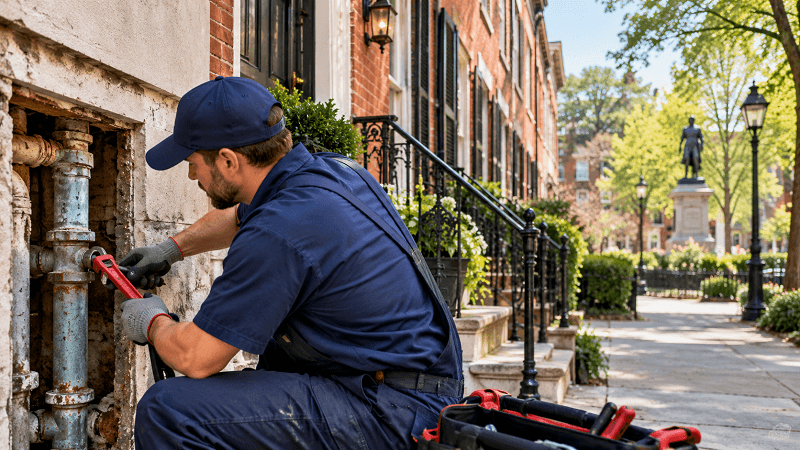
Decades-old rowhouses in Rittenhouse Square often hide a critical vulnerability: original lead water pipes running behind brick walls and beneath historic hardwood floors. Residents may notice subtle drops in water pressure, discolored tap water, or unexplained moisture along basement walls—signs that lead pipes are deteriorating out of sight. Because the city’s oldest homes were built before safer copper or modern plastic piping became standard, hidden lead piping remains a persistent risk for leaks, water contamination, and costly structural damage. Experienced plumbers familiar with these historic Philadelphia rowhouses have developed targeted approaches to identify, repair, and prevent lead pipe leaks without disrupting daily life or damaging irreplaceable architecture. For owners of aging Rittenhouse Square homes, understanding these specialized methods is key to keeping water safe and properties intact.
Historical Plumbing Challenges in Historic Philadelphia Rowhouses
Original lead piping installed in Philadelphia’s 19th-century rowhouses presents unique challenges for both property owners and tradespeople. These pipes were once the norm, prized for their flexibility and ease of installation before the health hazards of lead became widely recognized. Over time, exposure to varying water chemistry and shifting building structures can cause joints to loosen and pipe walls to thin, increasing the risk of leaks and contamination.
Unlike homes built after the mid-20th century, many Rittenhouse Square rowhouses still have large sections of plumbing that are inaccessible without removing walls or floors. This makes traditional full-pipe replacement expensive and potentially damaging to historic features. Plumbers must navigate these constraints, often working with original blueprints or visual inspections to locate vulnerable lead segments. Recognizing the importance of lead pipe safety precautions is a critical first step in addressing these aging systems.
Local regulations now require homeowners to address known lead hazards, making it important for plumbers to balance preservation of historic elements with modern safety standards. Ensuring compliance with Philadelphia’s plumbing codes helps protect both residents’ health and the home’s historical value.
Detecting Hidden Corrosion in Aging Rittenhouse Square Lead Pipes
Pinpointing corrosion in lead water pipes requires specialized diagnostic tools and experience with older construction methods. Many leaks begin as microscopic cracks or pinholes, often masked by layers of plaster or hardwood. Plumbers use non-invasive techniques such as acoustic listening devices and infrared cameras to detect moisture and temperature changes behind walls—methods particularly suited to preserving Rittenhouse Square’s architectural details.
Water quality testing is another critical tool. Elevated lead levels or unusual metallic tastes can signal the onset of internal pipe corrosion long before visible damage appears. In some cases, plumbers will use small, strategically placed access panels to visually inspect suspect pipe sections, minimizing disturbance to historic interiors.
Understanding methods for detecting plumbing leaks in old homes enables professionals to catch problems early, reducing the likelihood of catastrophic water damage and long-term health risks associated with lead exposure.
Advanced Trenchless Repair Techniques for Philadelphia Plumbers
Modern repair options have evolved to address the unique constraints of historic rowhouses, where traditional excavation or wall removal is often impractical. Trenchless pipe lining, also known as cured-in-place piping, allows plumbers to rehabilitate damaged lead pipes from the inside. By inserting a resin-coated liner through existing pipe openings, technicians create a new, durable barrier without disturbing original floors or walls.
Another approach, pipe bursting, replaces deteriorated lead pipes by threading a new pipe through the old line and breaking apart the original as it advances. Both solutions reduce the need for large-scale demolition and help preserve the visual integrity of Rittenhouse Square homes. Local Plumbers in Philadelphia, PA use these advanced methods to maintain water safety while respecting the historic character of these properties. These providers bring the necessary tools and experience to work within tight spaces and sensitive environments.
Choosing trenchless repair methods helps homeowners avoid the disruption and high costs associated with traditional pipe replacement, making it a preferred choice for many historic Philadelphia residences.
Proactive Maintenance Strategies Stopping Philadelphia Water Leaks
Preventing lead pipe leaks in aging Rittenhouse Square rowhouses demands an ongoing commitment to proactive maintenance. Regular inspections, including annual water quality testing and periodic pipe condition assessments, form the foundation of any effective prevention plan. Licensed plumbers often recommend installing point-of-use water filters or whole-house filtration systems until all lead pipes can be addressed.
In homes not yet fully upgraded, protective pipe coatings can slow internal corrosion and delay the onset of leaks. Proactive homeowners also keep detailed records of previous repairs and inspections, enabling plumbers to track the condition of remaining lead segments and prioritize replacement efforts. Establishing a schedule for phased pipe upgrades—replacing the most at-risk sections first—reduces the risk of sudden leaks and spreads costs over time.
Following best practices for lead pipe maintenance in historic homes ensures water stays safe while preserving the property’s original charm. Timely maintenance and a clear upgrade roadmap protect both the investment and the health of everyone living in these cherished Philadelphia homes.
Conclusion
Owners of Rittenhouse Square rowhouses with aging lead pipes should start with a thorough inspection from a plumber experienced in historic homes. Prioritize early detection and targeted repairs to prevent leaks, and create a phased upgrade plan that balances preservation with safety. This approach delivers long-term peace of mind while safeguarding both your home’s value and your family’s health.