
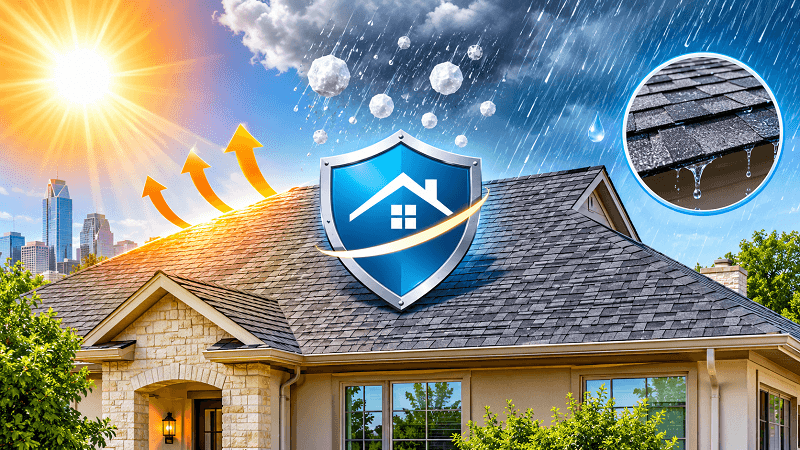
If you own property in Central Texas, you know the weather here doesn’t play nice. Summer afternoons push past 100°F, spring storms roll in with hail and gusty winds, and a heavy downpour can show up with almost no warning. Your roof handles all of it, day after day, and it usually gets very little attention until something goes wrong.
The good news is that most roof damage is preventable. A few smart habits, the right materials, and a reliable contractor can add years to your roof’s life and save you from expensive surprises. Here is a practical look at how to protect your roof from Austin’s toughest conditions, based on what experienced Austin roofers see every day.
Why Austin’s Climate Is So Hard on Roofs
Roofs in Austin deal with three major stressors at once:
- Constant UV exposure: Months of strong sun dry out roofing surfaces, causing cracking, fading, and blistering.
- Daily temperature swings: Roofs expand in the afternoon heat and contract at night. Over time, this movement loosens seams, flashing, and fasteners.
- Sudden severe weather: Hail can bruise shingles and dent metal panels, and strong winds can lift edges and let water in underneath.
Any one of these can shorten a roof’s lifespan. Together, they explain why a roof that should last 20 years sometimes needs attention after 12 or 15.
Start with a Regular Roof Inspection
The simplest way to avoid big repair bills is to catch small problems early. Plan on a professional roof inspection at least once a year, plus an extra one after any major hailstorm or windstorm.
Between inspections, a quick visual check from the ground can tell you a lot. Look for:
- Missing, curled, or cracked shingles
- Sagging areas or visible dips
- Damaged or loose flashing around chimneys and vents
- Granules collecting in gutters
- Rust spots or lifted seams on metal roofing
Inside the building, watch for brown stains on ceilings, musty smells, or daylight showing through the attic. These are early signs that water is finding its way in.
Protecting Your Roof from Heat
Heat is the quiet enemy. It doesn’t make noise like a storm, but it steadily ages your roof and drives up your cooling bills.
Here are a few ways to fight back:
- Choose reflective materials. Light-colored shingles, reflective coatings, and cool roofing membranes bounce sunlight away instead of absorbing it.
- Improve attic ventilation. Good airflow lets trapped hot air escape, which protects the roof deck and reduces strain on your AC.
- Add or upgrade insulation. Proper insulation keeps heat from moving into living or working spaces.
- Trim nearby trees. Strategic shade helps, but overhanging branches can scrape the roof and drop debris, so keep them trimmed back.
If your cooling bills keep climbing even though your AC is in good shape, your roof may be the real culprit. A dark, aging roof can absorb a surprising amount of heat.
Getting Ready for Hail and Wind
You can’t stop a hailstorm, but you can reduce the damage it does. Impact-resistant shingles and sturdy metal panels hold up far better than basic materials. Making sure flashing and edges are secure also helps your roof resist wind uplift.
After a storm, don’t assume everything is fine just because you can’t see damage from the ground. Hail damage is often subtle, with small dents, bruised shingles, or cracked seals that turn into leaks weeks later. Have a professional inspect the roof and take photos, since this documentation matters if you need to file an insurance claim. If damage turns up, prompt storm damage repair keeps a small problem from becoming a major leak.
Also be careful with door-to-door contractors who appear right after a storm. Take your time, ask for licensing and insurance details, and compare more than one estimate.
Don’t Wait on a Roof Leak
A small leak is never really small. Water travels along decking and insulation, so the stain on your ceiling may be several feet away from the real entry point. Left alone, moisture can cause mold, rotted wood, damaged insulation, and even electrical hazards.
If you find a leak, here is what to do:
- Move belongings away from the affected area.
- Take photos for your records and insurance.
- Use a bucket or tarp to limit immediate damage.
- Call a professional rather than slathering on store-bought sealant, which can trap water and make the problem worse.
Timely roof leak repair in Austin costs far less than dealing with water-damaged interiors later. A good roofer will trace the leak to its true source, whether that’s worn flashing, a failed vent seal, or damaged shingles, and fix it properly instead of covering up the symptom.
Metal Roofs Are Tough, but Not Maintenance-Free
Metal roofing is popular across Texas, and it’s easy to see why. It reflects solar heat, sheds water quickly, and can last for decades. That long lifespan, though, depends on a little upkeep along the way.
Repeated heating and cooling can slowly work screws out of place, sealants wear down with age, and corrosion tends to start where the coating is nicked or an edge is exposed. Spotting these issues early keeps metal roof repair in Austin simple and affordable, usually a matter of tightening or swapping screws, resealing seams, or touching up small rust spots. Put it off, and you may end up replacing entire panels.
Special Considerations for Commercial Roofs
Commercial buildings face a different set of challenges. Flat and low-slope roofs can collect standing water, large surfaces absorb more heat, and rooftop equipment creates extra penetrations where leaks can start.
An experienced commercial roofing company in Austin can help with drainage, reflective options, and a clear warranty. If you’re planning a new system, professional commercial roof installation in Austin should account for local heat, storm exposure, and the equipment on your roof. For an existing roof, commercial roof coatings can add reflectivity and extend its life.
Choosing the Right Roofing Contractor
Even the best materials fail when they’re poorly installed, so the contractor matters as much as the product. When researching local roofers, including the Cool Roofs Austin team, look for:
- Proper licensing and insurance: Always ask for proof.
- Local experience: Contractors who understand Texas weather know what holds up.
- Detailed written estimates: A clear scope, materials list, and timeline make bids easier to compare.
- Consistent reviews and references: Look for steady positive feedback over time.
- Clear warranties: Understand what’s covered and for how long.
A trustworthy contractor will explain your options without pressure, answer questions plainly, and give you time to decide.
Final Thoughts
Austin’s weather isn’t going to get gentler, but your roof can be ready for it. Schedule regular inspections, choose heat-smart materials, deal with leaks right away, and work with professionals who know the local climate. These steps protect your property, keep your energy costs in check, and help you avoid the stress of emergency repairs.
Want a professional set of eyes on your roof? Cool Roofs offers a free roof inspection. Call 844-939-2665 to schedule yours in Austin.