
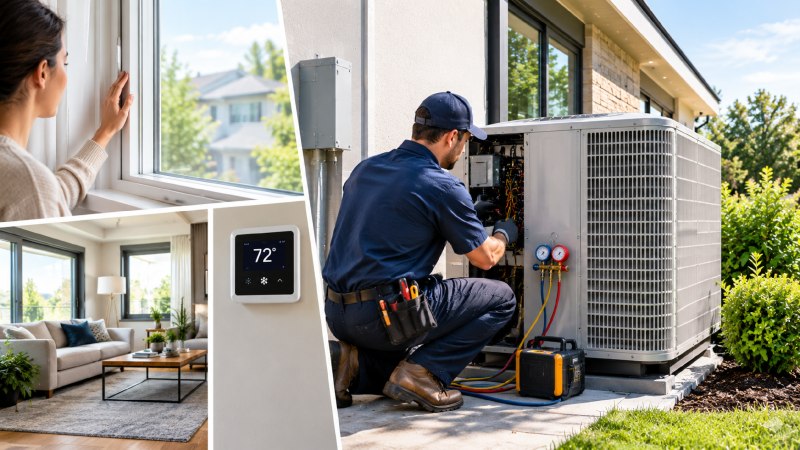
Comfort in a home or business comes down to two things: how well the space holds temperature, and how well the equipment inside keeps up. Ignore either one, and you feel it fast, in your utility bill and in your day to day comfort.
Start With the Envelope
Your building’s envelope, the windows, doors, and walls that separate inside from outside, sets the baseline for how hard your heating and cooling system has to work. A window with a failed seal or a warped frame lets conditioned air escape. You pay for that air twice: once to heat or cool it, and again when it leaks out.
Check your windows each season. Run your hand along the frame edges. If you feel a draft, or see fog trapped between panes, the seal has failed. Property owners searching for windows repair near me often catch this issue before it turns into a bigger energy problem, since a quick inspection can identify failed seals room by room.
Then Look at Your Equipment
Even a tight building loses ground if the heating and cooling equipment can’t keep pace. This matters even more for retail spaces and commercial properties, where foot traffic, large glass storefronts, and long operating hours put steady demand on HVAC systems.
When a unit fails or can’t handle a seasonal spike, waiting weeks for a full system replacement isn’t realistic for a business that needs to stay open. This is where commercial hvac rental comes in. A rented unit can bridge the gap while a permanent system is repaired or installed, keeping the space usable and the doors open.
A Simple Seasonal Routine
Whether you manage a home or a storefront, the same basic checklist applies:
Inspect windows and door seals twice a year, in spring and fall.
Have HVAC equipment serviced before peak season, not after a breakdown.
Track your utility bills month over month. A sudden jump often points to an envelope or equipment issue, not just weather.
Address small problems immediately. A minor draft or a sluggish air handler rarely fixes itself, and both tend to get more expensive the longer they’re ignored.
Comfort and efficiency aren’t separate goals. They come from the same source: a building that holds its temperature and equipment that can meet demand. Handle both, and the savings show up on their own.