
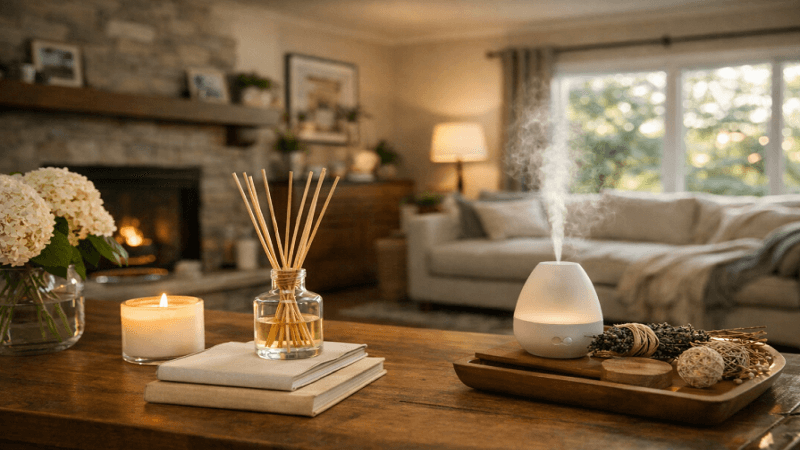
Fragrancing your home sounds simple until you try to make it feel consistent, natural, and not overpowering. I have tested almost every option over the years. Candles, sprays, plug-ins, diffusers, simmer pots, even natural sachets. Some methods smell great for a moment and then vanish.
Others last longer but feel artificial. The best approach is not about choosing one product. It is about creating a balanced scent system that fits your home, your lifestyle, and the way each room is used.
A well-scented home should feel clean, welcoming, and comfortable. It should never feel like a perfume store. The goal is subtle atmosphere, not strong fragrance.
Once I started treating home fragrance as part of daily home care, not decoration, the results became more consistent and enjoyable.
Start With Clean Air Before Adding Fragrance
Fragrance works best when the air is already fresh. Odors from cooking, pets, damp fabric, or closed rooms will clash with any scent you add. I learned this the hard way when I tried masking kitchen smells with candles.
The mix felt heavy and unpleasant. Opening windows, improving airflow, and keeping soft surfaces clean makes fragrance perform better. Clean air allows scent to sit lightly in the space instead of fighting existing odors.
Simple habits help. Ventilate rooms daily. Wash curtains and cushion covers regularly. Clean rugs and sofas since they trap smells. A neutral base makes every fragrance choice more effective and natural.
Match Fragrance Type to Each Room’s Purpose
Each room has its own rhythm. What works in a living room often feels wrong in a bedroom or bathroom. I stopped using one scent everywhere and started choosing based on function. This changed how my home felt instantly.
Living rooms benefit from warm, inviting scents. Soft woods, light spices, and gentle florals create a welcoming atmosphere without overwhelming guests. Bedrooms work best with calming notes that help the body relax.
Fresh linens, mild botanicals, or soft herbal blends support rest. Bathrooms need clean, light scents that feel fresh and hygienic. Kitchens should stay neutral or lightly citrus-based to avoid mixing with food aromas.
When fragrance matches the room’s purpose, it feels intentional rather than random.
Choose Long-Lasting Fragrance for Background Scent
For consistent everyday fragrance, slow-release methods work best. Candles are great for moments but not for maintaining a constant atmosphere. I rely on background fragrance that works quietly throughout the day.
Reed diffusers, natural sachets, and gentle electric diffusers provide steady scent without constant attention.
What matters most is balance. Strong diffusion can feel overpowering in small rooms. Gentle diffusion works better for long-term comfort.
I place long-lasting fragrance sources where air moves naturally but does not blow directly on them. This keeps scent distribution even and prevents rapid fading.
Background fragrance should be subtle enough that you notice it when you enter the room, not when you sit inside it for hours.
Use Candles and Sprays for Intentional Moments
Candles and room sprays shine when used intentionally, not constantly. I save candles for evenings, gatherings, or moments when I want to create a specific mood.
Lighting a candle signals relaxation, comfort, or celebration. This makes the scent feel special rather than ordinary.
Room sprays work best as a quick refresh before guests arrive or after cooking. They should never replace proper ventilation or cleaning.
When used sparingly, they enhance the atmosphere. When overused, they create scent fatigue and make the space feel artificial.
Think of candles and sprays as accents. They add personality to moments, not background maintenance.
Layer Scents Without Creating Confusion
Scent layering works when done gently. It fails when too many competing notes exist in one space. I follow a simple rule. One main scent per room, with occasional supporting accents.
For example, a neutral background fragrance paired with a candle from the same scent family works well. Mixing unrelated scent types often feels chaotic.
Staying within similar fragrance families keeps harmony. Fresh with fresh. Warm with warm. Floral with floral. This creates depth without confusion. Over time, your home develops a recognizable scent profile that feels personal and consistent.
Pay Attention to Airflow and Placement
Fragrance travels with air. Placement matters more than most people think. Putting a diffuser near a doorway or air vent helps spread scent naturally. Placing fragrance sources too high can cause uneven distribution. Too low and scent may feel trapped.
I tested moving fragrance from corners to central areas of rooms. The difference was noticeable. Central placement with gentle airflow gives even coverage. Avoid direct sunlight or heat sources since they change how fragrance releases and fades.
Good placement extends fragrance life and improves consistency without needing stronger products.
Rotate Scents With the Seasons
Your home should not smell the same year-round. Temperature and mood change how fragrance feels. I rotate scents seasonally. Light, airy notes in warmer months. Cozy, warmer notes during cooler seasons. This keeps fragrance feeling fresh and aligned with the environment.
Seasonal rotation also prevents scent fatigue. Using the same fragrance for too long makes your nose adapt, and the scent feels weaker over time. Changing scents resets your perception and keeps your home feeling renewed.
Use Natural Elements to Support Fragrance
Fresh flowers, herbs, and natural materials enhance fragrance in subtle ways. Eucalyptus in the shower, dried lavender in closets, or citrus peels simmered in water add gentle scent without artificial heaviness.
These natural touches complement structured fragrance methods like diffusers and candles.
Natural elements also connect scent with daily life. They feel organic, not manufactured. This creates a home atmosphere that feels lived-in and comfortable.
Avoid Over-Fragrancing
The biggest mistake in home fragrance is excess. Strong scent can cause headaches, discomfort, or scent blindness.
If you smell fragrance strongly while sitting in the room, it is too much. The best home fragrance is noticeable when you enter, then fades into the background.
I learned to scale back. Fewer fragrance sources, placed thoughtfully, worked better than multiple strong ones. Subtlety creates comfort. Heavy fragrance creates fatigue.
Final Thoughts
The best way to fragrance your home is to combine clean air, room-specific scent choices, gentle long-lasting fragrance for background atmosphere, and intentional use of candles or sprays for special events.
Pay attention to placement, airflow, and seasonality. Keep fragrance subtle and consistent rather than strong and constant.
When scent becomes part of how your home functions rather than a product you add randomly, your space starts to feel calmer, warmer, and more welcoming every day.