
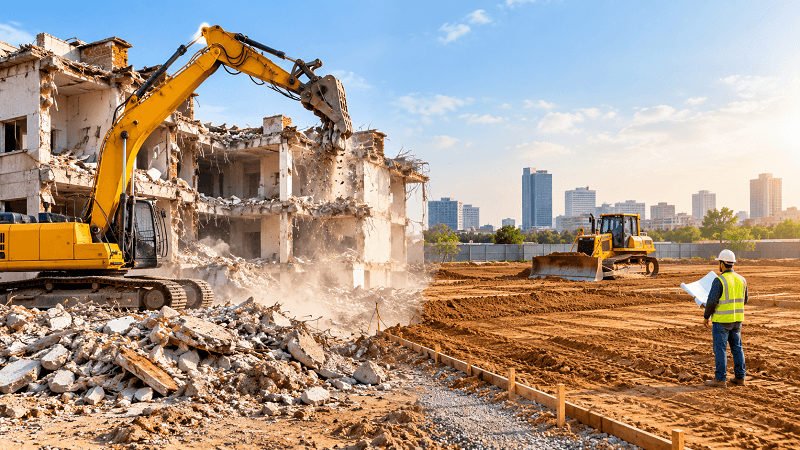
ommercial demolition is a cornerstone of urban development and economic growth. As cities evolve, older, outdated commercial structures must make way for modern, energy-efficient facilities. However, executing a commercial demolition project is vastly different from residential teardowns. It involves larger structures, complex building materials, strict environmental regulations, and dense urban surroundings. To ensure a successful transition from an old building to a shovel-ready site, developers must understand the intricate phases of commercial demolition and the critical role of professional site preparation in modern construction.
The Phases of Commercial Demolition
A commercial demolition project is a highly structured process that begins long before any heavy machinery is deployed. The first phase is a thorough site assessment and hazardous materials survey. Commercial buildings, especially older ones, often contain hazardous substances such as asbestos, lead, and polychlorinated biphenyls (PCBs). These materials must be identified and safely abated by certified specialists before structural demolition can begin. Following abatement, the building undergoes “soft stripping,” where non-structural elements like drywall, flooring, fixtures, and wiring are removed to maximize recycling and salvage efforts. This phase requires meticulous organization to ensure all materials are sorted correctly.
Engineering and Structural Planning
Once the building is stripped, engineers develop a detailed demolition plan. This plan outlines the specific methods and machinery that will be used to bring the structure down safely. Depending on the building’s height, location, and proximity to other structures, contractors may use high-reach excavators, wrecking balls, or selective dismantling techniques. In highly congested urban areas, selective dismantling is often preferred to minimize noise, vibration, and dust, protecting adjacent businesses and public infrastructure from disruption. Engineers must also calculate structural loads and potential fall zones to guarantee the safety of the surrounding community and the demolition crew.
The Importance of Professional Site Preparation
Demolishing the structure is only half the battle; preparing the site for future construction is equally critical. Professional site preparation involves clearing all debris, excavating foundations, and grading the land. Without proper excavation and grading, new construction projects can face severe structural issues, poor drainage, and unstable foundations. Experienced contractors utilize advanced GPS-guided equipment to ensure precise grading, creating a perfectly level and stable surface for the next phase of development. For comprehensive commercial demolition and site preparation services, developers rely on specialized contractors like hammercoregroupusa.com to deliver a clean, construction-ready site that meets all engineering specifications.
Environmental Sustainability in Modern Demolition
Modern commercial demolition is heavily focused on environmental stewardship. Today’s leading contractors aim to divert as much waste from landfills as possible. Concrete and masonry are crushed on-site and repurposed as road base or structural fill. Structural steel, copper wiring, and other metals are sorted and sent to recycling facilities. By prioritizing salvage and recycling, commercial demolition projects not only reduce their environmental footprint but also lower overall project costs by offsetting disposal fees with material salvage value. This sustainable approach is essential for meeting modern green building standards and reducing the carbon footprint of new developments.
Post-Demolition Inspections and Compliance
Before any new construction can begin, the cleared site must undergo rigorous post-demolition inspections. These inspections verify that all hazardous materials have been completely removed, the soil is stable and uncontaminated, and the grading matches the approved engineering plans. Obtaining these final sign-offs from local environmental and building authorities is crucial for securing subsequent building permits. A professional demolition contractor will handle all the necessary documentation and coordinate with inspectors to ensure a seamless transition to the construction phase.
Choosing the Right Demolition Partner
Given the high stakes, choosing the right demolition partner is the most critical decision a developer can make. The ideal contractor must possess extensive experience, a robust safety record, state-of-the-art equipment, and comprehensive liability insurance. They must also demonstrate a deep understanding of local permitting processes and environmental compliance. Partnering with an established, professional demolition firm ensures that your project is completed on time, within budget, and in strict accordance with all safety and environmental regulations, paving the way for a successful new development that will benefit the community for decades to come.