
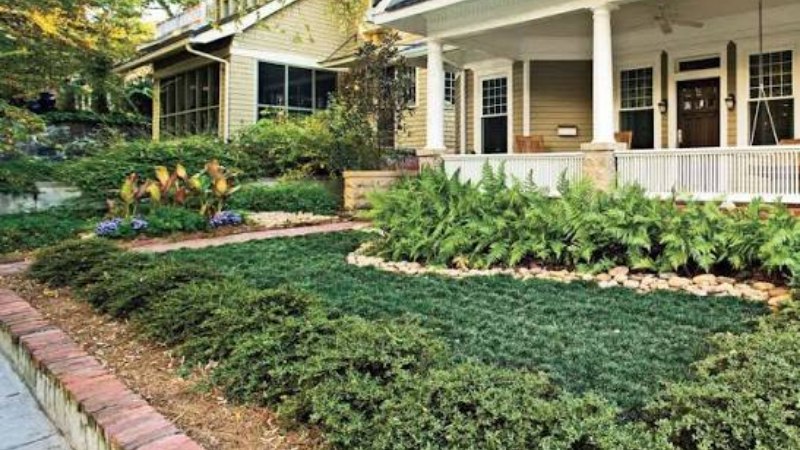
A small front yard can feel like a puzzle with too many pieces and not enough space. You need a path to the door, somewhere for bins, a spot for plants, and enough room for people to arrive without bumping into each other. When the lawn is barely there to begin with, every square foot matters. The good news is that a compact front yard does not have to feel cramped or neglected. With the right approach, it can look intentional, welcoming, and even beautiful. The key is to figure out what the space must do before you decide what to put in it.
Before adding anything decorative, it helps to think about the full calendar year. A front yard that works well in summer should also handle autumn leaves, winter rain, and holiday decorations without becoming chaotic. Speaking of the holiday season, decorations that go vertical rather than horizontal are a smart choice for small spaces. String lights along rooflines, wrap them around a small tree, or hang them from the eaves. This approach keeps the ground clear while still creating a festive look. If you want professional help with this, outdoor christmas light installation in San Rafael is a service that handles the whole process for you, from design to takedown, so you do not have to sacrifice any of your limited ground space to bulky decorations or storage.
Start by Deciding What the Space Must Do
Before you plant a single flower or lay a single paver, sit down and make a list of everything your front yard needs to handle. This sounds simple, but most people skip this step and end up with a yard that looks busy and still does not function well.
Think About Daily Traffic First
Who uses the front yard every day? If you have children, they may need a clear path from the gate to the door. If you receive regular deliveries, there should be a logical place for packages that does not block the entrance. If you have a car parked in a driveway that runs alongside the front yard, you need to think about how people move from the car to the front door without stepping on plants or tripping over containers.
Write down every person or activity that touches the front yard on a regular basis. This list becomes your design brief. Everything you add to the space should serve at least one item on that list.
Identify the Non-Negotiables
Some things simply have to be there. Bins are a common example. Most homes need somewhere to store rubbish and recycling bins, and in a small front yard, these can take up a surprising amount of space. Other non-negotiables might include:
- A clear path at least 90 centimetres wide from the gate or pavement to the front door
- A spot for the electricity or gas meter if it is located at the front of the house
- A letterbox or post box that is easy to access from the street
- Adequate lighting for safety at night
- A place for bikes if they are used regularly
Once you have placed all the non-negotiables on a rough sketch of the space, you will be able to see how much room is actually left for plants, seating, or decorative features. In many small front yards, this exercise reveals that there is less free space than expected, but it also shows exactly where that space is.
Make the Path Work Harder
In a small front yard, the path is often the dominant feature. It takes up a significant portion of the ground and sets the tone for the whole space. Rather than treating it as a purely functional strip of concrete or paving, think about how it can contribute to the overall look.
Choose Materials That Add Character
Gravel, brick, natural stone, and patterned concrete all look very different from plain grey paving slabs. The material you choose will affect how the yard feels. Warm-toned brick or sandstone can make a small space feel cosy and established. Pale gravel with stepping stones can make it feel open and airy. Dark slate can look sleek and modern.
The width of the path also matters. A path that is too narrow feels mean and awkward. A path that is slightly wider than strictly necessary feels generous and welcoming. If you can afford to make the path 1.2 metres wide instead of 90 centimetres, the extra 30 centimetres will make a noticeable difference to how the yard feels.
Use the Edges of the Path as Planting Space
The strip of ground on either side of a path is often underused. Even a 20 or 30 centimetre border can hold low-growing plants that soften the edges of the paving without encroaching on the walking surface. Good choices for narrow path borders include:
- Lavender, which stays compact and smells wonderful when brushed against
- Thyme, which can even be planted between stepping stones and tolerates light foot traffic
- Catmint, which spills softly over the edge of paving without becoming invasive
- Dwarf ornamental grasses, which add texture and movement
- Alyssum or lobularia, which produces small white or purple flowers and stays very low
These plants do not take up meaningful ground space, but they transform a plain path into something that feels designed and cared for.
Consider Containers Instead of Garden Beds
When the lawn is almost gone and the ground space is limited, containers are often the most practical solution for adding plants. They can be moved, rearranged, and swapped out with the seasons. They do not require you to dig up paving or commit to a permanent planting scheme.
Choose the Right Size and Number
One of the most common mistakes in small front yards is using too many small pots. A collection of tiny containers looks cluttered and is harder to maintain because small pots dry out quickly. Instead, choose one or two large containers and plant them generously. A single large pot with a well-chosen plant or combination of plants will have far more impact than six small pots scattered around the space.
Large containers also give you more planting options. You can combine a tall structural plant like a standard bay tree or a clipped box ball with trailing plants around the base and seasonal flowers in between. This layered approach creates a lot of visual interest in a small footprint.
Think About Year-Round Interest
Because the front yard is visible every day, it is worth choosing plants that look good across multiple seasons rather than just in summer. Some combinations that work well in containers for year-round interest include:
- A clipped evergreen topiary as the central plant, with seasonal bulbs planted around it in autumn for spring colour
- A small ornamental tree like an Acer palmatum, which has beautiful spring and autumn colour and interesting winter structure
- Evergreen grasses like Carex or Festuca, which look good in all seasons and require very little maintenance
- Hellebores, which flower in late winter and early spring when most other plants are dormant
If you change the seasonal plants in your containers twice a year, in spring and autumn, the front yard will always look fresh and relevant to the time of year.
Think About Whether a Bench or Seat Has a Place
A small bench or a pair of chairs in a front yard might seem like a luxury when space is tight, but seating can actually make a compact space feel more intentional and welcoming. It signals that the front yard is a place to pause, not just a corridor to the front door.
When Seating Works in a Small Front Yard
Seating works best in a small front yard when it is placed against a wall or fence rather than in the middle of the space. A narrow bench pushed back against the house wall takes up very little room and can double as a place to put bags or shopping while you unlock the door. A fold-down wall-mounted seat is an even more space-efficient option.
If the front yard gets morning sun, a small seat in that spot can become a genuinely used feature rather than a decorative one. People are more likely to sit outside in the morning than in the evening in a front yard, because the front of the house tends to face the street and feels more exposed after dark.
When to Skip the Seating
If the front yard is very narrow, less than two metres deep, or if it is heavily shaded and damp, seating is probably not worth the space it takes up. In these cases, it is better to use that space for plants or storage. A bench that nobody sits on just becomes another surface to collect leaves and clutter.
Add a Small Garden Bed Without Crowding the Entrance
If you want a proper garden bed rather than containers, it is possible to include one in a small front yard as long as you plan it carefully. The key is to keep the bed narrow and to choose plants that will not outgrow the space.
Where to Position a Garden Bed
The most logical place for a garden bed in a small front yard is along the base of the house wall or along a boundary fence. This keeps the bed out of the main circulation area and gives it a clear edge. A bed that is 60 to 90 centimetres deep is enough to grow a good range of plants without encroaching on the path or the entrance.
Avoid placing a garden bed in the centre of the space unless the yard is wide enough to walk comfortably around it. A central bed in a narrow yard will make the space feel even smaller and will create awkward circulation.
Choose Plants That Stay in Bounds
In a small front yard bed, plant choice is critical. Avoid anything that spreads aggressively, grows very tall, or needs frequent cutting back. Good choices include:
- Salvia nemorosa, which is compact, long-flowering, and easy to manage
- Agapanthus, which has a neat clump-forming habit and produces beautiful blue or white flowers
- Echinacea, which is upright and well-behaved
- Dwarf Nandina, which stays small and has attractive foliage year-round
- Heuchera, which comes in a wide range of foliage colours and stays very compact
Avoid plants like Crocosmia, which spreads by corms and can quickly take over a small bed, or large ornamental grasses that will eventually need significant space to look their best.
Handle the Bins Without Making Them the First Thing You See
Bins are a practical reality in most front yards, but they do not have to be the dominant feature. There are several ways to manage them without spending a lot of money or taking up extra space.
Simple Screening Options
A simple timber screen or trellis panel can hide bins from the street without requiring much depth. If you add a climbing plant to the trellis, it becomes a feature rather than just a barrier. Good climbers for a small trellis include:
- Clematis, which is available in many colours and flowering times
- Trachelospermum jasminoides (star jasmine), which is evergreen and fragrant
- Lonicera (honeysuckle), which is fast-growing and attracts pollinators
Alternatively, a simple gate or door on a small enclosure can keep bins completely out of sight. This works well if there is a side passage or a corner of the yard that is not used for anything else.
Make the Bin Area Tidy Rather Than Hidden
If there is no room for screening, the next best option is to make the bin area as tidy as possible. Keep bins in a consistent position, use matching bin bags or labels, and make sure the area around the bins is clean and free of debris. A tidy bin area is far less noticeable than a messy one, even if it is not hidden.
Test the Layout Before You Commit
One of the most useful things you can do before spending money on paving, plants, or containers is to test the layout using temporary markers. Use canes, string, cardboard boxes, or even chalk on the ground to mark out where different elements will go. Then live with that layout for a few weeks and see how it feels.
Why September Is a Good Time to Test
September is an ideal month to test a front yard layout for several reasons. The weather is usually mild enough to spend time outside assessing the space. The light is changing as the season shifts, which helps you understand how the yard will look in autumn and winter. And you still have time to make changes before the holiday season arrives and you want to add decorations or seasonal plants.
Testing the layout in September also gives you a chance to see how the space handles autumn leaves, which can be a real problem in small front yards with lots of paving. If leaves collect in corners or block drainage, you can adjust the layout before it becomes a seasonal chore.
What to Look for During the Test Period
During your test period, pay attention to the following:
- Does the path feel wide enough when you are carrying shopping or a pushchair?
- Is there enough room to open the front door fully without hitting a container or bench?
- Can visitors stand at the door without stepping off the path?
- Does the bin area feel accessible on collection day?
- Is there a clear line of sight from the street to the front door, which matters for safety and for finding the house?
If any of these things feel awkward during the test period, adjust the layout before you commit to permanent changes.
Add Seasonal Items Without Cluttering the Space
Once the core layout is working well, you can start thinking about seasonal additions. These are the things that change with the time of year and keep the front yard feeling fresh and relevant.
Autumn and Winter Additions
In autumn, you might add a container of ornamental kale, winter pansies, or cyclamen to replace the summer planting. A small bundle of dried seed heads or a wreath on the front door can add seasonal character without taking up any ground space at all.
In winter, lighting becomes one of the most effective ways to make a small front yard feel welcoming. String lights along the roofline or around a small tree create warmth and atmosphere without using any of the limited ground space. This is where professional help can make a real difference. Rather than wrestling with ladders and extension leads, many homeowners choose to have lights installed by a specialist who can design a scheme that suits the scale of the property and the available fixing points.
Spring and Summer Additions
In spring, bulbs that were planted in autumn containers will start to emerge, giving the front yard a burst of colour with no extra effort. You might also add a hanging basket to the wall beside the door, which is another way to bring colour and life to the space without using any ground area.
In summer, the main containers can be replanted with seasonal flowers, and any climbing plants on trellises or fences will be at their most lush. This is also the time to assess whether the layout is still working or whether anything needs to be adjusted before the next autumn test.
Lighting for Safety and Atmosphere
Good lighting in a front yard serves two purposes. It makes the space safe to use after dark, and it creates atmosphere that makes the house feel welcoming. In a small front yard, lighting needs to be chosen carefully so that it does not add visual clutter or take up ground space.
Practical Lighting Options
Wall-mounted lights on either side of the front door are the most space-efficient option. They provide good illumination for the entrance without requiring any ground-level fixtures. Solar-powered stake lights along the path are another option, though they tend to be less reliable than wired lights and can look cheap if not chosen carefully.
If you have a small tree or a large container plant, uplighting it from below can create a dramatic effect at night and make the front yard feel much larger than it is. A single well-placed uplight can transform the look of a small front yard after dark.
Seasonal Lighting
For the holiday season, string lights are the most versatile option for a small front yard. They can be draped along the roofline, wrapped around a tree, or hung from the eaves, all without touching the ground. This keeps the limited ground space free for other uses and avoids the safety hazard of cables running across a path.
If you want a professional result without the hassle of doing it yourself, a specialist lighting company can design and install a scheme that is proportionate to the size of your property and takes into account the available fixing points. They will also take the lights down at the end of the season and store them, which means you do not need to find space for bulky light storage in an already small home.
Conclusion
A front yard with almost no lawn is not a problem to be solved. It is a design opportunity that rewards careful thinking. The most important step is to decide what the space must do before you decide what to put in it. Once the non-negotiables are in place, the remaining space can be used for containers, a small garden bed, a bench, or seasonal decorations, depending on what matters most to you and your household.
Testing the layout in September gives you a chance to see how everything works before the busier months arrive. It also gives you time to make adjustments before you add seasonal items like winter plants or holiday lights. When the core layout is right, the seasonal additions become easy and enjoyable rather than stressful.
A small front yard that functions well and looks good year-round is entirely achievable. It just requires a little more thought than a larger space, because every decision has a bigger impact when there is less room to work with. Start with what the space must do, test before you commit, and add seasonal character gradually. The result will be a front yard that feels considered, welcoming, and genuinely useful, regardless of how little lawn it contains.