
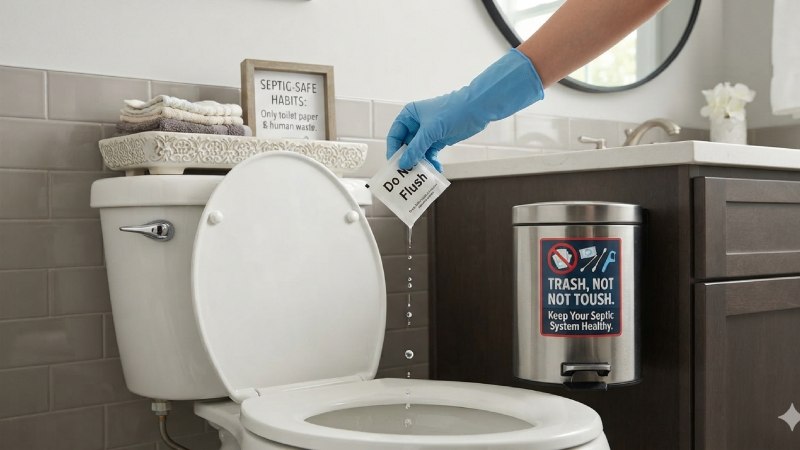
When you live on a septic system, everything that goes down the toilet stays on your property. There’s no city treatment plant at the other end, just a tank in the backyard and the soil around it. In a busy house with kids, guests and a never-ending laundry pile, it’s easy for the wrong things to go down the drain.
The good news is that keeping a septic system healthy mostly comes down to a few family habits. Here’s what never belongs in the toilet, and how to make septic-safe habits stick in a household where not everyone is paying attention.
Why it matters
A septic tank separates what you send down the drain into layers. Solids sink, grease and oils float, and the water in the middle flows out to a drain field in the yard. Bacteria break down human waste and toilet paper, but they can’t do anything with plastic, fabric or thick fibers. Those stay in the tank, fill it faster, and can clog the pipes or drain field. Fixing a clogged drain field costs far more than any pack of wipes ever saved.
Never flush these
Wipes of any kind, even “flushable” ones
Baby wipes, cleaning wipes, makeup wipes and so-called flushable wipes don’t break down the way toilet paper does. They clump together in pipes and in the tank. If your family uses wipes, put a small lidded trash can next to every toilet so there’s an easy alternative.
Diapers and feminine products
Tampons, pads and applicators are made to absorb water, not dissolve in it. Diapers are the same. All of them belong in the trash.
Paper towels, tissues and napkins
They look like toilet paper, but they’re made to stay strong when wet. Facial tissues are a common culprit in homes where kids blow their noses and toss the tissue in the toilet.
Dental floss, cotton swabs and hair
Floss and hair don’t break down and tend to wrap around everything else in the tank. Cotton swabs and cotton balls swell and sink into the sludge layer.
Cat litter
Even litter labeled flushable adds heavy solids the tank can’t process. Bag it and put it in the trash.
Medications
Flushed medicines can kill the bacteria your tank relies on, and they can end up in groundwater. Use a pharmacy take-back program instead.
Toys, and anything else a toddler finds
Every parent of a toddler knows toilets are fascinating. Toilet lid locks are cheap, and they save a lot of plumbing calls.
Family habits that protect your septic system
Make the trash can the easy choice
People flush the wrong things mostly because it’s convenient. A small trash can with a lid in every bathroom removes the temptation. Keep a roll of bags in the cabinet so it’s easy to empty.
Teach the “three Ps”
A simple rule works for kids and guests alike: only pee, poop and (toilet) paper go in the toilet. Some families tape a small note inside the bathroom cabinet for visitors, which is especially handy during holidays.
Spread out the laundry
A washing machine uses a lot of water at once. Five loads back to back on Saturday can flood the tank faster than it can settle, pushing solids out toward the drain field. Doing a load or two a day is much easier on the system. A lint filter on the washer’s drain hose also helps, because lint from synthetic fabrics doesn’t break down in the tank.
Plan ahead for a full house
Holidays, sleepovers and visiting relatives mean more showers, more flushing and more laundry. If you know a big gathering is coming, avoid running the dishwasher and washing machine at the same time, and remind guests about the trash cans in the bathroom.
Go easy on harsh cleaners
Normal household cleaning is fine. But pouring a whole bottle of bleach down the drain, or using chemical drain openers, can kill the bacteria in the tank. For a clogged toilet, reach for the plunger first.
Fix leaks quickly
A running toilet can send hundreds of gallons a day into the septic tank. If you hear the toilet refilling on its own, replace the flapper. It’s a cheap fix and usually takes a few minutes.
Pumping is still part of the plan
Even a family with perfect habits needs to have the tank pumped. Solids build up no matter what, and a professional pump-out removes them before they can reach the drain field. How often depends on the size of the tank and how many people live in the house. This guide explains how often you should pump your septic tank based on household size.
Most families land somewhere between every three and five years, and larger households need it more often. Put the date of your last pump-out somewhere you’ll find it, like the calendar on your phone or a note on the tank lid. If you’re in central Texas and it’s been a while, a company offering septic tank pumping can measure the sludge and tell you exactly where you stand.
The bottom line
A septic system can last for decades if it only gets what it’s built for. Keep a trash can in every bathroom, teach the three Ps, spread out the laundry, and keep up with pumping. They’re small habits, but they save families thousands of dollars in repairs.