
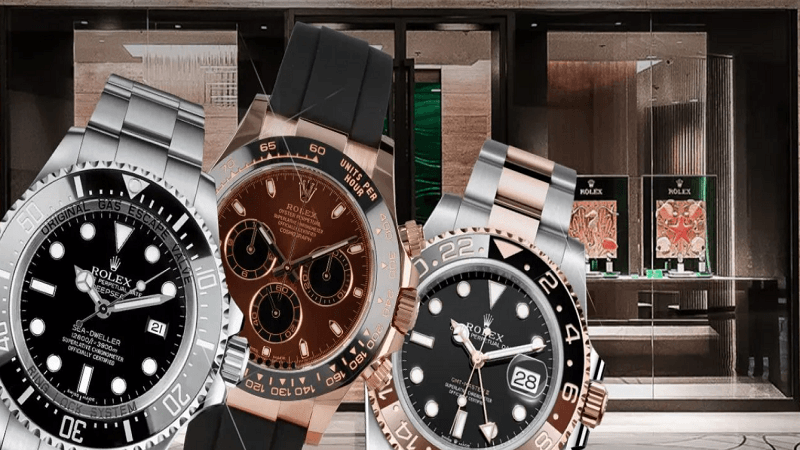
A few years ago, a collector walked into a Rolex authorized dealer in Manhattan, pointed at a steel sports watch in the display case, and was told it wasn’t for sale. The watch was there, physically present, lit beautifully, behind glass, but unavailable to him. He wasn’t on the list. He didn’t have the purchase history. He left empty-handed.
That scenario plays out thousands of times a week across the world, and it has quietly restructured how serious watch collectors think about acquisition. The authorized dealer model, once the gold standard for buying a luxury timepiece, has become an exercise in relationship management, retail politics, and patience that most collectors simply don’t have time for. The secondary market, which many buyers once treated as a fallback, has become the primary route. Platforms like Wrist Aficionado have become go-to resources for collectors who want authenticated access to the references they actually want, without the uncertainty of the AD system. The shift happened not because collectors couldn’t get what they wanted elsewhere, but because the secondary market started offering something the AD system fundamentally couldn’t: access.
The Waitlist Illusion: What the AD System Actually Looks Like Now
Let’s be precise about what the current allocation system involves. Rolex, Patek Philippe, and Audemars Piguet do not publish waitlists. There are no official queues, no ticket numbers, no transparent systems. What exists instead is a relationship-based allocation structure in which authorised dealers distribute their most desirable stock to clients who have demonstrated loyalty, usually measured in total spend across the brand or the broader boutique.
This means a first-time buyer, regardless of budget, has almost no realistic path to purchasing a steel Rolex Daytona, an Audemars Piguet Royal Oak in steel, or a Patek Philippe Nautilus ref. 5711 at retail. These watches are allocated almost exclusively to clients with significant existing purchase history, and even then, there are no guarantees.
The industry publication Hodinkee, which tracks watch culture closely, has reported on the chronic gap between demand and supply for sports-model steel watches. That gap isn’t narrowing. Rolex has reportedly increased production capacity, but demand has outpaced it consistently for nearly a decade.
The Premium Paradox: When Retail Price Becomes Irrelevant
Here is the argument that reframes everything: if a collector cannot buy a Patek Philippe Nautilus at retail, then retail price is not actually available to them. It is a theoretical price, not an accessible one.
In the secondary market, that same Nautilus 5711 has traded at multiples of retail. In peak 2021-2022 conditions, secondary prices for the reference reached three to four times the official retail figure. Even in a cooled market, the premium over retail for the most desirable references remains significant, often 50 to 100 percent above retail depending on condition, configuration, and box and papers.
But here is what most people miss: paying a premium on the secondary market is not overpaying relative to retail. It is paying the real market price. The retail price exists in the same way a manufacturer’s suggested retail price exists for a sold-out concert ticket, as a reference point, not as an available option.
Collectors who understand this stop resenting the premium and start making rational decisions based on what the watch is actually worth and what it will cost to acquire it.
The Psychological Shift: From Buyer to Strategist
Spending time inside the collector community makes one pattern obvious: the most experienced buyers stopped thinking about authorized dealers as their primary acquisition channel years ago. They use ADs for maintenance, for relationships with specific reference categories, and for the occasional lucky purchase. But their primary sourcing strategy is built around the secondary market.
This shift requires a different mindset. Instead of walking into a boutique and hoping, a serious collector needs to:
- Monitor pricing trends across major reference categories to understand what fair value looks like
- Build relationships with trusted secondary dealers who can source specific references on request
- Understand the condition matrix: box and papers, service history, dial originality, and case sharpness all affect value and should inform negotiation
- Treat acquisition as timing-sensitive: secondary market pricing fluctuates with broader economic conditions, and patient buyers who waited through the 2022-2023 correction found significantly better prices than those who bought at peak
The buyer who treats the secondary market as a last resort is at a structural disadvantage compared to the one who has built sourcing relationships and tracks market conditions actively.
What Serious Sourcing Actually Looks Like
For a collector targeting a specific reference, the best approach usually combines several channels simultaneously. Grey market dealers, auction houses, private sales networks, and specialist secondary retailers all offer different advantages.
Auction houses such as Phillips, Christie’s, and Sotheby’s are genuinely useful for vintage pieces and rare modern references, but auction fees add 20 to 30 percent to the hammer price, and condition verification requires careful attention. They are better suited to specific searches than general browsing.
Specialist secondary retailers offer the clearest combination of access, authentication, and service, particularly for buyers spending at the higher end of the market. A platform like Wrist Aficionado sits in this category, carrying authenticated pre-owned inventory across Rolex, Patek Philippe, Audemars Piguet, Richard Mille, and independent brands, with physical boutique locations that address the remote-purchase anxiety many buyers have when spending at this level.
The value of a specialist dealer over a peer-to-peer marketplace is authentication confidence. At $50,000 to $500,000 per transaction, the cost of buying an expertly produced counterfeit or a watch with undisclosed service issues is not recoverable. Authentication expertise and reputation carry real weight.
The Access Problem Goes Beyond Sports Models
It is tempting to frame the allocation problem as being only about steel sports watches. But the issue extends considerably further, particularly in the independent watchmaking space.
Brands like F.P.Journe, Greubel Forsey, De Bethune, and MB&F produce in genuinely limited numbers, and access often depends on established client relationships with specific ADs or direct relationships with the brands themselves. A new collector entering the market today will find that secondary market access is not just convenient for these pieces; it is frequently the only realistic option.
This is actually where the secondary market’s value proposition is clearest. The secondary market does not discriminate based on purchase history. Price is the mechanism. That is, in many ways, a more meritocratic system than allocation by boutique relationship.
Is the AD Relationship Still Worth Cultivating?
Short answer: yes, but with realistic expectations.
For collectors who are genuinely brand-loyal and spend consistently across a full boutique portfolio, building an AD relationship can eventually yield allocation on desirable references. This is a legitimate long-term strategy, particularly for Rolex, where authorized dealers retain meaningful discretion over allocation.
The calculus changes if you are being asked to purchase watches you do not want in order to access the one you do. This practice, often called a tiered purchase requirement, is widespread and worth being clear-eyed about. The collector spending $15,000 on watches they have little interest in, in hopes of eventually being offered a $12,000 steel reference, is playing an uncertain game.
For most buyers, especially those entering the market or targeting specific references on a defined timeline, secondary market acquisition is the more efficient path. The premium is real but so is the certainty.
Key Takeaways
- The AD allocation system for the most coveted references is relationship-based, not queue-based, making it inaccessible to most buyers regardless of budget
- Retail price for a sold-out reference is theoretical, not available; secondary market pricing reflects actual market value
- Experienced collectors have largely repositioned the secondary market as their primary acquisition channel, not a fallback
- Authentication, condition verification, and access are the three core variables that determine whether a secondary purchase is a good one
- The access advantage of the secondary market extends beyond steel sports watches into independent and ultra-high-end complications
FAQ
Is buying a luxury watch on the secondary market riskier than buying from an authorized dealer? The risk level depends entirely on who you buy from. A reputable specialist dealer with dedicated authentication processes and physical presence carries a risk profile very similar to an AD. The danger exists in peer-to-peer transactions or unverified online listings, where counterfeit watches and undisclosed condition issues are genuinely common.
Why do Rolex, Patek Philippe, and AP keep production limited if demand is so high? Scarcity is a deliberate brand strategy, not purely a production constraint. These brands have chosen to maintain pricing architecture and brand prestige by keeping supply below demand. Dramatically increasing production would risk diluting the perception of exclusivity that supports secondary market premiums and long-term brand value.
How much of a premium should I expect to pay on the secondary market for a steel sports watch? It depends on the reference, year, condition, and market conditions at the time. In a normalised market, premiums of 30 to 80 percent above retail are common for the most in-demand references. In peak conditions, those premiums have reached 200 to 300 percent. Monitoring secondary market prices across several platforms over a period of weeks before buying gives a reliable sense of fair value.
Does buying on the secondary market affect warranty coverage? Generally, yes. Manufacturer warranties are typically non-transferable, meaning a pre-owned watch will not carry the original warranty for a new buyer. However, reputable secondary dealers often provide their own authentication guarantees, and serviced watches from reliable sources carry less practical risk than the warranty gap might suggest.
Will secondary market premiums for desirable references eventually normalise? Prices corrected meaningfully from peak 2021-2022 levels, and some references have settled closer to previous norms. However, for references with structural supply constraints and no realistic path to increased allocation, a persistent premium over retail is likely for the foreseeable future. The underlying dynamics of the AD system have not changed.
Conclusion
The authorized dealer waitlist has not just complicated the buying process. It has fundamentally changed the logic of how serious collectors approach acquisition. Waiting for an allocation that may never come is no longer a sensible strategy for anyone who knows which watch they want and has the means to buy it.
The secondary market is not a consolation prize. For many of the most coveted references in the world, it is the only market that actually exists. Collectors who recognise that early, build the right sourcing relationships, and approach secondary purchases with proper diligence are not compromising. They are acquiring smarter.
If you are researching a specific reference and trying to establish what fair value looks like, the most useful thing you can do is spend time on platforms that offer transparent, authenticated inventory and know the market deeply. The information gap between informed and uninformed buyers at this price level is significant, and closing it before you buy is always time well spent.