
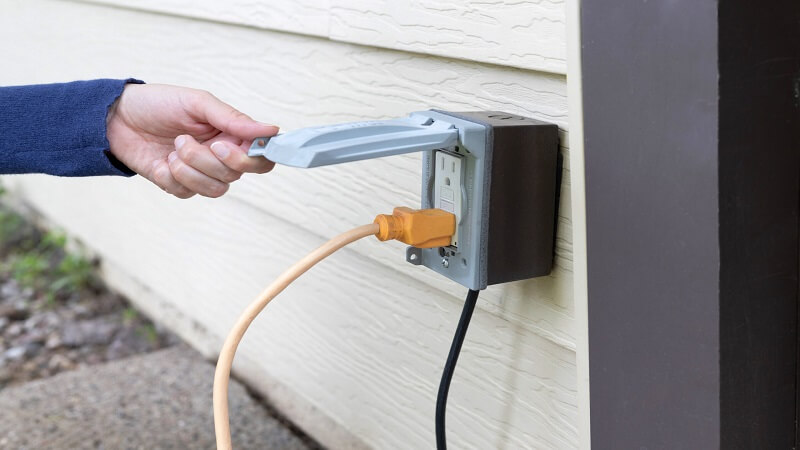
The outdoor electrical system is by far the least considered aspect of your home, even though it is critical to safety, functionality, and convenience. Whether you are powering your lawn tools or supporting your outdoor lighting and security systems, a reliable system is important for ensuring your outdoor spaces are functional year-round. This is the best time to check and improve such systems, particularly when they have been exposed to severe weather. An effective strategy now will prevent costly repairs and reduce future risks.
Step 1: Inspect Exterior GFCI Outlets
Ground-Fault Circuit Interrupter (GFCI) outlets are critical for electrical safety outdoors. These outlets automatically shut off when an electrical imbalance is detected, thereby preventing potential shocks. Outdoor outlets are always vulnerable to moisture, so they are more likely to wear and fail. During your spring inspection, press the “test” and “reset” buttons on each outlet to ensure they are functioning correctly. If any outlet fails the test, it should be replaced as soon as possible.
Step 2: Evaluate Your Load Capacity
The outdoor electrical system is rated to support a certain load. Using too many devices simultaneously may overload circuits, causing breakers to trip and even sparking a fire. This problem usually arises when homeowners begin preparing for outdoor holiday lighting services. Ornamental lighting installations may require more power than you thought, showing up any flaws in your system. If you frequently experience power outages, it is time to increase your current power supply.
Step 3: Use Extension Cords Properly
One such solution is the use of extension cords, which should never be a permanent solution. Always use cords rated for outdoor use because they are designed to resist moisture and temperature changes. Do not run cords through windows, under rugs, or across heavily used areas, as this may cause them to be damaged. Look for any evidence of wear during your inspection, such as frayed wires or broken insulation, and replace any damaged cords as soon as you find them.
Step 4: Check Weatherproofing and Protection
To ensure a safe outdoor electrical installation, weatherproofing is essential. Cover all outlets with weather-resistant, ideally in-use, covers that cover the plugs even when the devices are in place. Check wiring for exposed or damaged areas, particularly in areas receiving direct sunlight or heavy rainfall. Proper weatherproofing will extend the lifespan of your electrical components and minimise the risk of short circuits and electrical fires.
5: Seasonal and Future Needs Planning
The spring season is the time to plan. The more outdoor activities you have, the more your electrical system will demand. Whether for backyard projects, installing new features, or seasonal preparations, it is important to have a system that can withstand increased use. You can save time and frustration later by upgrading outlets or providing dedicated circuits.
6: Take a Proactive Approach to Safety
It is not only a convenience but also an important element in the safety of your entire house. These common problems can be prevented by regularly checking GFCI outlets, ensuring they meet their load capacity, using extension cords safely, and properly weatherproofing them before they escalate into serious problems.
Conclusion
Having a properly maintained outdoor electrical system ensures your home is safe, efficient, and prepared to face any season. Many homeowners do not appreciate its importance until they are restricted during high-demand seasons and need to install outdoor holiday lighting. When you consider all these factors during your spring inspection, you can enjoy your outdoor spaces and prevent future electrical problems.