
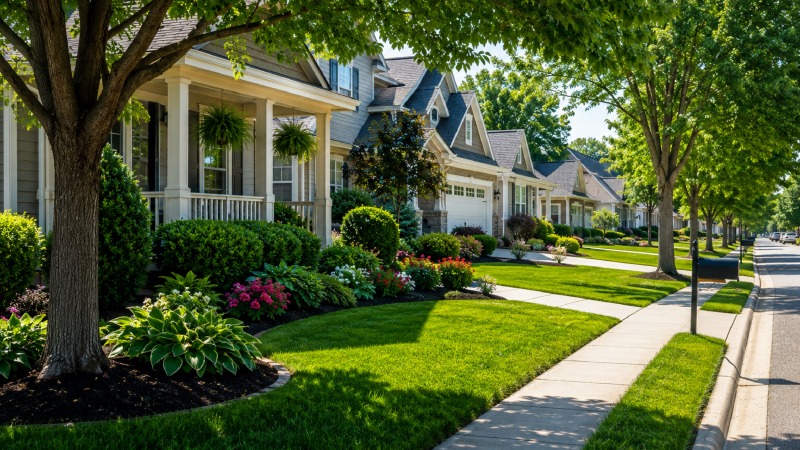
Summer can be tough on residential properties. Longer days, stronger sunlight, higher temperatures, sudden storms, and dry periods can quickly make lawns look tired and exterior surfaces appear less inviting. Yet some neighborhoods seem to maintain their fresh, attractive appearance well into July and August. Their homes have healthy lawns, clean walkways, vibrant landscaping, and exteriors that still look cared for despite the demanding weather. This difference is rarely accidental. Several factors work together to preserve curb appeal, including tree coverage, lot orientation, thoughtful neighborhood landscaping, proper irrigation, and consistent homeowner maintenance. Understanding these influences can help homeowners recognize why some properties age better visually during summer and what practical habits can help keep a home looking attractive throughout the hottest months of the year.
Tree Coverage Provides Natural Protection
Trees can play a major role in helping neighborhoods maintain their appearance during summer. Mature trees provide shade that reduces the amount of direct sunlight reaching lawns, flower beds, siding, driveways, and other exterior surfaces.
Grass growing beneath partial shade may experience less heat stress than grass exposed to strong afternoon sunlight all day. Trees can also help soil retain moisture, which may reduce the speed at which lawns dry out during periods of limited rainfall.
The benefits extend beyond landscaping. Shade can help protect exterior materials from constant exposure to ultraviolet rays. Fences, decks, painted surfaces, and outdoor furniture may experience less rapid fading when protected from intense sunlight.
However, tree coverage needs to be balanced. Excessive shade can prevent certain types of grass and flowering plants from receiving enough sunlight. Neighborhoods that look consistently attractive often have a thoughtful mix of mature trees, open lawn areas, and plants selected for their specific growing conditions.
Lot Orientation Can Affect Summer Appearance
The direction a home and its yard face can influence how much sunlight different parts of the property receive. A front yard that receives strong afternoon sunlight may dry out much faster than a yard protected from the hottest portion of the day.
Homeowners with highly exposed lots may need to pay closer attention to watering, mowing, and plant selection. Areas that receive morning sunlight often have different moisture patterns from areas that receive intense afternoon exposure.
Lot orientation also affects exterior surfaces. Some sides of a home may receive more sunlight, while other areas remain shaded for much of the day. This can create differences in fading, dust accumulation, algae growth, and general appearance.
Understanding these patterns allows homeowners to adjust maintenance instead of treating every part of the property exactly the same way.
Consistent Exterior Cleaning Makes a Difference
A well-maintained neighborhood is not necessarily one where homeowners constantly replace landscaping or make expensive improvements. Often, the difference comes from simple maintenance performed consistently.
Exterior walls, siding, porches, patios, driveways, and walkways can collect dust, pollen, dirt, and organic debris during spring and summer. After several months, these deposits can make an otherwise attractive property look dull.
Homeowners who include exterior cleaning in their seasonal maintenance routines can help preserve the fresh appearance of their properties. For residents who prefer professional assistance, hiring a house washing company near Milford can be one option for maintaining exterior surfaces while focusing on other summer property-care tasks.
Regular cleaning can be especially helpful after periods of storms or heavy pollen. Removing accumulated surface debris can make siding, entryways, and hardscapes appear noticeably cleaner without requiring major renovations.
Neighborhood Landscaping Creates Visual Consistency
Another reason some neighborhoods retain curb appeal is that landscaping choices work well together. When multiple properties maintain healthy lawns, defined garden beds, trimmed shrubs, and attractive trees, the entire street benefits.
Neighborhood landscaping does not have to look identical. In fact, variety can make a community more interesting. However, properties tend to look more cohesive when homeowners follow basic principles such as maintaining lawn edges, controlling weeds, pruning overgrown shrubs, and keeping plant beds orderly.
Plants also need to be appropriate for local conditions. Drought-tolerant varieties can be useful in areas where summer rainfall is unpredictable. Native or well-adapted plants may also require less intensive care than species that struggle in the local climate.
A neighborhood filled with plants suited to the environment is often easier to maintain throughout July and August because homeowners are not constantly fighting against unsuitable growing conditions.
Smart Irrigation Helps Lawns Stay Healthy
Water management is one of the biggest factors affecting summer curb appeal. Too little water can leave grass brown and brittle, while excessive watering can create muddy areas, encourage certain plant diseases, and waste resources.
Effective irrigation focuses on delivering enough water to plant roots without unnecessary runoff. Many homeowners use timers, drip irrigation, sprinkler systems, or manually adjusted watering schedules depending on their landscape needs.
Timing matters as well. Watering during cooler parts of the morning can allow moisture to reach the soil before much of it evaporates under the summer sun. Homeowners should also pay attention to rainfall and adjust irrigation instead of automatically following the same schedule every day.
Proper irrigation creates more consistent lawns and healthier plants, which can make a significant difference in how a property looks during the hottest weeks of the year.
Mowing Habits Affect More Than Grass Height
A freshly mowed lawn can immediately improve the appearance of a property, but mowing too frequently or cutting grass too short can create problems during summer.
Grass that is cut excessively short may have a harder time protecting itself from heat and moisture loss. Leaving the appropriate amount of blade height can help the lawn tolerate summer conditions more effectively.
Sharp mower blades also matter. Clean cuts are generally healthier for grass than ragged cuts caused by dull equipment. Homeowners should also avoid mowing when the ground is extremely wet, as heavy equipment can create ruts and compact the soil.
A consistent mowing schedule, combined with proper blade height and occasional edging, helps maintain the neat appearance commonly associated with attractive neighborhoods.
Small Maintenance Habits Add Up
Curb appeal is often influenced by details that are easy to overlook. A clean mailbox, trimmed hedges, swept walkway, maintained fence, and organized front porch can all contribute to the overall impression of a property.
During summer, weeds can grow quickly, outdoor furniture may become dusty, and leaves or branches can accumulate after storms. Addressing these small issues regularly prevents them from becoming obvious visual problems.
Homeowners do not necessarily need to spend hours every weekend maintaining their property. A short weekly inspection can help identify problems early. Checking the lawn, garden beds, exterior surfaces, drainage areas, and entryway gives homeowners an opportunity to handle minor issues before they become more difficult to manage.
Clean Drainage Supports Better Landscaping
Water management involves more than irrigation. Proper drainage is also important for maintaining attractive landscaping throughout the summer.
Blocked gutters, clogged drainage paths, and poorly directed downspouts can cause water to collect near foundations or landscape beds. Repeated standing water may damage plants, wash away soil, and create unattractive muddy areas.
Keeping gutters clear and making sure downspouts direct water away from vulnerable areas can support both property appearance and long-term maintenance.
Good drainage also helps prevent soil erosion. When heavy summer storms arrive, well-planned drainage systems can reduce the amount of soil and mulch displaced from garden beds.
Neighborhood Standards Can Influence Individual Homes
There is also a social element to curb appeal. When most homeowners on a street maintain their properties, other residents may be more motivated to keep pace.
This does not mean every home needs to look the same. Instead, a shared commitment to basic maintenance can create a consistently attractive environment. Communities with well-maintained common areas, sidewalks, trees, and landscaping often encourage homeowners to take greater interest in their own properties.
Even simple neighborhood practices, such as keeping shared green spaces maintained and removing storm debris promptly, can make an entire area look better throughout the summer.
Why July Is an Important Test
July often reveals which properties have strong maintenance routines. By this point, spring growth has accelerated, lawns have experienced weeks of heat, and outdoor surfaces have been exposed to sunlight, dust, pollen, and storms.
Homes that still look fresh in July usually benefit from maintenance performed throughout the year rather than from one large cleanup project.
Tree placement, suitable landscaping, efficient irrigation, regular mowing, exterior cleaning, and attention to small details all work together. No single improvement guarantees lasting curb appeal. The strongest results usually come from several manageable habits performed consistently.
FAQs
1. Why does one lawn stay greener than another during summer?
Differences in grass type, soil quality, shade, irrigation, mowing practices, and lot orientation can all affect lawn color. A lawn receiving moderate sunlight and consistent but appropriate watering may remain healthier than one exposed to intense afternoon heat.
2. How does tree coverage affect curb appeal?
Trees can provide shade, reduce heat exposure, support soil moisture retention, and create a more established appearance. However, too much shade can limit grass and plant growth, so balanced tree placement is important.
3. How often should homeowners clean exterior surfaces during summer?
The ideal schedule depends on weather, surrounding vegetation, and the type of exterior material. Homeowners should generally inspect siding, walkways, patios, and driveways periodically and clean them when visible dirt, pollen, algae, or other buildup becomes noticeable.
4. Is frequent watering better for maintaining a summer lawn?
Not necessarily. Watering too frequently can waste water and may contribute to shallow root development or other lawn problems. A well-planned irrigation routine should provide sufficient moisture while accounting for rainfall, soil conditions, temperature, and plant requirements.
Conclusion
Neighborhoods that maintain their curb appeal throughout the summer usually benefit from a combination of environmental advantages and consistent maintenance. Tree coverage can provide valuable shade, while lot orientation determines how much heat and sunlight different areas receive. Appropriate landscaping, efficient irrigation, sensible mowing, good drainage, and regular exterior cleaning can further protect a property’s appearance.
The key is consistency. A property does not have to undergo expensive renovations to remain attractive during July and August. Small maintenance tasks performed regularly can prevent minor problems from becoming major eyesores. When homeowners understand how their property responds to summer conditions and adjust their routines accordingly, they can help keep their homes and neighborhoods looking welcoming long after the excitement of spring has passed.