
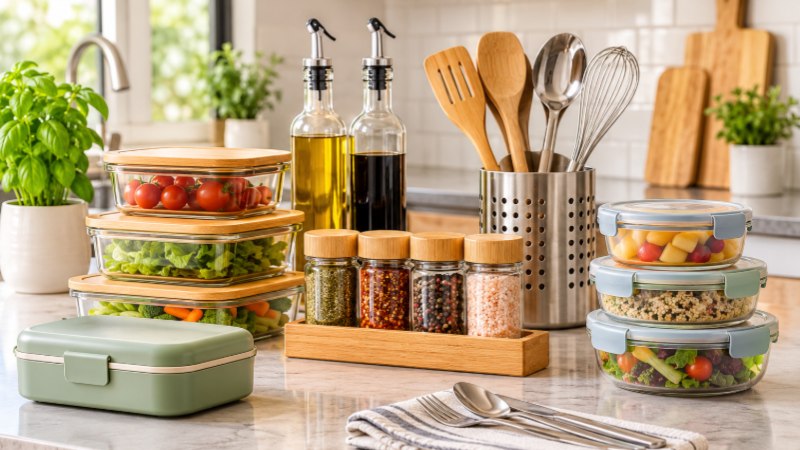
A modern kitchen is a place to prepare with! This is a hectic, communal area that combines storage, functionality, aesthetics and individuality. Who doesn’t want a well organized and inviting home, and a happier everyday life, with the right kitchen accessories? These products are also great for retailers and newcomers in the housewares segment to create collections around functionality, design and brand recognition. Little things go a long way, whether it’s an airtight food container, or a well-designed lunch box or countertop organizer. From this guide, readers will discover seven custom kitchenware concepts that are relevant to the modern home, and how they can be improved to be marketable kitchen products. Emphasis is placed on both usability and the materials used, as well as customization and added value for the consumer in the long run.
Home products are now in high demand by modern consumers, who demand to be both aesthetically pleasing and functional. Retailers can react with products which can address the daily needs and embody various life styles, budget and preferences.
For businesses interested in developing distinctive product collections, custom kitchenware provides opportunities to create products with personalized colors, materials, shapes, packaging, and branding. Working with an experienced OEM or ODM manufacturer can also help retailers turn product concepts into market-ready collections without building their own manufacturing facilities.
Airtight Food Storage Containers
Food Storage Containers are among one of the most useful additions to any kitchen that is modern. They assist households to arrange ingredients, keep them fresh, prevent unnecessary food waste, and clean up storage areas.
For everyday things like rice, flour, cereals, nuts and pasta, snacks, airtight containers are very helpful. When operating and maintaining them properly, their tight-fitting lids prevent moisture, dust and outside elements from entering the container.
New designs may feature clear body, safe locking systems, stacking designs and various container capacities. These clear materials will help users to easily see contents in a container without opening the containers for each ingredient.
Customization opportunities for retail brands:
- Develop matching container sets in different sizes.
- Offer transparent, frosted, or colored designs.
- Add customized lids with attractive finishes.
- Include measurement markings for convenient ingredient management.
- Create coordinated packaging with brand logos and product information.
Retailers can also introduce complete pantry organization collections instead of selling individual containers. This approach allows customers to purchase matching products for different storage requirements.
Stylish Lunch Boxes and Bento Containers
Despite the impact of the work schedule, school activities and healthier eating habits on daily life, reusable lunch boxes continue to be useful kitchenware items. Today’s shoppers want easy-to-take home cooked meals that are easy to organize and present.
Bento lunch boxes are particularly attractive due to the fact that they are divided into different compartments, which preserve the separation of various food items. They can be used by office workers, students, travelers and families who want to cook ahead.
A lunch box should be easy to close, easy to clean, easy to pack with food and constructed of material that is appropriate for use with food.
Different shapes, sizes and compartment sizes can be offered to fit different meal options.
Ideas for creating differentiated products:
- Multi-compartment lunch boxes for balanced meals.
- Compact containers for children and school lunches.
- Larger meal boxes for office workers.
- Matching lunch containers with reusable utensils.
- Minimalist designs with personalized colors and logos.
Retail brands can further differentiate their collections through coordinated accessories, such as small sauce containers, insulated bags, and reusable cutlery.
For growing businesses, lunch boxes also offer opportunities to target specific customer groups rather than competing only on price.
Modern Spice Jars and Seasoning Containers
Organizing spices can be a very important aspect to having an efficient kitchen. However, conventional packaging of spices can lead to clutter, particularly if the family uses many spices in their day to day cooking.
Containers are a great idea for the times of the modern kitchen, in which spices are used to cook delicious meals.In the modern kitchen, spices are an integral part of the cooking process, and a convenient way to keep them organized, accessible, and visually appealing.
Some of the most popular items include spice racks that can be rotated, clear seasoning jars, stacking holders and multi compartment seasoning boxes. Some designs feature dispensing holes which enable better control in cooking with seasoning.
By coordinating a collection of spices, one can also help make open shelves and kitchen countertops look better.
Customization opportunities include:
- Different jar capacities for various seasoning types.
- Clear bodies for easy ingredient identification.
- Matching lids in neutral or contemporary colors.
- Rotating bases for convenient countertop storage.
- Customized labels and packaging for private-label brands.
Retailers can create complete seasoning collections containing multiple jars, labels, and storage racks. These sets are suitable for homeowners who want an organized cooking environment and make attractive gift products as well.
When developing spice containers, businesses should prioritize secure closures, easy refilling, and materials appropriate for their intended food-contact applications.
Glass Oil Dispensers and Kitchen Pouring Bottles
Oil dispensers are another addition to modern kitchen collections. Oil dispensers provide an organized alternative to keeping large cooking oil bottles on countertops.
Glass dispensers are especially attractive because glass dispensers allow users to see the contents while adding an appearance, to kitchen spaces. Glass dispensers controlled pouring mechanisms can also help reduce spills and make everyday cooking convenient.
Modern oil dispensers can be designed for oil, vegetable oil, vinegar, sauces and other suitable liquids.
Popular product design ideas:
- Transparent glass bottles with stainless steel pouring spouts.
- Minimalist dispensers with leak-resistant closures.
- Matching oil and vinegar bottle sets.
- Easy-refill designs with wide openings.
- Decorative bottles suitable for countertop display.
For retail brands, these products can be marketed individually or as part of coordinated kitchen accessory collections.
The choice of materials is important. Glass bodies, durable closures, and properly designed dispensing components can improve usability and help create a more premium product experience.
Eco-Conscious Kitchenware Using Alternative Materials
Sustainability is a key factor in the development of household products. The combination of good design and responsible material choices is a growing attraction for consumers.
The 2025 National Kitchen & Bath Association (NKBA) Kitchen Trends Report points to sustainability, personalization and functional design as key directions in modern kitchen development. The findings are helpful to brands that may be planning future household product collections.
Natural bamboo fiber, recycled PET (rPET) and other appropriately selected materials can create alternatives to conventional product designs.
For example, bamboo fiber composites can be used in selected lunch boxes and home accessories while recycled PET can be applied for suitable storage and organization applications.
Product development opportunities include:
- Bamboo-fiber lunch boxes.
- Recycled-material storage accessories.
- Reusable food containers.
- Natural-looking kitchen organizers.
- Products designed to reduce reliance on disposable packaging.
However, sustainability claims should always be supported by reliable material information. Retailers should verify the composition, food-contact suitability, durability, and relevant certifications of each product before marketing it as environmentally responsible.
Offering clear product information helps businesses build consumer confidence and avoid unsupported environmental claims.
Multi-Functional Kitchen Organizers
Space in the kitchen is often limited, especially in apartments and small homes. Multi-functional organizers can help homeowners make better use of their existing storage space without creating additional clutter.
They are designed to keep your most used kitchen essentials within reach, but still keep things looking organized.
Examples are adjustable drawer organizers, countertop storage racks, utensil holders, stackable baskets and modular kitchen storage systems.
A good organizer should be easy to clean, simple to assemble if needed, and suitable for the space where it will be used.
Ideas for modern organizer collections:
- Modular storage containers that fit together.
- Drawer dividers for cutlery and cooking accessories.
- Countertop racks for frequently used items.
- Compact holders for cooking utensils.
- Stackable storage solutions for cabinets and pantries.
Retail brands can develop these products in coordinated colors and sizes to create collections that appeal to homeowners looking for practical organization solutions.
For manufacturers, modular designs also offer opportunities to introduce multiple product variations using related design elements.
Personalized Kitchenware Sets for Private-Label Brands
For retailers trying to differentiate themselves in a crowded household goods market, personalization is one of the most valuable opportunities.
Rather than selling generic products, businesses can create coordinated collections of kitchenware that reflect their reputation and target audience.
You can customize your collection with food storage containers, seasoning jars, lunch boxes, oil dispensers and kitchen accessories in a uniform color, finish and packaging.
This allows retailers to create a product identity that is recognizable across multiple categories.
The 2025 research from the National Kitchen & Bath Association also states that personalized design and multifunctional products are key kitchen trends.
Ways to customize private-label kitchenware:
- Print brand logos on selected products.
- Develop exclusive color combinations.
- Customize product shapes and capacities.
- Design coordinated retail packaging.
- Create matching product collections.
- Adapt product features for specific customer markets.
OEM (Original Equipment Manufacturing) and ODM (Original Design Manufacturing) partnerships can support this process.
With OEM services, retailers can develop products according to their specifications and branding requirements. ODM services can provide access to existing product designs that can be adapted for different markets.
Businesses should evaluate sample quality, production capabilities, minimum order quantities, customization costs, and delivery schedules before selecting a manufacturing partner.
What Should Retail Brands Consider Before Choosing Kitchenware Products?
Selecting attractive products is only one part of building a successful kitchenware collection. Retailers must also consider product performance, customer expectations, manufacturing quality, and commercial requirements.
Here are several important factors to evaluate.
- Understand Your Target Customers
Identify whether your customers are homeowners, families, students, office workers, or premium kitchenware buyers. Their needs will influence product selection, pricing, design, and packaging.
- Prioritize Material Quality
Choose materials suitable for each product’s intended purpose. Food-contact products should meet applicable food safety requirements in their destination markets.
- Focus on Practical Design
Products should solve genuine everyday problems. Easy cleaning, secure lids, convenient storage, and comfortable handling can make a significant difference to customer satisfaction.
- Evaluate Customization Options
Discuss available colors, printing methods, packaging, dimensions, materials, and structural modifications with manufacturers.
- Request Samples Before Mass Production
Product samples allow businesses to evaluate appearance, functionality, dimensions, and finishing before committing to larger orders.
- Calculate the Complete Cost
Consider manufacturing costs, packaging, shipping, customs duties, marketing expenses, and retail margins when evaluating a product’s commercial potential.
Why Choosing the Right Manufacturing Partner Matters
A reliable manufacturing partner can make product development easier for both established retailers and businesses launching their first private-label kitchenware collection.
Manufacturers with OEM and ODM capabilities can support different stages of development, including product selection, design adjustments, mold development, sampling, production, and packaging.
Guangdong Metka, for example, focuses on household products such as food storage containers, lunch boxes, seasoning containers, and kitchen organization products. Its manufacturing services include product development, customization, OEM and ODM support, and packaging options.
The company also highlights its ISO certification and BSCI social compliance audit, providing useful information for international buyers evaluating manufacturing partners.
Before placing an order, businesses should review the manufacturer’s documentation, request relevant product samples, clarify production specifications, and confirm quality inspection procedures.
A well-planned manufacturing relationship can help retailers maintain consistent product standards while developing collections that suit their customers and business objectives.
Frequently Asked Questions (FAQs)
- What are the most popular custom kitchenware products for modern homes?
Some popular options include airtight food storage containers, lunch boxes, spice jars, glass oil dispensers, kitchen organizers, and coordinated kitchenware sets. These products combine everyday functionality with attractive designs and convenient storage solutions.
- Can retailers customize kitchenware with their own brand logos?
Yes. Many OEM and ODM manufacturers offer private-label customization. Depending on the product and production requirements, businesses may customize logos, colors, materials, packaging, dimensions, and selected design features.
- Which materials are suitable for manufacturing kitchenware?
Common materials include food-grade plastics, glass, stainless steel, bamboo fiber composites, and recycled materials such as rPET. The appropriate choice depends on the product’s intended use, durability requirements, applicable food-contact regulations, and target market.
- What should businesses check before ordering kitchenware from a manufacturer?
Businesses should evaluate manufacturing experience, product quality, available customization services, minimum order quantities, sample policies, certifications, production timelines, packaging options, and international shipping arrangements. Reviewing samples before mass production is particularly important.
Conclusion
The kitchenware industry offers opportunities for both modern households and growing retail brands. Products such as airtight food containers, stylish lunch boxes, spice jars, oil dispensers, sustainable accessories, and multi-functional organizers address practical needs while supporting attractive kitchen designs.
For retailers, developing a coordinated collection can create stronger brand recognition and provide customers with useful products for everyday living. Customization further allows businesses to introduce distinctive designs, personalized packaging, and private-label collections that reflect their market positioning.
Choosing the right manufacturing partner is equally important. By prioritizing product quality, practical design, reliable materials, and clear production standards, businesses can build kitchenware collections that deliver lasting value to their customers.