
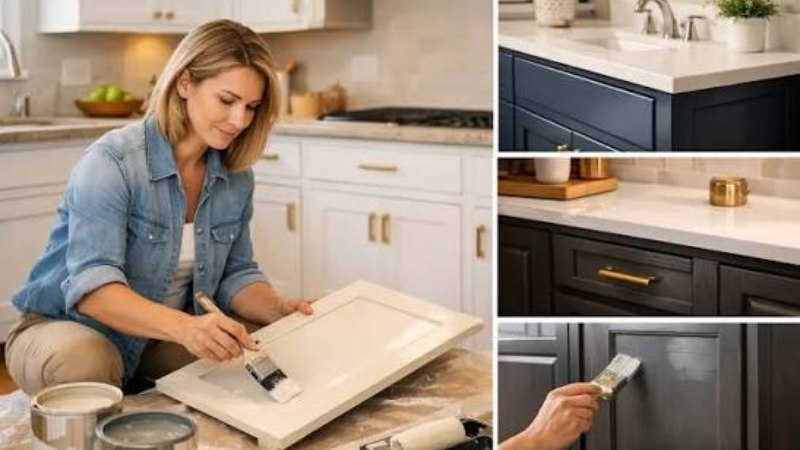
Cabinet finishes are one of the most permanent decisions in a kitchen remodel. Unlike countertops or hardware, which can be swapped out with moderate effort, cabinets are typically in place for 15 to 20 years. Choosing a finish that photographs well but doesn’t hold up to daily use is one of the most common regrets in kitchen renovation.
What Drives Cabinet Stain Popularity
Current cabinet stain trends tend to cluster around a few themes: warm naturals that show wood grain clearly, cool grays that read as contemporary, and two-tone combinations that use a darker lower cabinet against a lighter upper. Understanding the best wood stain color for kitchen cabinets in your specific context depends heavily on your lighting conditions, flooring, and countertop material.
A stain color that looks rich and warm in a showroom lit with incandescent lighting can read as muddy and dark in a north-facing kitchen with limited natural light. Always evaluate stain samples in your actual space before committing.
Durability Factors That Matter More Than Appearance
The finish coat applied over the stain matters as much as the stain itself. Conversion varnish and catalyzed lacquer are the most durable options for kitchen cabinets — they resist moisture, cleaning products, and daily impact better than standard paint or oil-based finishes.
The Wood Finishing Manufacturers Association rates conversion varnish finishes as the highest durability tier for kitchen applications. If you’re investing in quality cabinet boxes and hardware, spending the extra cost on a durable finish coat protects that investment significantly.
Wood Species Affects How Stain Reads
Stain interacts differently with different wood species. Oak has a pronounced open grain that shows clearly through stain, giving it a traditional character. Maple is tight-grained and takes stain very evenly, which makes it popular for contemporary applications. Alder falls between the two — more character than maple, more uniform than oak.
If you’re targeting a specific look from a stain sample, make sure the sample was applied to the same species you’re ordering. A stain applied to maple will look significantly different on oak.
How to Evaluate a Stain Before You Commit
Ask your cabinet supplier for a door sample in your chosen stain and finish, not just a small chip. Live with it in your kitchen for a few days, in different lighting conditions. Check how it looks against your countertop sample and flooring. The combination matters more than any individual element in isolation.