
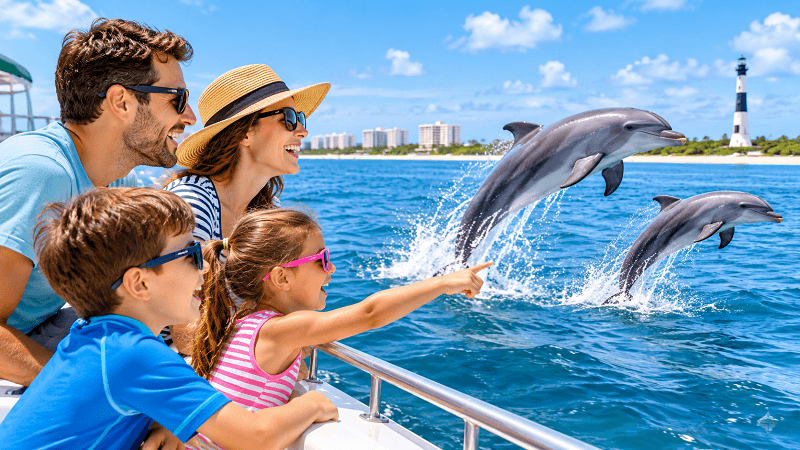
Cocoa Beach dolphin tours work well for families, as long as the plan starts with the kids. Two and a half hours on a boat is a long stretch for a toddler and just about right for a nine-year-old. What goes wrong is almost never big: a skipped nap, a hat left in the car, a child nobody told what to look for. Sound familiar? Good. That means you already know how to fix it.
What to Expect on the Water
The Cocoa Beach Eco Tours trip is on the Banana River Lagoon, a shallow body of water behind the barrier island, and is open to all ages. That’s important when traveling with a four-year-old and a grandparent. Kids mostly watch the water, and the grown-ups, if they are sensible, watch the kids. The captains stay at no-wake speeds and keep a respectful distance from the wildlife, so no one is racing anywhere. Expect a slow ride. That pace suits most families, because nobody has to hurry a toddler along.
A Packing List That Fits One Bag
Pack the basics, with a few parent extras mixed in:
- sunscreen, applied before you leave the car
- sunglasses and a hat (one with a chin strap, if your children are the type to lose hats)
- water for everyone, including you
- a camera or phone with a wrist strap
- a light jacket for winter trips
Skip the heavy cooler and anything that squeaks. Something small enough to hold in your lap is ideal. Some boats have rules about what you can bring on board, especially regarding food. So check the rules before packing a lunch. A sandwich you aren’t allowed to eat is dead weight.
Timing Around Naps and Moods
If you can choose a departure time, pick the window that suits your children rather than you. For most toddlers, mornings work best. Allow time for an early breakfast and a restroom stop. Picture the day the kids finally saw wild dolphins. A rested child spots fins, while an overtired one spots every flaw in the boat. Wildlife doesn’t let on when it will be seen, so tell the kids that sightings are never promised. Stretches of calm water will often feel good instead of like a letdown.
Jobs for Small Spotters
Waiting is the hardest part of wildlife watching, and it’s especially hard at age five. The solution? Jobs. The fin spotter, bird spotter, and boat counter positions all work well. Rotate the jobs if interest fades. A small notebook and pencil let older kids draw what they see. If the boat allows, a snack can buy ten quiet minutes. Sun reflecting off the water can feel stronger than it does on the dock, so keep sunscreen handy. When a sighting happens, let the youngest look first.
When the Dolphins Take a Break
Of course, there are stretches of quiet time on a tour. Wildlife can’t be guaranteed. But that doesn’t mean you can’t find things to do while you wait. The water around the mangrove islands can change colors as the sun moves. The wind can change the water’s surface. Birds can be named and counted. You can search for the straightest mangrove. Suggesting ways for kids to look can help a quiet stretch be part of the trip. Save a few minutes at the end for each person to share the “best thing you saw.” The adults should participate, too.
Teaching Kids to Watch Quietly
NOAA’s guidelines say to stay at least 50 yards from wild dolphins and not to feed them. They recommend that boaters slow to no-wake speed when dolphins are near. Fifty yards is around half a football field. The guidelines are aimed at boaters, but they can be useful to families as well. As a family code, you can try to stay quiet with no leaning over the rail. The same guidelines tell boaters to limit time with any one group of animals to 30 minutes or less. That can work as a timer for kids as well. After 30 minutes, take a break and let everyone reset. A reason helps, so tell the kids the dolphins are wild and the quiet gives them space.
Something concrete to hunt for is a good way to keep the kids involved. Look for a curved dorsal fin rolling through the surface, or a quick puff of breath. If a child spots a fin, they get to point it out to everyone, and the rest of the group follows the arm.
Trivia for the Waiting Stretches
A little trivia makes the wait more fun. NOAA says adult bottlenose dolphins can weigh between 300 and 1,400 pounds, so the largest ones can weigh more than a few full-grown adults. They eat a variety of prey, including fish, squid, and crustaceans such as crabs and shrimp, and they can swallow fish whole, head first. Kids love the head-first part, and you will too, a little. Dolphins find their prey by listening and by using high-frequency echolocation. Calves can nurse for around 20 months and tend to stay with their mothers for three to six years. Calves swim tucked in close to their mothers, in what NOAA calls baby position, which can reduce drag. Ask your kids which of the facts surprised them the most, and see if they can stump the grown-ups on the way home.
Questions Parents Ask
Is a dolphin tour good for kids?
Yes, provided your children can sit still for a couple of hours. Bring something for the quiet stretches, because watching wildlife involves a good deal of waiting. Let younger children pick a favorite hat to wear. Some kids love the animals right away, and others take a while to warm up. Both are normal, so keep the mood easy.
How long is a dolphin tour with kids?
Cocoa Beach Eco Tours lists its dolphin and wildlife tour at 2.5 hours. Plan on several hours once you add parking, check-in, and a restroom stop. Bring a few ideas for the quiet stretches, and a snack if the boat allows one.
When is the best time to see dolphins in Florida?
Florida has a long coast, so here is the answer for one lagoon: on the Banana River, resident bottlenose dolphins are active all year, according to the local operator. Sightings still shift with conditions.
Where can I see dolphins in Florida?
Look for coastal water with fish to hunt. NOAA says bottlenose dolphins live in a wide variety of habitats, including harbors, bays, gulfs, and estuaries, so a shallow lagoon behind a barrier island, like the Banana River, is a sensible place to look.
What type of dolphins live in Florida?
Start with the bottlenose, a good word to teach a preschooler before the trip. NOAA lists adult bottlenose dolphins at 6 to 13 feet long, so a big one is longer than your couch, and NOAA says they can live at least 40 years. A dolphin your children spot could be older than mom or dad, which gives you something to talk about on the drive home.