
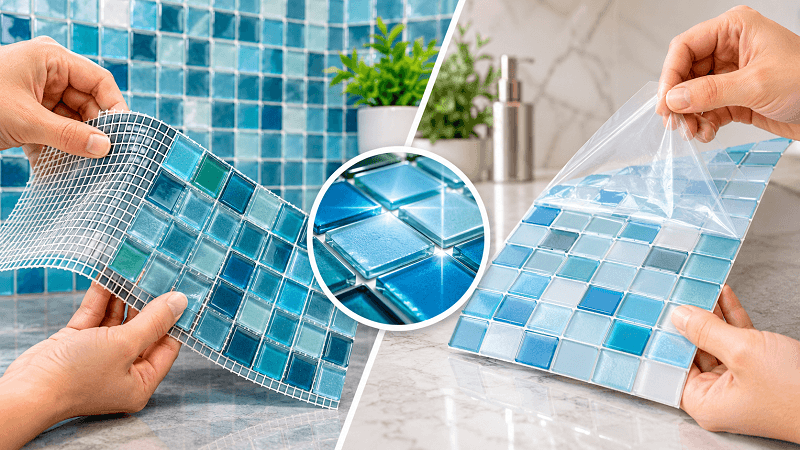
Comparing Mesh-Backed and Face-Mounted Glass Tile Construction
Mesh-backed sheets are assembled by attaching individual glass tiles to a flexible mesh material on the back, making it easy to install large sections at once. In contrast, face-mounted sheets hold tiles together with a removable film or paper on the front surface, which is peeled away after the adhesive sets. Both methods streamline the process of installing intricate mosaics, but the way they interact with grout and adhesive is quite different.
The mesh-backing on some tiles can overlap the edges of each piece, allowing adhesive or grout to seep through onto the tile faces or sides. Face-mounted options, on the other hand, leave the glass surfaces fully exposed after the mounting film is removed, reducing the risk of trapping grout residue. Comparing installation techniques for Glass Tile Sheets mesh vs face mounted reveals that the construction method directly affects how easily grout haze can be prevented or removed.
For design projects where tile clarity and color are critical, like a vibrant shower wall, understanding this construction difference shapes both installation and maintenance decisions.
How Grout Haze Forms on Glass Tile Installations
Grout haze develops when fine particles in the grout mixture dry on the tile’s surface, leaving a cloudy residue. This is especially noticeable on glass because its smooth, reflective surface highlights even the thinnest film. The type of tile mounting impacts how much grout haze forms and how challenging it is to clean up.
When grout is applied, any excess left on the tile face quickly dries, especially if the installation area is warm or poorly ventilated. Mesh-backed sheets sometimes allow moisture to become trapped behind the tiles, slowing the drying process and making haze more persistent. Face-mounted sheets, with their clean front surfaces, allow for easier and faster removal of excess grout before it sets.
Following proper grout haze removal techniques is necessary for both mounting types, but the risk of permanent residue is higher when sheet construction complicates access to the tile surface.
Mesh-Backed Glass Tile Sheets and Moisture Trap Issues
Mesh-backed tiles can introduce unique challenges during installation. The mesh, usually made from fiberglass or similar materials, is bonded to the back of each tile with a water-resistant adhesive. If the mesh covers too much of the tile’s back or edges, it can prevent the adhesive and grout from bonding directly to the glass, trapping moisture and grout particles in the process.
This trapped moisture extends the drying time for grout, allowing haze to harden and become more difficult to clean. In some cases, mesh-backed options leave the edges of the tiles slightly exposed, which makes it easier for grout to seep between the glass and the mesh. Over time, this can result in more pronounced haze, especially in wet areas like shower walls or kitchen backsplashes.
For those installing Glass Tile Sheets in areas prone to splashes or humidity, this mounting method may require extra care and more frequent cleaning to maintain the intended shine.
Face-Mounted Glass Tile Sheets and Clean Surface Advantages
Face-mounted sheets use a removable film or paper on the front of the tiles, which keeps the glass surface entirely free from adhesive and grout until installation is complete. Because the mounting material is stripped off after the tiles are set, the entire face of each tile is accessible for immediate grout removal and cleaning, minimizing the risk of haze buildup.
This construction method also allows grout to fully bond around the edges and between the tiles, reducing the likelihood of moisture pockets. As a result, face-mounted sheets are often preferred for projects where a flawless, crystal-clear glass finish is a top priority, such as decorative accent borders in bathrooms.
By ensuring the tile surface remains unobstructed during installation, face-mounted products make it easier to achieve a spotless result and keep maintenance simple in the long term.
Conclusion
For a glass tile installation with minimal grout haze, choose face-mounted sheets whenever possible. Their clean, accessible surfaces make haze removal far easier than mesh-backed alternatives, especially in moisture-prone spaces. If you must use mesh-backed tiles, plan for extra cleaning and consult product guidelines to reduce haze before it sets.