

Playgrounds give children valuable opportunities to interact, explore, and learn alongside their peers. Beyond physical activity, these everyday environments help children practice important social skills, including waiting, taking turns, sharing toys, and participating in group games.
However, these interactions do not always come naturally. Some children may struggle to understand when to wait, how to share a preferred toy, or how to respond when another child wants to join their activity. With consistent guidance and age-appropriate practice, parents and caregivers can make these social experiences easier to navigate.
Why Turn-Taking and Sharing Matter in Childhood Development
 Turn-taking and sharing are foundational social skills that help children participate in everyday interactions. Whether they are playing with building blocks, using playground equipment, or joining a group activity, children need opportunities to understand that other people have needs, preferences, and opportunities to participate.
Learning to wait is an important part of this process. A child who understands that another person is having a turn can gradually develop patience and learn to manage the anticipation of getting something they want. These experiences also introduce children to basic social expectations that apply beyond the playground.
Learning how to take turns can be particularly useful when introducing children to the idea that play involves cooperation rather than always getting their preferred outcome.
Starting With Simple Turn-Taking Activities
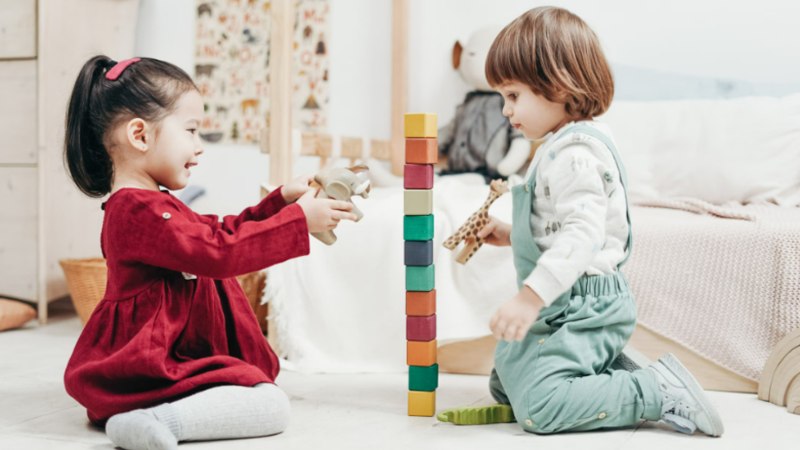
Children do not need complicated games to begin learning how turn-taking works. Simple activities with clear beginnings and endings provide an accessible way to introduce the concept. Rolling a ball between two people, stacking blocks one at a time, or taking turns placing puzzle pieces can all create natural opportunities for practice.
Short activities are often more effective when a child is first learning this skill. Instead of expecting them to wait for extended periods, caregivers can begin with brief turns and gradually increase the waiting time as the child becomes more comfortable.
Visual cues can also make turn-taking easier to understand. A small object, such as a ball or toy, can indicate whose turn it is, while picture cards can help children follow the sequence. These supports are particularly useful for children who benefit from visual communication rather than verbal instructions alone.
Teaching Children to Share Toys and Playground Equipment
Sharing can be challenging when children become attached to particular toys or activities. A child may not understand why another person should use something they are currently enjoying, especially when they have difficulty communicating their preferences or managing disappointment.
Playground equipment offers additional opportunities to practice sharing. Waiting for a swing, allowing another child to use the slide, or taking turns with a climbing structure introduces children to situations where resources are shared among several people.
Caregivers can model appropriate language during these moments. Phrases such as “Can I use that when you’re finished?” and “Would you like a turn?” give children practical ways to communicate their intentions. Over time, these expressions can become part of their everyday interactions.
Using Play-Based Learning to Encourage Social Interaction
Play-based learning allows children to practice social skills in familiar and enjoyable situations. Instead of treating turn-taking and sharing as isolated lessons, parents can incorporate them into activities that children already find interesting. This makes practice feel more natural and encourages participation.
Outdoor activities can provide similar learning opportunities. Passing a football, taking turns on a scooter, or participating in a simple playground obstacle course allows children to practice waiting and cooperation while remaining physically active.
Parents can also introduce games that involve following a sequence of actions. The simple play activities can complement everyday practice by giving caregivers additional ideas for encouraging interaction, participation, and shared play without making activities overly complicated.
Supporting Children Who Struggle With Turn-Taking and Sharing
Some children need additional support before they can participate comfortably in shared activities. They may become frustrated when asked to wait, have difficulty understanding social expectations, or struggle to communicate that they want a particular toy. Recognizing these challenges helps adults respond with appropriate guidance rather than unnecessary pressure.
Breaking activities into smaller steps can make these experiences more manageable. A caregiver might first teach a child to pass an object, then introduce a short waiting period, and eventually practice the same skill during a game with another child. Each step provides an opportunity to build confidence before introducing additional expectations.
For children who benefit from more structured opportunities to interact, social skills groups for autism can provide guided practice with turn-taking, sharing, communication, and cooperative play. These environments allow children to work on social goals with support while gradually becoming more comfortable interacting with peers.
Using Positive Reinforcement to Encourage Cooperation
Positive reinforcement can help children understand which behaviors support successful social interactions. When a child waits for their turn, shares a toy, or allows another person to join a game, acknowledging that behavior helps make the expected action more recognizable.
Consistency is important when using reinforcement. If caregivers acknowledge cooperative behavior across different activities, children have more opportunities to understand how the same social expectations apply in different situations. This can make it easier to transfer newly learned skills from home to school and playground settings.
Adults should also recognize effort rather than expecting perfect interactions. A child who waits for a few seconds instead of immediately reaching for a toy is making progress. Building on these smaller achievements can gradually help children manage longer turns and more complex social activities.
Helping Children Manage Frustration While Waiting
Waiting can bring up strong emotions, particularly when children are excited about an activity or want immediate access to something they enjoy. Learning to manage these feelings is an important part of developing turn-taking skills.
It is equally important to acknowledge a child’s frustration rather than dismissing it. Saying “I know you want the swing, but your friend is using it right now” communicates understanding while maintaining the expectation that others also get a turn.
Various play-based strategies can provide additional ideas for introducing social interactions in manageable ways. Caregivers can adapt activities to suit a child’s interests, communication abilities, and comfort level rather than expecting every child to respond identically.
Making Turn-Taking and Sharing Part of Everyday Life
Children benefit when social skills are practiced across different environments. While structured activities provide opportunities to introduce new behaviors, everyday situations allow children to apply what they have learned. Sharing snacks, taking turns choosing a family game, or passing household items can all become useful learning moments.
“Consistency between parents, caregivers, teachers, and intervention professionals also matters. When adults use similar language and expectations, children have a clearer understanding of what is expected during shared activities.” – Desiree Lawrence, Clinic Director, Little Legends ABA
Building Positive Social Experiences Through Play
Turn-taking and sharing are skills children develop through repeated opportunities, patient guidance, and positive interactions. Playgrounds offer a natural environment for practicing these behaviors, but meaningful learning can also happen at home, in classrooms, and during everyday family activities.
By introducing simple games, modeling cooperative behavior, and acknowledging small achievements, parents can help children become more comfortable interacting with others. With appropriate support and realistic expectations, children can gradually develop the social skills needed to enjoy play and build meaningful connections with their peers.