

Most new contractors underestimate how fast insurance requirements show up in the real world. Construction Insurance for Startups isn’t just a checkbox; it’s what determines whether you can land your first client, pull a permit, or walk onto a jobsite. The challenge is that new firms face a double burden: no operating history makes carriers nervous, and cash flow is tight before projects actually generate revenue. After reviewing dozens of providers serving Florida contractors, this guide breaks down five options worth serious consideration.
Behind the ranking
Options were selected by pulling data from official company websites, industry directories, and publicly available customer feedback. Only providers with a documented track record in construction or contractor insurance made the shortlist. Newer or unverifiable entrants were filtered out before any deeper review began.
→ See the full research breakdown
- Affordable Contractors Insurance – Best for small to mid-sized Florida contractors needing fast coverage and certificates
- Genrose Insurance – Best for small business insurance and construction industry coverage
- Markel – Best for complex and hard-to-place construction insurance
- biBerk – Best for small business construction insurance
- Liberty Mutual – Best for commercial and specialty insurance for construction businesses
The Real Impact of Construction Insurance For Startups
Getting the wrong coverage early on doesn’t just cost money. It can cost you the contract entirely. Most general contractors and project owners in Florida require proof of insurance before any work begins, and startups with no loss history often get quoted rates that feel completely disconnected from their actual risk profile.
Knowing which coverages are legally required versus strongly recommended makes a real difference in how you structure your first policy.
The right provider helps you avoid overpaying for coverage you don’t need while making sure the gaps that actually matter get filled. Over time, that translates into lower claims frequency, a better experience modification rate, and certificates of insurance that arrive fast enough to keep projects moving.
5 Top Picks at a Glance
Note: All data in this table is sourced from review platforms and the official websites of the listed companies.
| Company Name | Years Operating | Headquartered In |
| Affordable Contractors Insurance | Est. 2011 | United States |
| Genrose Insurance | Est. 2001 | Scottsdale, Arizona |
| Markel | Est. 1930 | Glen Allen, Virginia |
| biBerk | Est. 2015 | Stamford, Connecticut |
| Liberty Mutual | Est. 1912 | Boston, Massachusetts |
1. Affordable Contractors Insurance – Best for Fast Coverage and Compliance for Florida Contractors
How Does Affordable Contractors Insurance Help Its Customers?
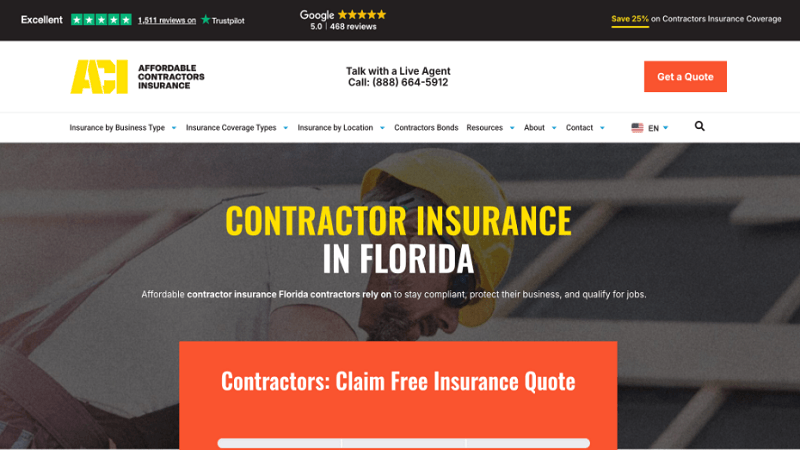
Affordable Contractors Insurance works with trade professionals and construction businesses, covering everything from general liability and workers’ compensation to builder’s risk, commercial auto, tools and equipment, umbrella liability, and professional liability. They focus on the contractors who actually need fast answers: roofers, electricians, plumbers, HVAC contractors, and specialty trades. Same-day policy binding and quick certificate of insurance delivery make them a practical fit for startups that can’t afford to lose a project while waiting on paperwork.
What Sets Affordable Contractors Insurance Apart from Construction Insurance For Startups?
Startups often struggle to find carriers willing to write new business without an established loss history. Affordable Contractors Insurance addresses that directly by working with small to mid-sized contractors from day one. Their payment options are designed for smaller operations, which makes it easier to manage premiums before project revenue catches up.
Real User Sentiment:
Honestly, the consistent theme across reviews points to speed and accessibility. Contractors mention getting coverage and certificates faster than expected, which matters a lot when a general contractor gives you a 24-hour window to produce proof of insurance. That turnaround time alone keeps clients coming back.
2. Genrose Insurance – Best for Small Business Construction Coverage with Broker Representation
How Does Genrose Insurance Help Its Customers?
Genrose Insurance operates as an independent broker rather than a captive agent, which means they represent the client, not the carrier. Founded in 2001 and licensed across 13 states, they work with small businesses across liability, health, auto, commercial, and specialty coverage lines. For construction clients, that broker model means someone is actively shopping your risk across multiple top-tier carriers instead of fitting you into a single carrier’s appetite. That distinction matters when you’re a startup with a thin file.
What Sets Genrose Insurance Apart from Construction Insurance For Startups?
The broker model solves a real problem for new contractors: finding a carrier willing to write coverage when there’s no loss history to point to. Having someone advocate on your behalf across multiple markets tends to produce better pricing and fewer coverage gaps than going direct with a single insurer.
Real User Sentiment:
Genrose holds a BBB A+ rating, which is a reasonable trust signal for small business owners doing due diligence. Public-facing reviews are limited, but the long operating history since 2001 and consistent accreditation suggest a stable track record. That kind of longevity is hard to fake in a service business.
3. Markel – Best for Complex and Hard-to-Place Construction Insurance
How Does Markel Help Its Customers?
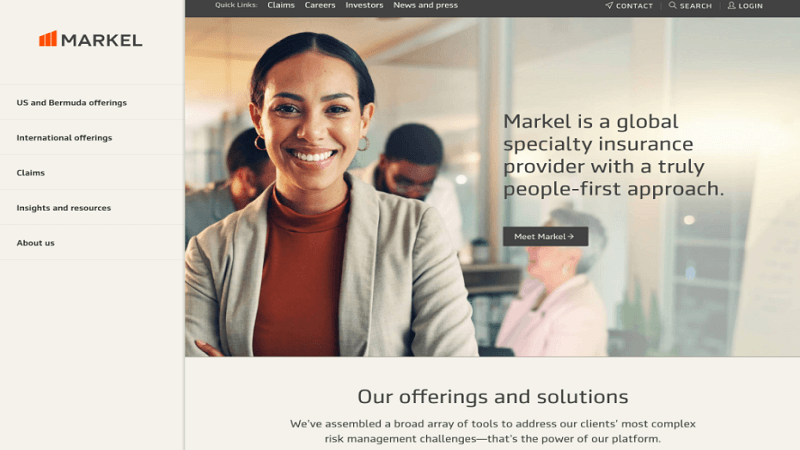
Markel operates as a specialty insurance holding company with three divisions covering domestic, international, and reinsurance markets. They focus on risks that standard carriers often won’t touch, which makes them genuinely useful for construction firms working on unusual project types or operating in high-risk trades. With 22,900 employees across 76 offices in 18 countries, the depth of underwriting knowledge behind each policy is real. They’ve built their reputation on customizing coverage rather than forcing clients into off-the-shelf products.
What Sets Markel Apart from Construction Insurance For Startups?
Specialty trades and non-standard projects often hit a wall with conventional insurers. Markel exists to solve that problem. Winning Specialist Insurance Company of the Year at the British Insurance Awards isn’t a marketing claim; it reflects a consistent ability to write coverage that other carriers decline.
Real User Sentiment:
Markel has earned Feefo Platinum Trusted Service for six consecutive years, which is based on verified customer reviews rather than internal scoring. That consistency over multiple years signals something beyond a single good year. Clients dealing with complex risks tend to stay because the coverage actually fits their situation.
4. biBerk – Best for Affordable Direct-to-Consumer Construction Insurance
How Does biBerk Help Its Customers?
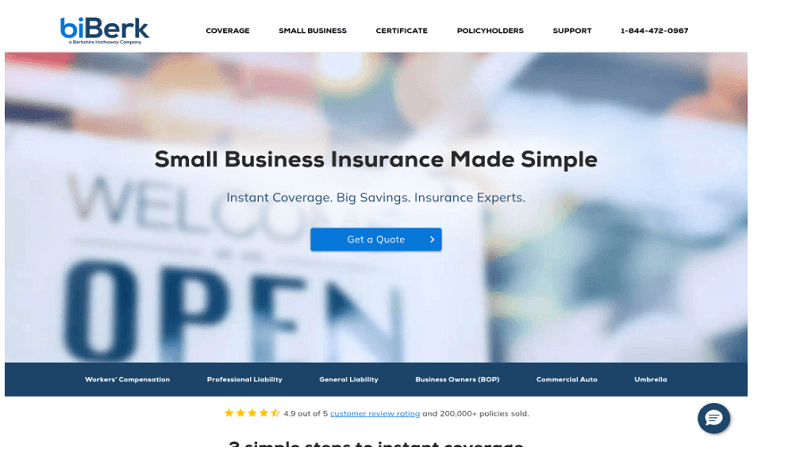
biBerk is part of the Berkshire Hathaway Insurance Group and built around a direct-to-consumer model that cuts out the broker layer entirely. For small construction businesses, that means lower premiums (up to 20% savings compared to broker-placed policies, according to their published figures) and a simpler buying experience. They cover the standard coverages construction startups actually need: general liability, workers’ compensation, commercial auto, and professional liability. Over 200,000 small businesses have gone through their platform, which builds a solid baseline of risk data for pricing.
What Sets biBerk Apart from Construction Insurance For Startups?
Cash flow is one of the biggest pressure points for new contractors. biBerk’s direct model lowers the upfront premium cost by removing intermediary fees from the equation. Backed by Berkshire Hathaway with an A++ rating from A.M. Best, the financial stability behind each policy is about as strong as it gets in the small business insurance space.
Real User Sentiment:
The feedback pattern for biBerk consistently centers on price and simplicity. Small contractors appreciate being able to get a quote, buy a policy, and access documents without going through multiple phone calls or waiting days for a response. And honestly, for a startup trying to keep costs lean, that kind of friction-free process is rare.
5. Liberty Mutual – Best for Commercial and Specialty Insurance for Construction Businesses
How Does Liberty Mutual Help Its Customers?
Liberty Mutual is the sixth-largest property and casualty insurer in the world, operating through US Retail Markets and Global Risk Solutions divisions. For construction businesses, their commercial multiple peril, general liability, commercial auto, and workers’ compensation products are backed by 112 years of underwriting experience and a network of over 2,300 sales professionals. Their Global Risk Solutions division handles the more complex commercial accounts, which makes them a viable option for growing firms that have moved past the startup phase and need broader coverage structures.
What Sets Liberty Mutual Apart from Construction Insurance For Startups?
Scale and stability are what Liberty Mutual brings to the table. That matters for construction firms growing quickly and needing a carrier that won’t have to re-underwrite them every year. Working with a carrier of this size typically means more consistent pricing over time and fewer coverage disruptions as your business evolves.
Real User Sentiment:
Liberty Mutual doesn’t have a narrow review profile specific to construction, but the broader reputation reflects a well-capitalized carrier with strong retention numbers. Commercial clients tend to value the breadth of product options and the ability to consolidate multiple coverage lines with one carrier (not always easy to find at this scale).
How These Were Chosen and Verified
The Data Collection Phase Explained
The initial list was built by pulling company data from multiple sources at once: state contractor insurance directories, national business insurance directories, third-party review platforms, and official company websites. The goal during this phase was breadth, not precision. A long list of candidates was assembled before any filtering began, capturing both well-known carriers and smaller specialty brokers serving the Florida construction market.
The Shortlisting Pass
Once the long list was assembled, unverifiable entrants were removed first. Any company without a publicly accessible website, documented business history, or traceable presence in review databases was filtered out. From there, review patterns were analyzed across multiple platforms to identify providers with consistent feedback rather than a handful of outlying reviews. Companies with thin or inconsistent review histories were deprioritized even if their product offering looked strong on paper.
Verification Pass
Each shortlisted company was then cross-referenced against its own claims. Website descriptions were compared against what customers actually reported experiencing, with particular attention to coverage availability, certificate of insurance turnaround times, and responsiveness for new accounts with limited operating history. Where a company claimed specific capabilities, those claims were checked against independent review data before being accepted as accurate.
Industry Recognition and Authority
Industry awards were factored in as supporting evidence, not determining criteria. Awards from established industry bodies, mentions in trade publications, and verified ratings from financial rating agencies like A.M. Best were noted where available. These signals help distinguish carriers with sustained performance from those with a good marketing presence but a thinner operational track record.
Evidence Specific to Construction Insurance For Startups
The final pass focused on relevance to the target reader. Each company was evaluated for whether it had dedicated service pages or documented experience covering the types of risks new construction firms face in Florida: general liability for unlicensed or newly licensed trades, workers’ compensation for small crews, and fast certificate delivery for client requirements. Providers without clear evidence of serving this audience were ranked lower regardless of their overall market size.
What to Look For When Choosing Construction Insurance For Startups
Choosing the right construction insurance as a startup comes down to fit, not just price. The cheapest policy that has gaps in the right places will cost far more than a slightly higher premium with solid coverage. Here’s what deserves close attention before you commit.
- Industry and Domain Experience: Look for providers that have documented experience with construction or contractor risks. A carrier that knows what a roofing subcontractor’s exposure looks like is going to price and structure coverage more accurately than one treating it as generic commercial liability.
- Features and Service: General liability is the starting point, but most Florida contractors also need workers’ compensation, commercial auto, and builder’s risk, depending on project type. Make sure the provider can bundle these rather than forcing you to shop multiple carriers.
- Pricing Structure: Premium cost as a percentage of project revenue matters a lot at the startup stage. Ask whether payment plans are available and whether rates are adjustable as your payroll or project size grows.
- Results Measurement: Track how quickly you can get a certificate of insurance after binding a policy. That turnaround time directly affects your ability to start jobs on schedule.
- Industry Knowledge and State Licensing Requirements: Florida has specific contractor bonding and licensing requirements that affect which coverage types are legally required. A provider unfamiliar with state construction codes and OSHA standards may leave you exposed without realizing it.
Final Take
Getting construction insurance right from the start saves Florida contractors from expensive coverage gaps and lost contracts. Affordable Contractors Insurance stands out for speed and contractor-specific focus, while carriers like Markel and Liberty Mutual cover more complex or large-scale needs. biBerk is worth serious consideration for cost-conscious startups, and Genrose brings real value through its broker model. As Florida’s construction market keeps growing, the firms that get their coverage structure right early will have a clear operational edge.