
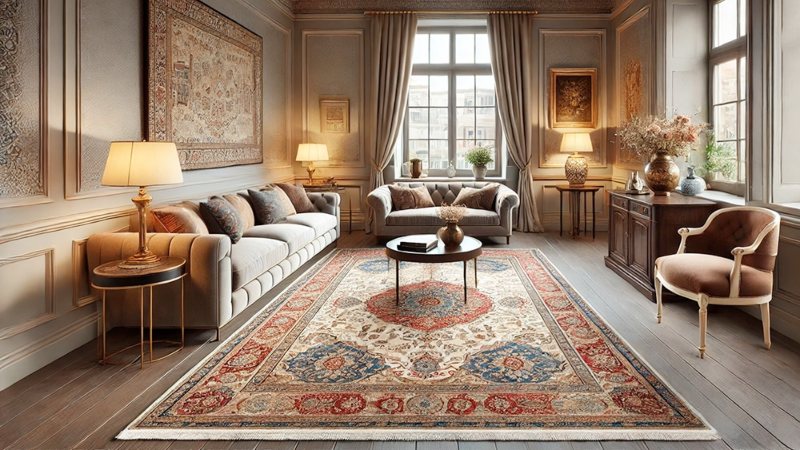
An interior feels complete not because of the number of expensive items, but because of the details that create its mood and character. It is the reason why antique rugs remain popular among designers and consumers all over the world. These rugs may harmonize with furniture of different epochs and make contemporary interiors cozier and more vivid. Each of them bears the signs of handicraft, tradition, and art, becoming not only a decoration but also a part of the story that continues in the new house.
Discovering Vintage Area Rugs
If you want to see a selection of unique, handmade carpets, visit https://sixvintagerugs.com/. When searching for a distinctive carpet, remember that it will be unique not only in its design but also in its history. For this reason, vintage area rugs have much higher value compared to mass-produced products. They were made by hand, are often transferred from generation to generation, and remain attractive for many years.
The main peculiarity of the carpets is their organic combination of elegance and quality materials. Six Vintage Rugs offers a collection of handcrafted pieces.
When selecting a carpet, it is necessary to take into account several aspects:
- The rug’s origin and region of manufacture;
- The density of the weave and the quality of the wool;
- The condition of the warp and pile;
- The specifics of the pattern;
- The color palette should complement the existing interior design.
This comprehensive assessment allows you to choose a piece that will delight you for many years to come.
Vintage Style Rugs Bring Personality into Every Interior
Most contemporary interiors aim to avoid monotony. The use of vintage style rugs allows for the creation of a natural interior that would not be affected by short-lived trends.
Vintage rugs match well with wood, natural stone, metals, glass, and modern furniture. They serve as a common link in terms of textures and colors.
Another important feature of these rugs is their ability to adjust to the changes in the interior. Whether new furniture pieces appear, walls are repainted, or accessories are installed, a high-quality vintage carpet will never go out of place. It does not correspond to a specific style and easily adapts to the updated interior. In this way, the purchase is a good long-term investment in household comfort.
The aspect of tactile perception should also be mentioned. Wool used in the manufacture of the vintage rugs is comfortable to the touch, provides thermal insulation, and makes the room cozy. With the right lighting, the carpet can create a cozy atmosphere that makes one want to spend more time on it.
Another good point about such objects is that they serve as a strong accent without additional decor. One carpet may replace several decor items at once, preserving a sense of space and harmony, creating a holistic, individual interior while remaining suitable for everyday use.
The combination of minimalism and a richly patterned piece become especially expressive.
In addition to their aesthetic functions, such objects are quite functional. Natural materials provide durability, and complicated traditional patterns help hide traces of daily life.
Six Vintage Rugs: Every Piece Has Its Own Story
Authentic hand-knotted carpets are virtually impossible to replicate. Even if the artisans used identical materials and similar patterns, subtle differences make each piece unique.
Over the years, such carpets become part of family history. They accompany the transition of homes, interiors, and generations, retaining their value.
Simultaneously, however, their look gradually becomes more expressive. The patina of age is regarded as a positive rather than a negative feature; it highlights the rug’s genuine nature and makes it more attractive.
Details that cannot be recreated through modern mass production are especially valuable. Unique nuances of the weaving technique, smooth color transitions, and pattern elements transform each carpet into an authentic work of decorative art. They enliven the interior and make it more pleasant. As a rule, owners note that such a carpet becomes the room’s focal point and draws visitors’ attention. Besides, vintage rugs are easy to adjust to different interiors, keeping their relevance whatever the fashion trends are.
Customers value these carpets for several reasons:
- Individual, seamless patterns;
- High-quality natural materials;
- Handcrafted;
- Durability;
- Their ability to seamlessly blend with interiors of various styles.
It is this combination of factors that makes these rugs so sought-after even decades later.
Vintage Rug Shop: Choosing a carpet That Feels Right
A reputable vintage rug shop goes beyond just selling nice products. Rather, it is the place that helps select the right item based on the room’s specifics, lighting conditions, and the house’s overall decor.
The choice is hardly ever made only based on the color scheme. Of course, what should matter most is thinking about the room’s dimensions, furniture placement, frequency of use, and natural lighting.
Larger-sized carpets can visually harmonize a living room, emphasize a seating area, and create an intimate atmosphere in the bedroom. Small carpets can serve as accents in the hallway, office, or dining room.
At the same time, one must remember that vintage rugs can easily complement any style, be it contemporary furniture, antique items, industrial style, or Scandinavian design.
Time only adds to their charm, as they become part of family history and preserve meaningful memories.
More and more people today try to surround themselves with objects of real value and durability. That is why the demand for handmade items increases every day. With such products, one can replace impersonal, mass-produced items with something unique.
With such an item, one obtains more than mere decoration; one gets artwork that will become an integral part of one’s everyday domestic routine, enriching the interior with its warmth and contributing to a unique atmosphere. The principles of thoughtful home decor remain timeless because true beauty comes from quality and tradition.