
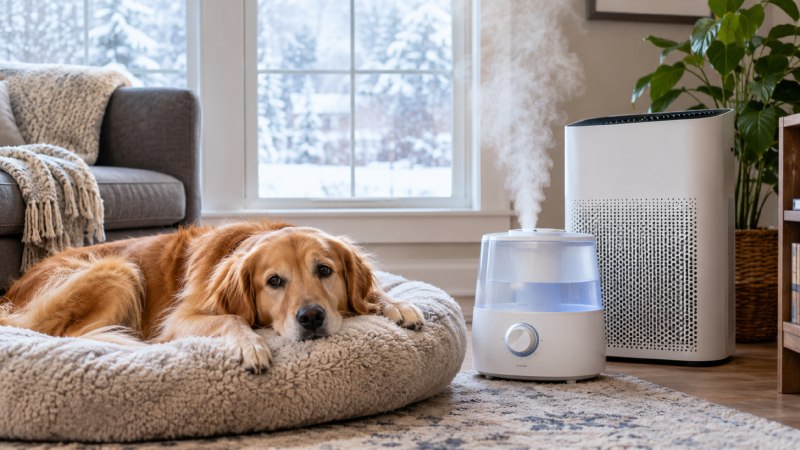
The Hidden Cost of Skipping Humidity Control for Pets
A dog that spends the colder months breathing air stripped of moisture pays for it in small, cumulative ways that owners often miss until a vet visit reveals the pattern. Cracked paw pads, flaky skin, a dry nose that stays dry past morning, and a cough that sounds suspiciously like kennel cough but never gets diagnosed as such are frequently side effects of indoor air that has dropped below a comfortable humidity range. Furnaces and space heaters pull moisture out of a home’s air at a rate most people underestimate, and dogs, who can’t adjust the thermostat or grab a glass of water on a whim the way people do, absorb the consequences through their skin, sinuses, and respiratory tract. Left unaddressed through an entire winter, this dryness can aggravate allergies, worsen existing skin conditions, and make a dog more prone to minor infections that take longer to clear.
Cool mist humidifiers built or sized for pet environments address this by adding water vapor back into the air without raising the temperature of the room, which matters for dogs that already run warmer than humans and overheat easily. Unlike warm mist units, cool mist versions carry a lower burn risk around curious noses and paws, and they tend to be easier to clean without worrying about residual heat damaging plastic components. The goal isn’t to turn a living room into a greenhouse; it’s to bring relative humidity back into a range that keeps mucous membranes functioning the way they’re supposed to. Veterinarians who treat recurring respiratory irritation in dogs during winter months often point to indoor air as the overlooked variable, since owners tend to assume outdoor cold is the only seasonal threat worth managing.
Balancing Moisture and Airflow in the Same Room
Adding moisture to a room solves one problem, but it can quietly create another if the air isn’t also being filtered and circulated properly. Humid air holds onto dust, pet dander, and mold spores more effectively than dry air does, which means a cool mist humidifier running in a poorly ventilated basement or bedroom can inadvertently thicken the particulate load your dog is inhaling. This is especially relevant in basements, where humidity already tends to run higher and airflow is often worse than anywhere else in the house. A dog that naps in a finished basement rec room or sleeps in a crate down there is exposed to whatever settles in that air for hours at a stretch, so pairing added moisture with some form of air cleaning isn’t optional if you want the humidifier to actually help rather than just shift the problem.
This is where a basement air purifier earns its place alongside the humidifier rather than as a separate purchase decision made later. Running both in the same space lets the humidifier correct dryness while the purifier pulls out the dander, mold spores, and dust that basement humidity tends to trap in the air instead of letting it settle. The combination matters more in finished basements used as dog living areas than in dry, drafty upper floors, simply because the underlying air quality starts in a worse place to begin with. Owners who’ve dealt with a dog’s chronic sneezing or itchy skin often find that humidity alone didn’t fix things until filtration was added to the room as well.
Workplace air quality research offers a useful reference point here, even though it wasn’t written with pets in mind. NIOSH occupational air quality standards describe how humidity, ventilation, and particulate concentration interact in enclosed spaces, and the same physics apply whether the occupant is a person at a desk or a dog asleep on a basement couch. Enclosed, humid, poorly ventilated rooms accumulate airborne particles faster than drier, better-circulated ones, regardless of species. Applying that logic to a home means treating the basement, or any room where a cool mist humidifier runs for hours a day, as a space that needs both moisture correction and active filtration, not one or the other. Dogs can’t advocate for better air the way a person filing a workplace complaint can, which puts the responsibility for noticing and correcting these conditions entirely on the people sharing the house with them.