
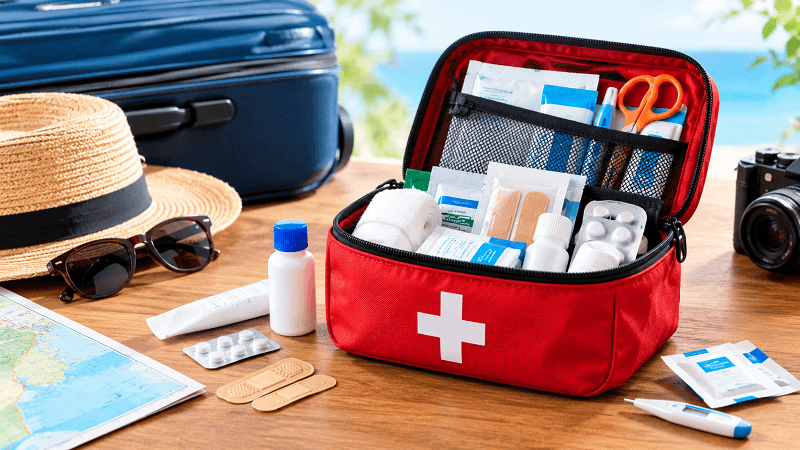
Whether your travels take you overseas or across state lines, it’s always a good idea to pack a first-aid kit too. A first-aid kit can help you treat minor illnesses and injuries when you’re far from home. Here’s some helpful guidance on building a travel-friendly first-aid kit and what to do if you suddenly become more seriously ill or injured while away.
Items To Pack
Ideally, your first-aid kit should have everything you may need to treat a mild illness or injury. While it should include a variety of things, you don’t necessarily have to bring along your entire medicine cabinet. Use a small box or bag to store everything and use travel or sample sizes when you can to save space. Here’s a helpful list of items you should include:
Basic First-Aid Items
The most frequently used items in a first-aid kit are usually the basics. This includes things like:
- Antibacterial wipes
- Hand sanitizer
- Instant cold pack
- Pain reliever
- Thermometer
- Self-adhesive wrap
- Tweezers
Scissors are a useful item to include since you may need them to cut up gauze or bandages. If you are flying, be sure to place them in your checked luggage instead of your carry-on bag.
Skin Problem Essentials
Some of the most common injuries people get on vacation are skin-related. These items can help you take care of minor scrapes, cuts and bug bites:
- Aloe vera gel
- Antibiotic ointment
- Antiseptic
- Bandages
- Calamine lotion
- Gauze
- Medical tape
When packing bandages, it’s a good idea to include some in various shapes and sizes.
Medicine for Stomach Trouble
An upset stomach can quickly ruin a good time, especially when you’re far away from home. Be ready for digestive issues with the following:
- Antacids
- Anti-diarrhea medication
- Laxatives
- Stool softeners
Even if you’re not prone to motion sickness, it’s always a good idea to keep a few motion sickness tablets in your kit, just in case. Remember, some may cause drowsiness, so use them with caution.
Items for Respiratory Problems
Coughs, sneezes and a runny nose are a bummer when you’re on vacation. These medications will have you feeling better in no time:
- Antihistamines
- Cold relief medication
- Cough suppressant
- Saline nasal spray
A combination of dry air, dehydration and close contact with others can cause a sore, scratchy throat for many travelers. Be sure to also include throat lozenges or Chloraseptic spray in your first-aid kit.
How To Prepare for Travel
Before going on any extended vacation, it’s a good idea to schedule an appointment with your primary care provider. They can ensure you’re up to date on vaccines and provide any other necessary preventative care before you leave town. Your doctor can also supply you with refills for any prescription medications you may need while away.
Using Your Travel Emergency Kit Safely
Preparing your kit is only one step towards keeping you and your fellow travelers healthy. Here are a few tips for using your kit safely.
- Pay attention to dosing instructions for all your medications.
- Any old medicines that are expired should be safely disposed of.
- Keep your prescription and over-the-counter medications in their original labeled packaging.
- Make a list of all your medications and keep it in your bag or purse.
- If you have children, make sure your first-aid kit is kept out of reach.
If you have prescription painkillers or medications with needles, be sure to bring a doctor’s note explaining why you use them. A note will also come in handy if your luggage is searched by the TSA (or any other agency) while you travel.
What To Do if You’re Seriously Injured on Vacation
While your first-aid kit is helpful for minor health problems, it’s important to seek medical care if you do become seriously ill or injured. If you are hurt while on vacation, seek professional medical care and take the following steps.
Seek Immediate Medical Attention
Call emergency services in the case of life-threatening injuries. Don’t wait until you return home to get checked out. Delaying care can worsen your injuries and potentially weaken insurance or legal claims. Be sure to follow your doctor’s instructions and get copies of all paperwork regarding your diagnosis, discharge and prescriptions.
Report the Incident
If your injury involved a motor vehicle crash or a crime, call the police. If it happened at a hotel, resort or other private property, let management or the appropriate staff members know and request a written incident report. Before leaving the location, ask for a copy of the official police or management report.
Document the Scene and Preserve Evidence
Take pictures and video of your injury, where the accident happened and if there were any dangerous conditions that may have contributed to the incident (such as a broken staircase, wet floors or malfunctioning equipment). If anyone saw the accident happen, get their names, phone numbers and brief statements about what they witnessed. Make sure you save all receipts and records related to the incident. It’s also helpful to keep an organized folder containing evidence of your out-of-pocket costs. These include your medical bills, additional lodging expenses and pharmacy receipts.
Protect Your Rights
When an accident happens while on vacation, make sure to contact your health or travel insurance company to let them know what happened. It’s also important to take the steps necessary to protect your legal rights.
Never admit fault, apologize or sign a liability waiver without legal review. Also, do not accept any settlement offered by property owners without speaking with an experienced personal injury lawyer like the attorneys at Barrera Law Group LLC.
Claims involving injuries that occur out of state or abroad while vacationing can be very complex. A lawyer can help you navigate the process of a personal injury claim, advocate for your rights and make sure you receive a fair payout for your injuries.
Vacations should be about fun and adventure, but sometimes illnesses and injuries happen. By planning ahead, packing a first-aid kit and knowing what to do if an accident occurs, you’ll be ready for whatever your travels may bring.