
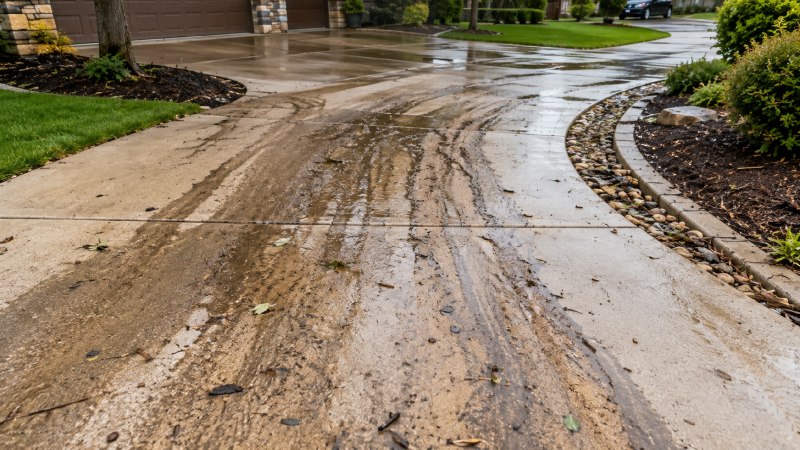
Summer is officially winding down, and while you might be looking forward to cooler temperatures and crisp autumn mornings, your driveway is likely bearing the heavy scars of the season. If you live in Ashland, you are intimately familiar with the intense heat waves paired with those violent, unpredictable afternoon thunderstorms that consistently define the month of August. This harsh cycle of baking under relentless ultraviolet rays followed by sudden, torrential downpours takes a significant toll on both concrete and asphalt surfaces.
As the season transitions, you might step outside and notice that your previously pristine driveway looks streaked, discolored, or unevenly worn. It is not just your imagination; the extreme weather fluctuations literally alter the surface and substrate of your pavement. Before you panic and assume that you need a costly replacement, it is crucial to understand exactly what the summer weather does to your driveway.
By recognizing the difference between ordinary seasonal staining, surface grime accumulation, and actual structural damage, you can take the right corrective steps. Let us explore why your driveway looks so different after a summer of afternoon storms and how you can restore its original curb appeal before the winter freeze arrives.
The Double Whammy of Intense UV Rays and Heavy August Rainfall
The dramatic change in your driveway’s appearance usually begins with the invisible power of ultraviolet radiation. Throughout the long summer days, intense UV rays constantly beat down on your concrete or asphalt, slowly breaking down the chemical bonds in sealants and binders. For asphalt, this oxidation process makes the surface brittle and fades its rich black color into a dull, dusty gray.
Concrete suffers similarly, as the heat bakes out essential moisture and weakens topcoat sealants. Just when the pavement is at its most vulnerable, sudden afternoon thunderstorms deliver a secondary blow. Torrential rain washes over this weakened, porous surface, sweeping away microscopic particles and exposing the raw material underneath.
This thermal shock—rapidly cooling a surface that was just baking at over one hundred degrees—causes minor expansion and contraction. Over a single summer, this repeated cycle of scorching heat and flash cooling leaves the surface looking weathered, faded, and noticeably older than it did in the spring.
Accumulation of Dirt, Environmental Runoff, and Tree Debris
Beyond the structural weathering caused by the sun, summer storms are notorious for dragging massive amounts of environmental debris across your pavement. When heavy rain hits your property, water flows toward the lowest point, carrying topsoil, mulch, and lawn fertilizers directly across your driveway.
This continuous runoff creates distinct, dark dirt lines and muddy streaks that embed themselves deep into the pores of the unsealed concrete or asphalt. Additionally, August storms frequently knock down leaves, twigs, and berries from surrounding trees. When these organic materials sit on a wet driveway and bake in the subsequent afternoon sun, they release natural tannins that cause stubborn, rust-colored stains.
If a thorough inspection rules out structural issues or severe drainage problems, addressing this superficial buildup is highly effective. Contacting pressure washing companies in Ashland is the best way to blast away these deeply set organic stains and restore your driveway to a clean, uniform appearance.
The Impact of Hot Vehicle Tires and Oil Residue During Storms
Another major contributor to seasonal driveway discoloration involves the very vehicles you park on it every day. During peak summer heat, automobile tires become incredibly hot as they travel over sun-baked asphalt roads. When you pull into your driveway, these scorching tires transfer softened rubber and heat directly into the pavement, often leaving dark, permanent-looking tire marks. Furthermore, the extreme summer temperatures can thin out the automotive fluids in your vehicle, leading to minor oil, grease, and antifreeze leaks that drip onto the driveway.
When an afternoon thunderstorm inevitably rolls through, the heavy rainwater mixes with these petroleum-based fluids. Because oil and water do not mix, the storm runoff spreads a thin, iridescent sheen of grease across a much larger surface area. Once the water evaporates, it leaves behind a broad, splotchy stain that makes your driveway look significantly dirtier and more neglected than it actually is.
Distinguishing Cosmetic Discoloration from Structural Damage
After a summer of intense storms, Ashland homeowners must carefully evaluate whether their driveway’s altered appearance is purely cosmetic or a sign of structural failure. It is easy to mistake a dark line of mold or a deep tannin stain for a pavement crack. To tell the difference, you need to get up close. Superficial dirt and organic staining will sit on top of the surface and generally feel smooth to the touch. True structural damage, on the other hand, involves physical separation in the material.
Look for hairline cracks, flaking top layers known as spalling, or small potholes where the aggregate has broken away. If the fading and streaking are just on the surface, a good cleaning will solve the problem. However, if you discover active cracking or crumbling edges, these issues require immediate crack sealing or patching before the winter freeze-thaw cycle turns them into massive craters.
Identifying Underlying Drainage and Erosion Issues
Sometimes, the strange patterns left on your driveway after a summer storm indicate a much larger problem concerning your property’s drainage. If you notice thick, recurring mud trails or persistent standing water in specific sections of the pavement hours after the rain has stopped, your driveway is not draining properly. Summer deluges can overwhelm poor grading, causing water to pool and slowly seep into the concrete or asphalt pores. Even worse, fast-moving runoff from heavy storms can wash away the soil and gravel supporting the edges of your driveway.
This invisible erosion creates hollow voids beneath the pavement. Without the necessary support from below, the weight of your vehicles will eventually cause the driveway to sink, buckle, or snap. Before worrying about the surface stains, it is critical to address these underlying drainage issues by improving gutter downspouts, adding French drains, or re-grading the adjacent landscaping.
Choosing the Right Solution: Cleaning vs. Structural Repair
Once you have assessed the post-summer condition of your driveway, you can determine the most effective course of action to restore it. If you have thoroughly inspected the surface and ruled out deep cracks, crumbling aggregate, and sub-surface erosion, you are likely dealing with standard seasonal discoloration. In this case, deep cleaning is your primary solution. High-powered water extraction removes the embedded dirt, tire marks, and algae that regular hoses cannot budge, instantly reviving your home’s curb appeal.
Following a thorough wash, applying a fresh coat of UV-resistant sealant is highly recommended to protect the material from next year’s summer sun. Conversely, if you identified pooling water, shifting slabs, or significant cracking, these must be repaired by paving professionals before any cosmetic cleaning occurs. By matching the right solution to your specific driveway issues, you ensure the longevity and beauty of your property for years to come.
Frequently Asked Questions (FAQs)
Why does my concrete driveway have dark streaks after summer rainstorms?
Dark streaks are usually caused by environmental runoff. Heavy summer rains wash dirt, mulch, and lawn fertilizers across the concrete. Additionally, moisture promotes the rapid growth of algae and mildew in the porous surface of the pavement, leaving dark, stubborn streaks once the water evaporates.
How can I tell if a crack in my driveway was caused by water runoff?
Cracks caused by water runoff often occur near the edges of the driveway or in areas where water chronically pools. If the soil alongside the pavement is visibly eroded or washed away, the lack of support beneath the driveway likely caused the concrete or asphalt to crack under pressure.
Can high-pressure washing damage my concrete or asphalt driveway?
If done incorrectly with too much pressure or the wrong nozzle, power washing can etch concrete or strip away the binders in asphalt. However, when performed by trained professionals using appropriate pressure settings and specialized surface cleaners, it is a safe and highly effective way to remove summer stains.
How often should Ashland homeowners clean their driveways after summer?
Homeowners should ideally give their driveway a thorough cleaning at least once a year, preferably at the end of summer or early autumn. This timing removes accumulated summer storm debris, algae, and vehicle fluids, preparing the surface for a fresh sealant before the harsh winter weather arrives.
What should I do if water pools on my driveway after every storm?
Persistent pooling indicates a grading or drainage issue. You should consult a landscaping or paving expert to correct the slope, install a French drain, or redirect your gutter downspouts. Standing water will eventually degrade the pavement and cause severe freezing damage during the winter months.
Final Thoughts
The transition from summer to fall is the perfect time to evaluate the health and appearance of your property’s exterior. While Ashland’s blazing sun and intense afternoon storms inevitably leave their mark on your pavement, understanding the root causes of these changes empowers you to take the right action. Whether your driveway is simply suffering from superficial dirt and tree sap, or facing more complex issues like poor drainage and hairline cracks, addressing these problems early is key.
Routine maintenance not only restores your home’s welcoming curb appeal but also protects a major structural investment from premature failure. By washing away the summer grime, sealing the surface against future UV damage, and fixing minor imperfections, you ensure your driveway remains strong, safe, and beautiful for every season ahead.