
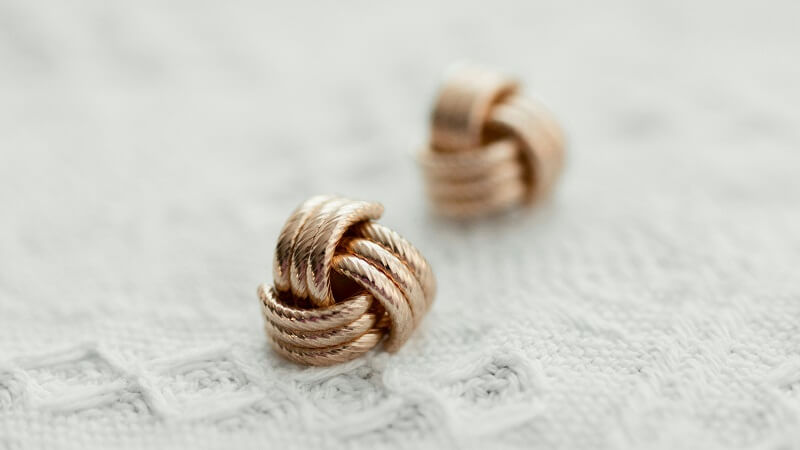
Safe earrings for kids share three traits: nickel-free metal, a secure screw back and a small, smooth stud. Get those right and rashes, lost backs and snagged ears become far less likely.
A practical starting point is this range of earrings for kids, which lists lightweight gold studs with smooth edges and screw-back closures.
Why the Right Earrings Matter for Children
Piercings are common in childhood, but complications happen. Dr. Alyssa Swick of Riley Children’s Health says roughly 35% of ear piercings lead to some kind of complication.
Metal is a major factor. A Finnish study summarized in Canadian Family Physician found that 31% of children with pierced ears reacted to nickel, against 2% of children without piercings.
Choosing the Right Metal
Dr. Rachel Dawkins of Johns Hopkins All Children’s Hospital is direct on this point: “The new earrings should be gold or sterling silver.”
Riley Children’s Health adds that 14, 18 and 24 karat gold are hypoallergenic, while nickel frequently triggers allergic reactions.
| Metal | Verdict | Why |
| 14K or 18K gold | Good choice | Listed as hypoallergenic by Riley Children’s Health |
| 24K gold | Good choice | Pure gold, so it contains no nickel |
| Sterling silver | Good choice | Named by Johns Hopkins as a safe option |
| Nickel alloys | Avoid | Nickel frequently causes allergic reactions |
Backs and Styles That Stay Secure
Why Screw Backs Win
Dr. Swick says young children may need a screw locking mechanism. It keeps the back on the post and lowers the choking risk.
Embedded backs are another concern. In a Cincinnati Children’s Hospital review, 60% of embedded earring patients were under 10 years old.
Studs Beat Hoops and Danglers
Dr. Dawkins advises skipping hoop and dangling styles for babies and young children. Little hands can pull them and tear the earlobe.
| Style | Safety note |
| Stud with screw back | Locks the back in place |
| Stud with push back | Less secure than a screw locking back |
| Hoops and danglers | Can be pulled, so avoid for babies and young children |
Piercing Day and Aftercare
- Ask for needle piercing, which Dr. Swick prefers to a gun because it lowers infection and scarring risk.
- Leave starter earrings in for four to eight weeks, depending on your pediatrician’s advice.
- Clean with alcohol on a cotton swab and gently rotate the earring.
- Call your pediatrician if redness, pain, pus or swelling lasts more than 24 hours.
A Quick Buying Checklist
- Nickel-free metal such as 14K gold or sterling silver
- Screw back closure
- Small, lightweight stud with smooth edges
- A clear return window in case the fit is wrong
Buying for a birthday? Our personalized gift ideas for moms and families pair nicely with a first set of studs.
Older kids who enjoy making accessories can try beaded bracelets from our easy crafts guide.
Questions Parents Ask
What is the safest earring back for a child?
A screw back. It locks onto the post, so the back is far less likely to come off and become a choking hazard.
Which metals are safest for kids’ ears?
Gold at 14 karat or higher and sterling silver are the usual picks. Avoid nickel, which frequently causes allergic reactions.
What age is right for a first piercing?
The American Academy of Pediatrics recommends waiting until a child can care for the piercing. Some pediatricians pierce infants after early vaccines, so ask yours.
How long should starter earrings stay in?
Four to eight weeks, depending on your pediatrician’s advice, before you change them.
Are hoops safe for toddlers?
Hoops can be pulled and tear the earlobe, so small studs are the better choice.
Final Thoughts
Safe kids’ earrings come down to metal, closure and shape. Choose nickel-free gold or sterling silver, a screw back and a small stud, then follow your pediatrician’s aftercare advice.
Gold studs in the range linked above start from $39, so a secure first pair does not need a big budget. For more everyday guidance, see our parent’s guide to recognizing when your child needs help.